Newsletter
Newsletter Support JNS

Israelis savor wildflower crop, despite Gaza arson damage

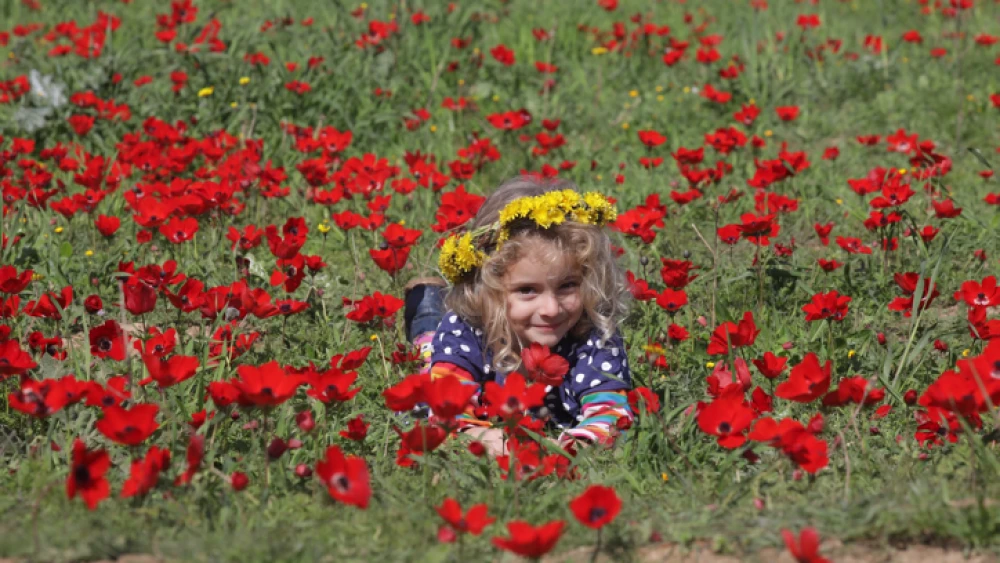
With the abundant rainfall that has fallen in Israel, the blossoms were particularly numerous.

Enjoying the bloom of wild red anemones in southern Israel on Feb. 3, 2018. Photo by Nati Shohat/Flash90.

The annual five-week Adom Darom (“Red South”) nature festival along Israel’s Gaza border and in the Western Negev kicked off this past weekend, with 60,000 Israelis converging on nature reserves and fields to see the annual blooming of Israel’s protected wild red anemones, or kalaniyot in Hebrew.

Visitors took tours and walked among the blooms—without picking them, which is illegal. With the abundant rainfall that has fallen in Israel, the blossoms were particularly numerous.

Blooming flowers were reported along the Gaza border, cropping up in fields that had been destroyed by arson fires set by Gazan Arabs, who flew incendiary kites and balloons into Israel for months prior to the beginning of the rainy season. Some 7,000 acres of land were burned, causing damage estimated in the tens of millions of shekels.

Many of the fields and former forests will be left fallow for a year to allow the land to recuperate before determining how best to rehabilitate it.

“At a time when some would isolate Israeli academia, UCLA has chosen collaboration,” Eveline Shekhman of the American Jewish Medical Association told JNS.
“The juxtaposition of us being at the United Nations, and all those people walking out while literally their employees helped to perpetuate Oct. 7 was put in a certain frame,” Rabbi Steven Burg of Aish told JNS.
Jason Brodsky, of United Against Nuclear Iran, told JNS that the address carried messages to “the international community, antisemites abroad, state threats against Israel and most especially the Iranian people.”
Deena Margolies, of the Brandeis Center, told JNS that “Jewish faculty, staff and students should be able to report antisemitic discrimination without fear that speaking up will jeopardize their academic or professional futures.”