Newsletter
Newsletter Support JNS

Jerusalem invites bids for 3,401 homes in E1 area near capital

Once the tender closes in March, the E1 project moves out of the Israeli government’s direct control and becomes irreversible.

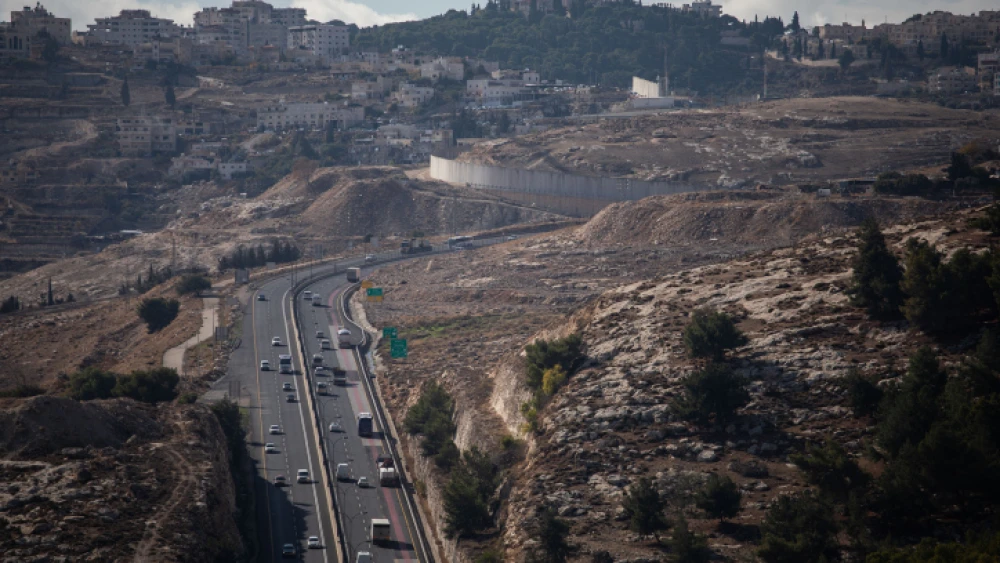
The Ma'ale Adumim-Jerusalem road, from the Judean Desert area known as E1, with Jerusalem's Mount Scopus seen on the horizon, Dec. 10, 2019. Photo by Hadas Parush/Flash90.
The Ma’ale Adumim-Jerusalem road, from the Judean Desert area known as E1, with Jerusalem’s Mount Scopus seen on the horizon, Dec. 10, 2019. Photo by Hadas Parush/Flash90.

Israel’s Housing Ministry on Tuesday invited construction companies to bid on a tender for 3,401 homes in the E1 area near Jerusalem, with a March 16 deadline, advancing plans to build in the contested zone.

A Defense Ministry planning committee gave final approval in August for the construction project, which Israeli Finance Minister Bezalel Smotrich has said would bury “the idea of a Palestinian state.”

The project was delayed for decades due to international opposition, led by the European Union and some U.S. administrations. (E1 is an unbuilt area within the municipal boundary of the Judean Desert city of Ma’ale Adumim.)

Once the tender closes in March, the E1 project moves out of the Israeli government’s direct control and becomes irreversible, including from a legal standpoint, as it is handled by the Ma’ale Adumim municipality.

The tender, which was first published on Dec. 10 with a Jan. 26 deadline but was only reported on this week, offers developers leasing rights for 98 years, with an option to extend the lease for an additional 98 years.

Additional details, including minimum price for the land, development costs and other financial terms, will be published separately in the official tender booklet on Feb. 16, the ministry stated on Tuesday.

E1 covers 4.63 square miles between Jerusalem and Ma’ale Adumim. The building plans seeks to link Ma’ale Adumim—established more than 40 years ago and home to 40,000 residents—to Jerusalem. E1 is intended to contain three neighborhoods and commercial zones.


See more from JNS Staff
In a draft report delivered to the U.S. president, the commission also called for improved religious accommodations for U.S. service members.
Salah Salem Sarsour, accused of concealing Israeli military court convictions on immigration forms, argued his detention was part of a Trump admin effort to target the pro-Palestinian movement.
CENTCOM stated that the strikes targeted missile, drone and radar facilities after the Islamic Republic attacked a cargo ship in the Strait of Hormuz, calling the assault a violation of the ceasefire.
Now that the primaries are over, “we hope that everyone will come together and be united,” Christine Quinn, chair of the executive committee of the New York State Democratic Party, told JNS.
An Iranian official warned on Friday that the safety of ships passing through the Strait of Hormuz without Iran’s permission “cannot be guaranteed.”
“We have put the train back on the tracks and going in the right direction,” said Yechiel Leiter, Israeli ambassador in Washington. “Final destination? Peace between our two countries.”
Benny Gantz, JNS editor-in-chief Jonathan S. Tobin, Gilad Erdan, Mosab Hassan Yousef, Nissim Black and leading voices in security, diplomacy, media, law and Jewish communal affairs headline the summit’s third day in Jerusalem.