


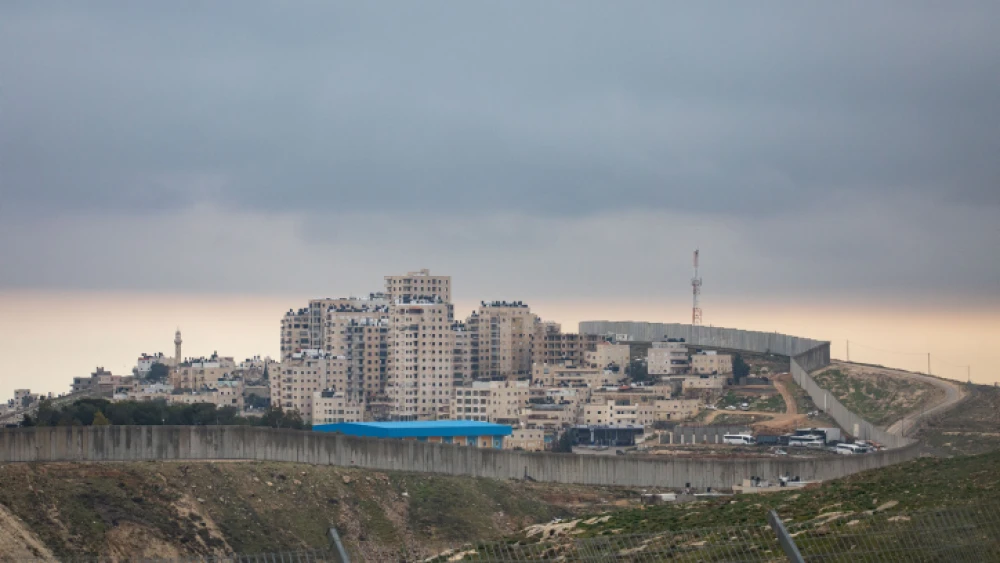
The Jerusalem District Planning and Building Committee gave initial approval last week to the construction of a Jewish neighborhood in the Arab village of Abu Dis on the eastern outskirts of Israel’s capital.
The neighborhood, to have 400 housing units, will be named Kedmat Tzion. Ten Jewish families currently live there in three buildings purchased by Ateret Cohanim, a nonprofit that encourages Jewish presence in eastern, mostly Arab, parts of Jerusalem.
Abu Dis, located east of the Silwan/Shiloach neighborhood and the City of David archaeological site, partly falls within Jerusalem but the majority of it is in Area B of Judea, under Palestinian Authority civil supervision and Israeli security control.
It is home to 15,000 Arab residents, the main campus of Al-Quds University, an Islamic college, P.A. government institutions and a large five-story building meant to house a future Palestinian parliament, Zman Israel reported.
Abu Dis has been named in Israeli-Palestinian negotiations as a possible future capital of a Palestinian state.
In its explanatory notes appended to the Kedmat Tzion plan submitted to the building committee, Ateret Cohanim cited “Palestinian ambitions” in Abu Dis to underscore the project’s importance.
“Palestinian institutions in Abu Dis were built with the vision of turning the town into the capital city of Palestine and building a corridor and passage to the center of Jerusalem, thus promoting the takeover of the entire city,” the group said.
“The significance of establishing and developing the neighborhood is to create a shield for Jerusalem against Palestinian ambitions. The neighborhood will disturb the contiguity [of the area] and protect us from dividing the city,” it added.
Aryeh King, deputy mayor of Jerusalem, told Zman Israel: “I am sure that the current government, which today discussed the budgeting of the Eastern Ring Road out of an understanding of its strategic importance for the future of Jerusalem, will also advance the Kedmat Tzion neighborhood plan that is planned on the borders of the Eastern Ring Road.”
The Eastern Ring Road is meant to bypass eastern parts of Jerusalem, ease traffic congestion and better connect Israeli communities in Judea and Samaria with the capital.


