Newsletter
Newsletter Support JNS

Netanyahu in ‘good condition’ after surgery to remove prostate

The Israeli premier is expected to remain in the hospital for observation in the coming days.

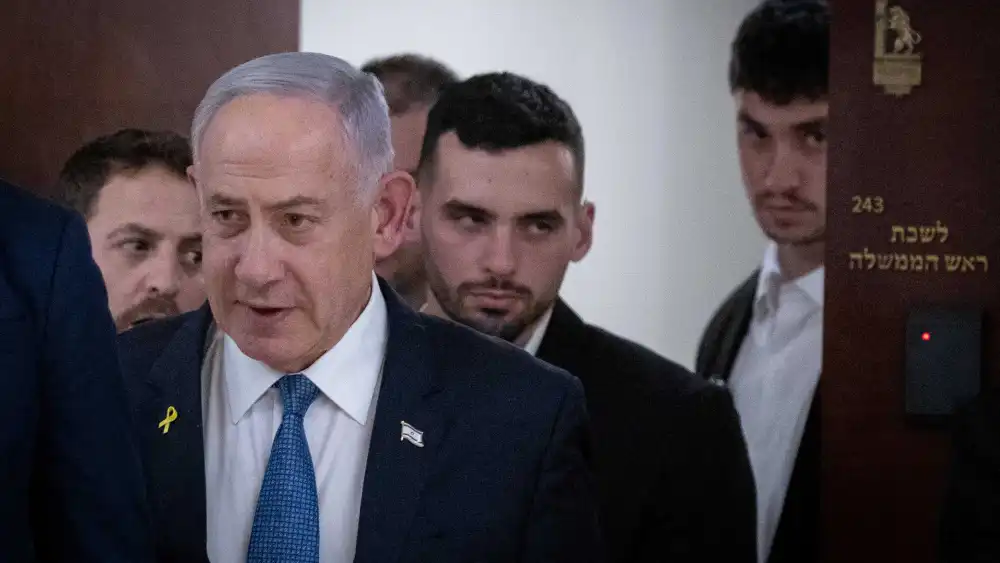
Prime Minister Benjamin Netanyahu at the Knesset in Jerusalem, Dec. 16, 2024. Photo by Chaim Goldberg/Flash90.

Israeli Prime Minister Benjamin Netanyahu underwent successful surgery on Sunday night to remove his prostate, according to a statement from his office.

“The prime minister has awakened from the anesthesia, is in good condition and is fully conscious. He has been transferred to the underground, protected recovery unit. He is expected to remain in the hospital for observation in the coming days,” added the statement.

Last Wednesday, Netanyahu, 75, underwent an examination at Hadassah Medical Center in Jerusalem’s Ein Kerem, during which a urinary tract infection caused by a benign prostate enlargement was identified.

On March 31, Netanyahu underwent successful hernia surgery, also at Hadassah Medical Center.

On Dec. 31, 2023, following routine annual checkups by his medical team, Netanyahu received a clean bill of health after undergoing an emergency cardiac procedure earlier in the year.

Legal analysis says a report to the Human Rights Council ignores Hamas’s “openly declared genocidal intent.”
“We don’t have to wait for a mandate from the Department of Justice or the Department of Civil Rights to tell me what needs to be done,” the public school’s president told JNS.
The Israeli prime minister vowed to “safeguard our vital interests under all circumstances.”
The then 28-year-old screamed antisemitic things at a group of Jews and assaulted an Israeli in October 2023, the Manhattan district attorney’s office said at the time.
The U.S. secretary of education said that “the campus has been in the spotlight for tolerating egregious antisemitic harassment for years now.”
The Trump administration’s “trade over aid” approach is necessary to root out inefficiencies and waste at the United Nations and elsewhere, the U.S. envoy to the global body said.