


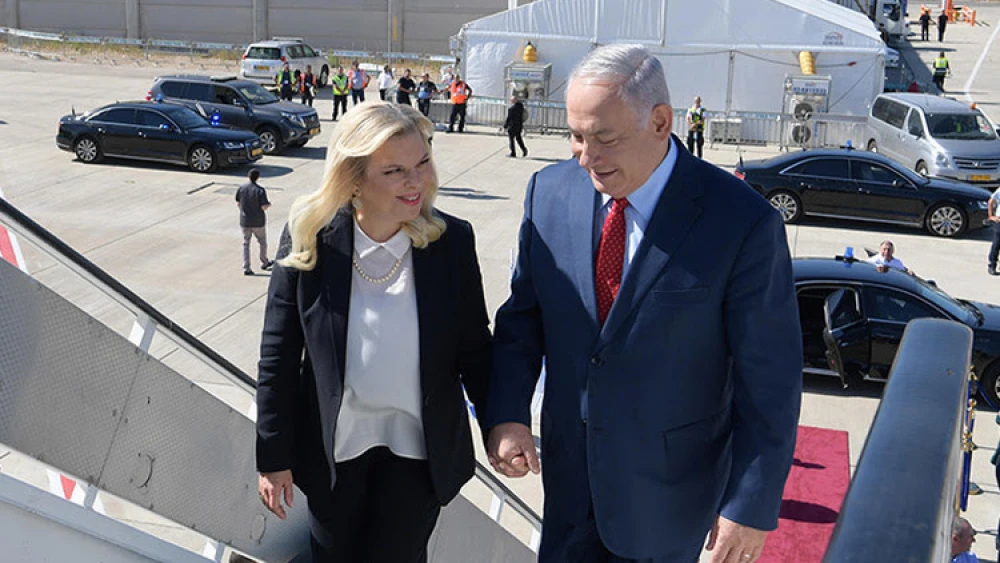
Israel Prime Minister Benjamin Netanyahu said that discussing Europe’s relationship with Israel while sitting at the top table with heads of European states in Paris, he made it clear how important it is for them to connect and have strong ties with Israel.
“I do not hide my dissatisfaction with the fact that the European Union attacks and criticizes Israel, which is a real barrier against the spread of radical Islam, Sunni or Shi’ite, in Europe,” he said.
Netanyahu was in the French capital for commemorations of the 100th anniversary of the armistice that ended World War I.
“I am very proud that I came to represent the State of Israel in this important event, and I thank President [Emmanuel] Macron for inviting us. I think that there is no better evidence of the State of Israel’s standing in the world than the way we were accepted in this event, from the place we received, literally, in the first line of countries,” said the Israeli premier.
He added: “I see this as a great compliment to the State of Israel and its achievements. This was, of course, followed by lunch, before which there was a meeting with many leaders, almost all of whom were interested in strengthening ties with Israel, who came to me in the morning before the ceremony and now at lunch.
“Some of the conversations were short, while others were longer and extended. They want to strengthen the political, economic, technological and security ties with the State of Israel.”
While in Paris, the Israeli prime minister met with Russian President Vladimir Putin—the first time they have met since a Russian plane was shot down by Syrian missiles in September.
Netanyahu briefed Israeli journalists about the meeting and said: “Obviously, I spoke with Putin. It was very good, business-like and very important. Beyond that, there’s no point in going into detail.”
Israel’s public broadcaster Kan News reported last week that Russia cancelled a tentatively arranged meeting in Paris between Putin and Netanyahu due to its continuing anger over Israeli airstrikes in Syria.
He also told journalists that he agreed to allow $15 million of Qatari funds to enter Gaza because he wanted to “restore quiet to the residents of the Gaza periphery and to avert a humanitarian collapse.”
He added that “the thing that creates stability and which undermines stability isn’t a change in the balance of deterrence, but internal volatility, which we have the power to avert. We were a pace’s distance from using maximum force. Hamas understood that and was deterred. We both prepared ourselves militarily and produced calm.”
When asked about the potential truce arrangement with Hamas, Netanyahu said that Israeli policy is not to prevent the entry of medical supplies and food into the Gaza Strip because “we need to distinguish between the population and the regime.”
He added that he doesn’t have a political solution for Gaza, “just as there is no political solution to the issue of ISIS,” but hoped to reach an arrangement that will avert a humanitarian collapse there.
He made the statements before the announcement of the death of an Israeli officer in an IDF intelligence operation in Gaza.
On Sunday night, Netanyahu cut short his Paris visit in light of the security situation in the south of Israel and returned to Israel.



