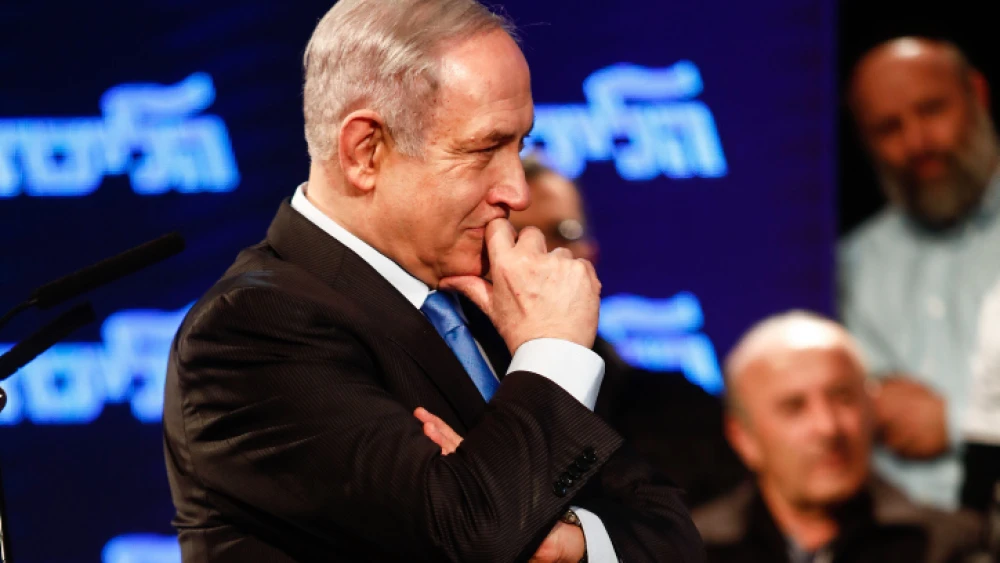
Israeli Prime Minister Benjamin Netanyahu’s corruption trial will start on March 17, just two weeks after Israel holds its third election in less than a year, the country’s Justice Ministry announced on Tuesday.
The Justice Ministry said the trial will begin on March 17 at 3 p.m. The prime minister will be required to attend the Jerusalem District Court for the first session to hear the indictments against him.
On Jan. 28, Netanyahu was formally indicted by Israeli Attorney General Avichai Mandelblit, where he faces charges on fraud and breach of trust in Cases 1000 and 2000; and bribery, fraud and breach of trust in Case 4000.
Netanyahu has denied any wrongdoing in the charges against him.
Despite the looming trial, an Israeli Channel 12 report said Mandelblit will likely inform Israel’s High Court of Justice that Netanyahu will be able to form a government while standing trial. Israel’s national elections are scheduled for March 2.
Blue and White Party leader Benny Gantz called the trial a “sad” development that would distract Netanyahu from performing his duties.
“Netanyahu will be preoccupied with himself alone. He will not be in a position to look out for the interests of Israel’s citizens,” he said.
At a campaign rally, Netanyahu shot back, saying: “You know what will be a sad day? If a Benny Gantz government dependent on [the Joint Arab List’s] Ahmad Tibi is formed. … We won’t let that happen.”