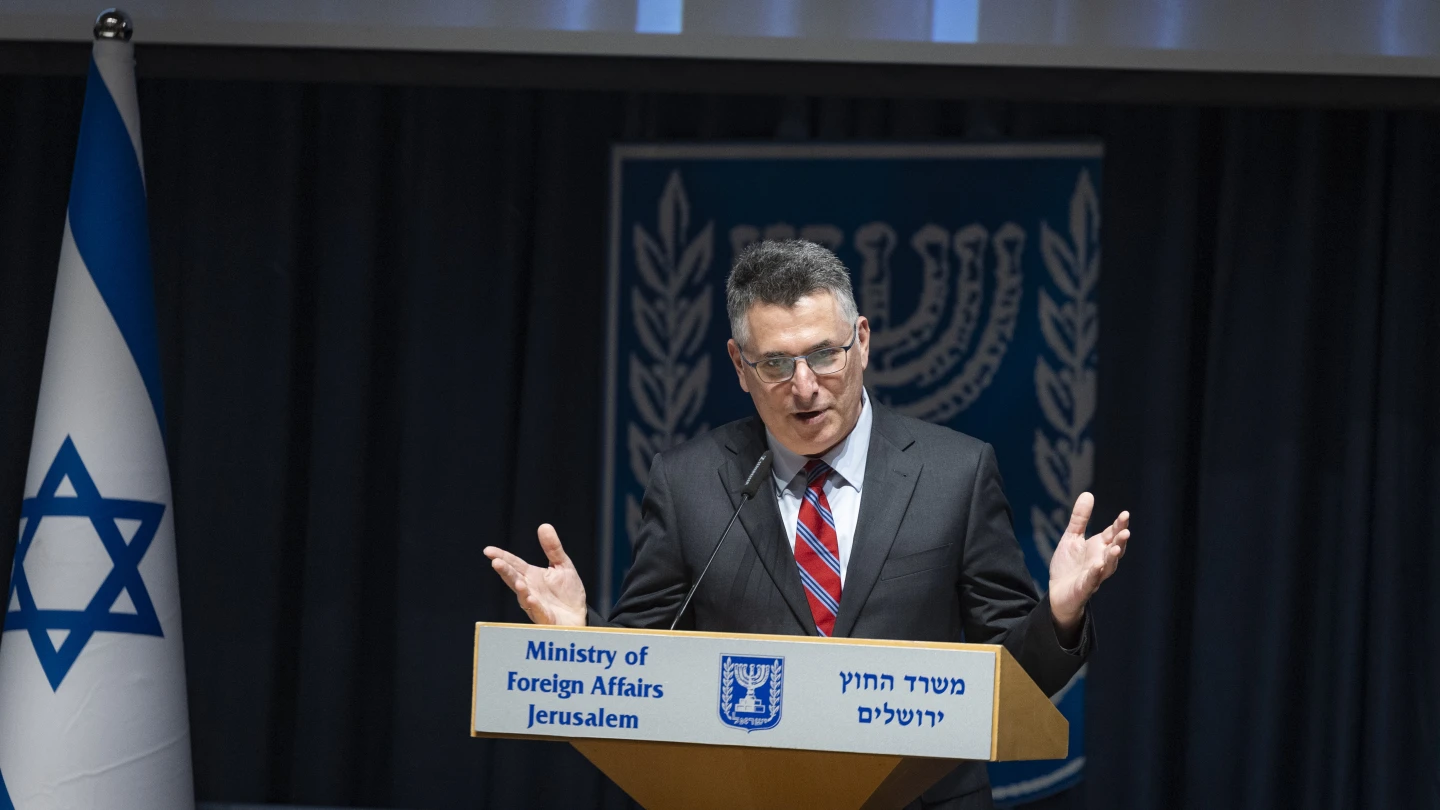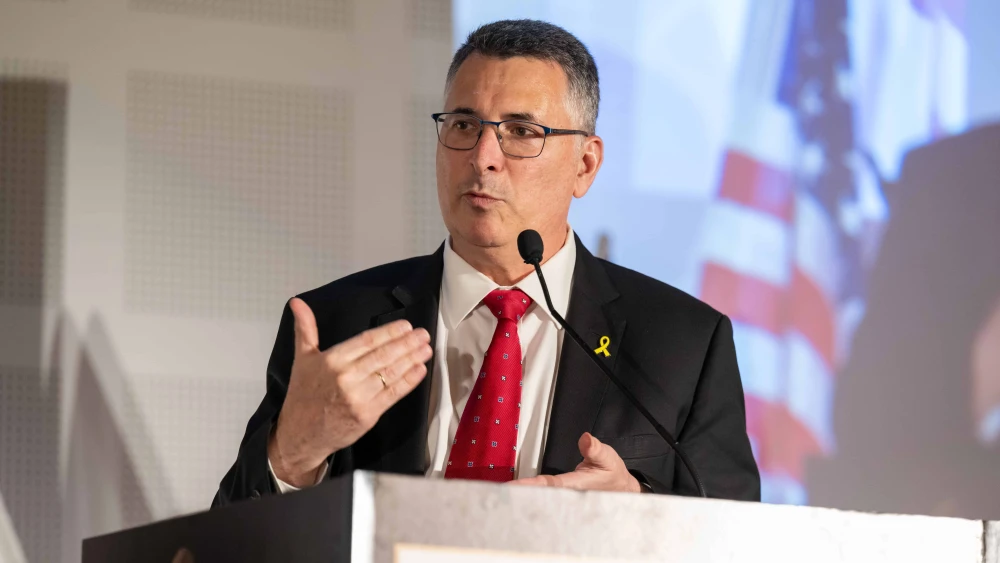
Israeli Foreign Minister Gideon Sa’ar said on Monday that Iran’s ability to launch missiles at Israel has decreased, even as Tehran and its regional proxies continue attacks.
In an interview with CNN‘s Bianna Golodryga, Sa’ar said, “There is no doubt that the ability of the Iranians to launch on Israel … decreased because we hunt so many of the launchers.”
Pressed about whether there were concerns that Iran would attempt to turn the conflict into a war of attrition, Sa’ar declined to specify how long the fighting could last, but insisted that Israel would continue pursuing its objectives in coordination with the United States.
“If you want to be successful, you are simply not telling the other side how much time you are ready to fight,” he said.
Sa’ar stressed that Iran is a “mad regime,” pointing to its attacks on U.S. allies across the region, from Turkey to Azerbaijan.
“Think what they would have done if they had nuclear weapons,” he said. “They are already using these cluster warheads. It is very important to understand that not only do they target civilians, but they do it in a way to maximize civilian casualties. And this is, of course, a war crime.”
“You’ll have to wait and see.” Israeli Foreign Minister @gidonsaar tells me when asked whether Mojtaba Khamenei is now a target for Israel. pic.twitter.com/0sgcs8aoby
— Bianna Golodryga (@biannagolodryga) March 9, 2026
He would not reveal whether Israel was going to target Mojtaba Khamenei, the newly appointed leader of Iran, saying only, “You’ll have to wait and see.”
Sa’ar said cracks were already forming in the regime, noting the mixed messages coming out of Iran, with President Masoud Pezeshkian apologizing for attacking neighboring Gulf states, only to be contradicted by the speaker of Iran’s parliament, who said Iran would continue to attack its neighbors.
While it’s impossible to predict if the regime will fall, he said, Israel and the United States are creating the conditions for regime change.
“We saw that the people of Iran want to fight for their freedom, to regain their freedom, and they paid heavy prices for that,” he said.
What Israel can do is target elements of Iran’s security apparatus to weaken the regime and create the conditions for internal change in Iran, he said.
Asked about reports of Israeli strikes on Iranian fuel depots that allegedly surprised U.S. officials, Sa’ar said the facilities were used by Iranian military forces and stressed that coordination with Washington remains “very tight.”
“We will communicate with the U.S., [but] not through the media,” he said. Acknowledging the soaring gas prices and the loss of lives, Sa’ar said, “There are no free lunches. And it’s tough to be in war, but sometimes it’s more dangerous not to act than to act.”
He praised both U.S. President Trump and Israeli Prime Minister Benjamin Netanyahu for making the right decision to go forward with the attack.
Regarding Hezbollah in Lebanon, Sa’ar said that the terror group’s decision to launch missiles at Israel shows it has no loyalty to Lebanon. “They are working against the will of the Lebanese people,” he said.
While Israel will strike Hezbollah forcefully, Sa’ar said it will not lose sight of the main front, which is Iran.