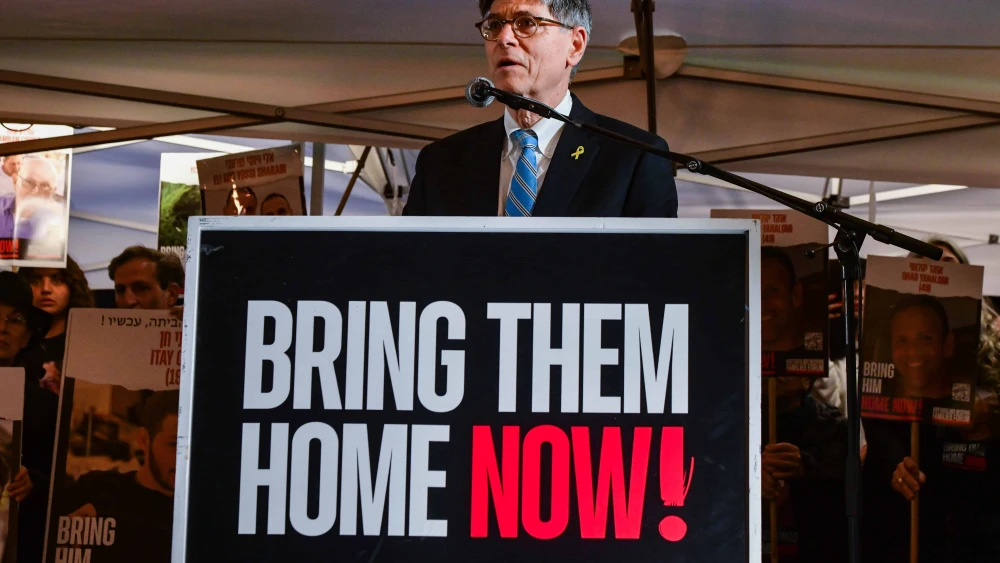
American Ambassador to Israel Jacob Lew gave an intricate interview at the Institute for National Security Studies online conference on Thursday, discussing a broad spectrum of topics, including hostage negotiations, the U.S. arms shipment delay, Israel-U.S. ties, Saudi Arabia and regional normalization efforts.
Lew emphasized the need for flexibility in talks with Hamas, firmly rejected the notion that a two-state solution would reward terrorism, and provided insights into the ongoing hostage deal talks and the complexities of achieving regional normalization.
When asked whether it was Prime Minister Benjamin Netanyahu who needed to show more flexibility to secure a deal, Lew diplomatically responded, “In any negotiation, everyone needs to be flexible.”
Explaining how the two-state solution would not be a “trophy” for Palestinian terrorism, Lew explained that while Hamas ostensibly advocates for two states, its true stance is fundamentally opposed to the existence of a Jewish state. As such, “a long-term vision of how two people can live together and for there to be a democratic Jewish state of Israel” would be a “defeat for Iran and Hamas,” and therefore “not a reward for October 7, but punishment.”
Looking to the future after a Gaza deal, he added, “From there, within the remaining time constraints, we try to achieve normalization.” Nevertheless, he said it would not be an easy process as “Saudi Arabia made it clear it was not prepared to go through normalization on the exact same terms as the Abraham Accords.”
Regarding potential direct negotiations with Hamas for the release of Israeli-American dual citizen hostages, Lew assured that the administration was still pursuing “Plan A,” which includes Israel in the process. “We are devoting most of our energy, from the president through the entire foreign policy team, myself included, 24/7 efforts to make it happen,” the ambassador emphasized.
Despite the recent murder of six hostages in captivity, Lew claimed that “progress continued to be made” and that “conversations at very senior levels between Israel and the mediators continued.”
The Philadelphi Corridor
Addressing the issue of the Philadelphi Corridor along Gaza’s border with Egypt, Lew said, “Phase 1 never called for the complete withdrawal of IDF from Gaza. There’s no mention of the Philadelphi Corridor in the document. It wasn’t even an issue when the framework was drafted.”
On the topic of the U.S. weapons shipment delays to Israel, Lew said, “There was one shipment that was put on hold because we have different views on the appropriate use of one weapons system. There was never an embargo. The day that shipment was held, aircraft delivered munition to Israel.”
He added, “Friends can have different views about the use of a 2,000-pound bomb. It was blown way out of proportion.”
Lew praised Israel for adjusting its plans for Rafah after the U.S. expressed concerns about civilian casualties. “IDF rethought its battle plan and went about the plan in Rafah in a very different way. That demonstrates the strength of the relationship.”
When asked about the relationship between Netanyahu and President Joe Biden, Lew emphasized the importance of trust and open communication.
“It is always the case that when leaders know each other, understand each other and trust each other, it makes easy things and difficult things possible. Things that undermine trust create friction. There has to be an ongoing and tight relationship between the people, government and leaders of Israel and the U.S.
“Relationships with trust require constant nurturing. If your closest friends don’t ask the hardest questions, then they’re not really your closest friends,” the ambassador said.
Originally published by Israel Hayom.