Legislators from the United States, Greece, Cyprus and Israel met this week via video conference to further cooperation in the Eastern Mediterranean.
The inter-parliamentary conference took place amid burgeoning relations between Israel and both Cyprus and Greece over the last decade and a half in a variety of fields including tourism, medicine, cybersecurity, energy and military cooperation.
“We are pleased to have convened the first meeting of the 3+1 interparliamentary group with elected representatives from the United States, Cyprus, Greece and Israel,” according to a statement.
“We reaffirmed our shared commitment to promoting security, stability, and prosperity in the Eastern Mediterranean, and discussed ways our legislative bodies can promote joint priorities including energy security, maritime security, economic growth and overall stability.”
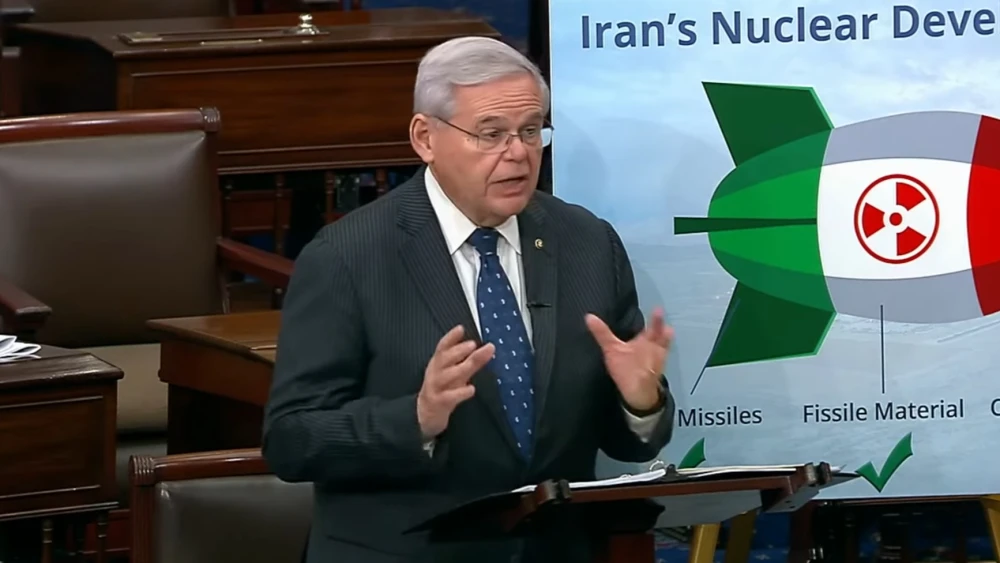
Sen. Bob Menendez (D-N.J.). chairman of the U.S. Senate Foreign Relations Committee, hosted the event along with a bipartisan group of American lawmakers, including Sens. Deb Fischer (R-Neb.), Shelley Moore Capito (R-W.V.), Tammy Duckworth (D-Ill.), Mike Rounds (R-S.D.) and Kirsten Gillibrand (D-N.Y.).
“The importance of cooperation in various fields, including energy, cybersecurity, disaster readiness and more, cannot be overstated,” said Knesset member Dan Illouz of Likud. “The parliamentary oversight that we can bring together will push cooperation between countries forward.”
MK Moshe Tur-Paz of opposition leader Yair Lapid’s Yesh Atid Party also participated in the meeting.
The Cypriots were represented by Nikolas Papadopoulos, chairman of his parliament’s Committee on Finance and Budget, while the Greek delegation was headed by Parliament member and former Foreign Minister Dora Bakoyannis.
The meeting follows the passage of bipartisan legislation put forward by Menendez in the U.S. Senate that significantly bolsters U.S. support for Greek military modernization as well as increased multilateral engagement among Cyprus, Greece, Israel and the United States.
The parliamentary meeting also comes as construction of an “energy highway” that will connect the national electricity grids of Israel, Cyprus and Greece is underway.
The mammoth European Union-backed energy project comes as the war in Ukraine and sanctions on Russia are fueling a global energy crisis that has hit the E.U. hard, spotlighting the continent’s dependence on foreign energy.
A summit between the leaders of Greece, Cyprus and Israel is planned for later this year.