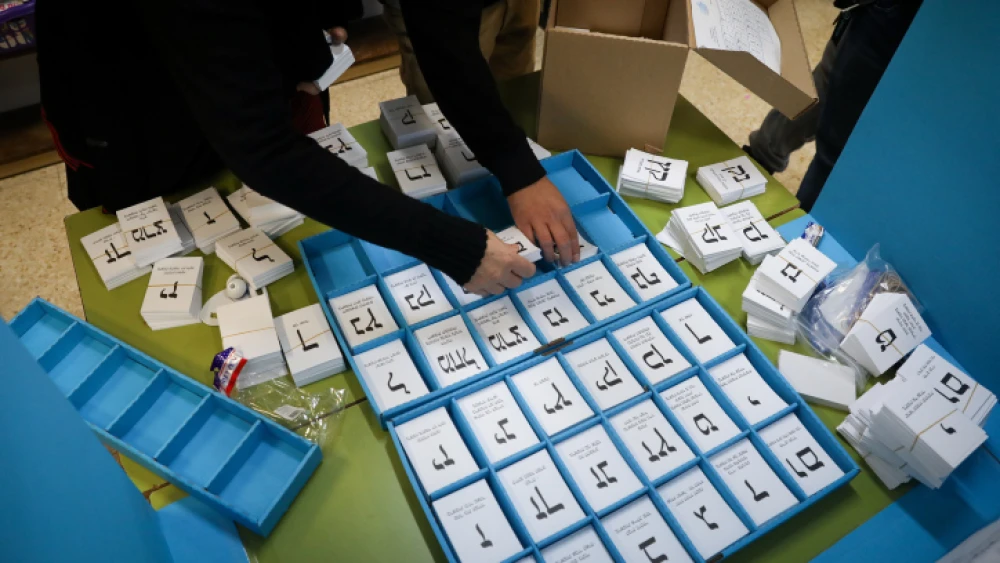
Some 4,843,023 people, or 71.3% of eligible voters, cast ballots in Tuesday’s elections for the 25th Knesset, according to the Israeli Central Elections Committee (CEC), the highest turnout on Election Day since 2015.
A total of 6,788,804 people were eligible to vote at more than 12,000 stations set up across the country.
The high turnout reflects the electorate’s trust in the Jewish state’s democratic system, said Israeli President Isaac Herzog during a visit to the CEC at the Knesset.
“It’s very impressive to see this diverse, sophisticated, supervised and responsible operation, and I am convinced that the CEC will do its work faithfully and of course will thus reflect the public’s confidence in the electoral process,” Herzog added.
“Go vote and make a difference, because each vote has an impact,” he said.
Israeli Prime Minister Yair Lapid cast his ballot on Tuesday morning at a polling station set up at the Ramat Aviv Gimmel School in north Tel Aviv. “Vote wisely; vote for the State of Israel, the future of our children and our future in general,” he said.
Opposition leader and former premier Benjamin Netanyahu cast a ballot in Jerusalem, calling exercising the democratic right “a great privilege.”
“I’m a little bit worried, but with the help of everyone who hears us, I hope the day will end in a smile,” Netanyahu said.
Indeed, exit polls showed Netanyahu’s right-wing/religious bloc garnering a parliamentary majority, with all three major Israeli channels projecting him to form a 61- or 62-seat coalition.