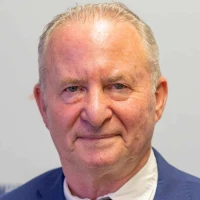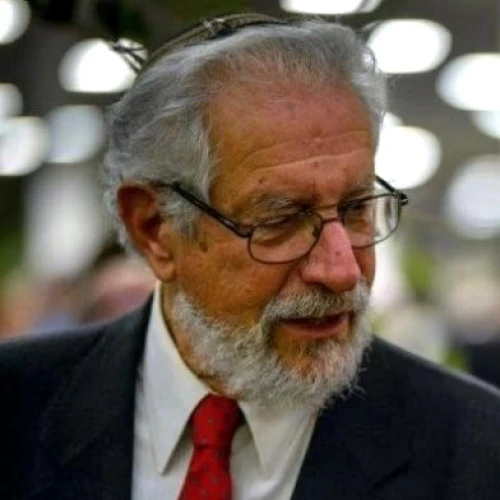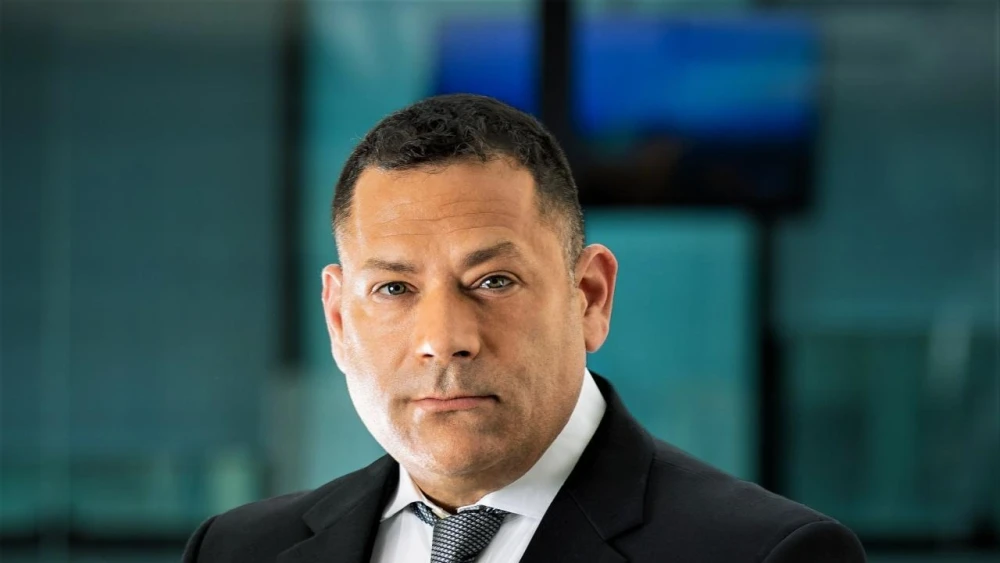
Lior Chorev, the newly appointed campaign adviser to Naftali Bennett, has sharply criticized U.S. President Donald Trump in the past, comparing him to Iran’s leaders as well as accusing him of supporting antisemites and siding with Israel’s enemies.
Bennett, who served as Israel’s 13th prime minister from June 13, 2021, to June 30, 2022, recently recruited Chorev (sometimes spelled Horev) as part of his efforts to build his campaign team ahead of the next national election, expected to be held by October, under the banner “Bennett 2026.”
On Feb. 21, 2022, Chorev tweeted that “Trump’s Truth is like Iran’s democracy,” referring to Trump’s Truth Social platform, established as an alternative to Twitter, which became X in July 2023.
"Trump's #Truth is like Iran's democracy. #TruthSocial"
— Lior Chorev ליאור חורב (@liorchorev) February 21, 2022
On Oct. 12, 2023, five days after the Hamas assault on southern Israel, Chorev posted that “Donald Trump has sided with Israel’s worst enemies.” It was apparently a response to Trump’s warning to Hezbollah in a speech in West Palm Beach, Florida, on Oct. 11 about opening a northern front against Israel.
“Two nights ago, I read all of Biden’s security people,” Trump said. “They said, ‘Gee, I hope Hezbollah doesn’t attack from the north, because that’s the most vulnerable spot.’ I said, ‘Wait a minute. You know, Hezbollah is very smart. They’re all very smart.’”
Donald Trump has sided with Israel's worst enemies
— Lior Chorev ליאור חורב (@liorchorev) October 12, 2023
In a post in Hebrew on Nov. 26, 2022, Chorev called Benjamin Netanyahu, who was sworn in for his sixth term as prime minister a month later, a “blind follower of Trump, who is an all-out follower of antisemites, white supremacists and persecutors of Jews in the US.”

Other posts attributed to Chorev include a denigrating quip before the 2016 U.S. election, “The nation that invented McDonald and Donald Duck will have no issue electing Donald Trump,” and a 2020 tweet referring to “a new medical phrase that describes politically related mental health issues: the Trump Tantrum.”

‘Don’t mess with Trump’
Political analysts said Chorev’s comments stand in stark contrast to Bennett’s efforts to improve relations with the White House following Trump’s return to the presidency in January 2025. Bennett has publicly praised the administration and signaled interest in strengthening ties with Washington.
Expressing support for the U.S.-Israeli military campaign against Iran, Bennett was quoted on a March 2026 White House web page as saying, “The big lesson is do not mess with President Trump … I think the whole region… will be thankful—and the world will be thankful—because already now, the world is a safer place compared to yesterday.”
Chorev’s anti-Trump stand is also at odds with Bennett’s decision to bring Anthony Fabrizio, a key Trump adviser and pollster involved in both the 2016 and 2024 presidential campaigns, and longtime political consultant George Birnbaum onto his team. In his announcement on Feb. 4, Bennett noted that Fabrizio served as a senior adviser to Trump, highlighting the campaign’s outreach to figures close to the White House.
“I am proud and honored to add two successful and highly experienced advisers like Tony and George to my team,” he said. “Their extensive experience in Israel and around the world will be of tremendous value to me and to our campaign. I am confident they will help lead us to victory and, in doing so, also help heal and unite our country.”
Whether Chorev’s past statements will affect Bennett’s relationship with Trump remains unclear. In 2015, Netanyahu rescinded the planned appointment of Ran Baratz as media adviser following controversial statements he had made on social media about then-U.S. President Barack Obama, including calling Obama antisemitic.
In 2020, Ronen Tzur, a senior adviser to Blue and White chairman Benny Gantz, came under harsh criticism and was forced to apologize after it was revealed that he had likened Trump in the past to Nazi leader Adolf Hitler and insinuated that he colluded with Russian President Vladimir Putin.
Chorev is widely regarded as one of Israel’s most experienced political strategists. He advised former prime ministers Ariel Sharon and Ehud Olmert and has worked on political campaigns in Europe and Africa. In his X account, he describes himself as an “International Political Strategist; Expert in the field of Public Perception and Influence; Chief Strategist-Campaign Manager for the Hostages Family Forum.”
His role as the chief strategist of the Hostages and Missing Families Forum placed him at the center of one of the most prominent protest movements against the government’s handling of hostage negotiations, aligning him with voices highly critical of Netanyahu’s wartime leadership.
Recent polling indicates that Bennett is struggling to expand his political base. While he has sought to position himself as a centrist capable of bridging ideological divides, he has found it difficult to attract voters from Netanyahu’s Likud Party. At the same time, he faces increasing competition from former IDF Chief of Staff Gadi Eisenkot, head of the Yashar party, who has recorded higher approval ratings.
In a recent interview with Yedioth Ahronoth, Chorev questioned whether Bennett should necessarily lead the broader center-left bloc. “The mistake is concentrating everything under Bennett,” Chorev was quoted as saying. “Gadi [Eisenkot] should be seen as a legitimate candidate for prime minister.”
Bennett, a successful high-tech businessman, began his political career as Netanyahu’s chief of staff from 2006 to 2008. He later served as a senior Cabinet minister in several Netanyahu-led governments before breaking with Netanyahu in 2021 to form a “change government” with Yesh Atid leader Yair Lapid, currently head of the opposition. The “change government” collapsed after a year because its diverse coalition lost its narrow Knesset majority, making it impossible to pass legislation or survive confidence votes.
Bennett’s spokesman did not respond to the contents of this article—and particularly whether Bennett had been aware of Chorev’s previous Trump-bashing on social media before appointing him.
Analysts offer divergent views
Some analysts believe Bennett’s decision to recruit Chorev reflects an effort to strengthen support among center-left voters, amid challenges gaining traction on the right. Bennett’s political repositioning remains controversial among right-wing voters, many of whom accuse him of abandoning the nationalist camp by partnering with Lapid in a coalition that relied on support from the Islamist Ra’am party, led by Mansour Abbas.
Martin Sherman, founder of the Israel Institute for Strategic Studies and a JNS columnist, said he was not surprised by Bennett’s choice of Chorev.
“No one even moderately versed in Israeli politics should have any expectation of even a modicum of consistency where Bennett is concerned. He is someone who has brought deceit and deception to unprecedented levels in the nation’s polity. Indeed, he should be considered an indelible stain on the Israeli political system. In fact, it is difficult to think of any topic on which Bennett has expressed an opinion and has not expressed the diametric opposite opinion elsewhere on some other occasion.”
Sherman added, “After all, appointing left-wing advisers is ‘small potatoes’ compared to his past betrayals (as a self-proclaimed right-winger), such as embracing the Muslim Brotherhood and ensconcing radical anti-Zionists in positions of influence in major ministries.”
In Sherman’s opinion, “With all the manufactured media hype over Bennett’s still-emerging ‘smoke-and-mirrors’ party, and with the elections fast approaching, one wonders not only what the party will stand for, but who will be number two on the list.”
Gayil Talshir, a political scientist from Hebrew University, said Chorev’s liberal views suit Bennett.
“I think Bennett wants to become PM,” she told JNS. “His voters are strategic voters in the liberal camp and a small minority who belong to the coalition. He needs Chorev to influence his liberal base to continue seeing him as the leader. Chorev won’t be there should Bennett be elected, but he is the man to keep liberal voters on board so the leadership doesn’t pass to Eisenkot. He has to be elected before his main worry is Trump.”
Ilana Shpaizman, a senior lecturer in the Department of Political Studies at Bar-Ilan University, said that while Bennett’s choice of strategic adviser speaks to his judgment, it is not that important.
“I think there are many questions that should be asked about Bennett and his election campaign that are more consequential than his role as a strategic adviser,” she told JNS. “The strategic adviser at the end of the day is just an adviser; he is not the substance. Bennett, however, has a lot to answer for in terms of substance. He is leading in the surveys without expressing any policy positions on any issue on the agenda.”
More importantly, she said, “So far, Bennett has not presented a single person who will run on his list. Since Israel is a parliamentary democracy and we do not have a presidential system in which you elect an individual, the voters vote for a list and not a person. Bennett needs to prove to the Israeli citizens that he has learned the lesson and knows how to choose his party members wisely. Thus, I think his policy preferences and the identity of the candidates are much more important than a strategic adviser, who is important only during the campaign.”
Political scientist Gil Troy said the overall issue highlights the risks public figures face in an era dominated by social media, where past statements can quickly resurface and shape current political narratives. Troy suggested that the persistence of online records has fundamentally changed political accountability, often forcing candidates and advisers to confront statements they made years earlier under different circumstances.
“This is yet another indicator of the perils of living, as we do, in social-media land,” Troy said. “It’s like living in what some describe as the Jewish version of hell: you’re constantly forced to relive the worst moments and biggest mistakes of your life.”