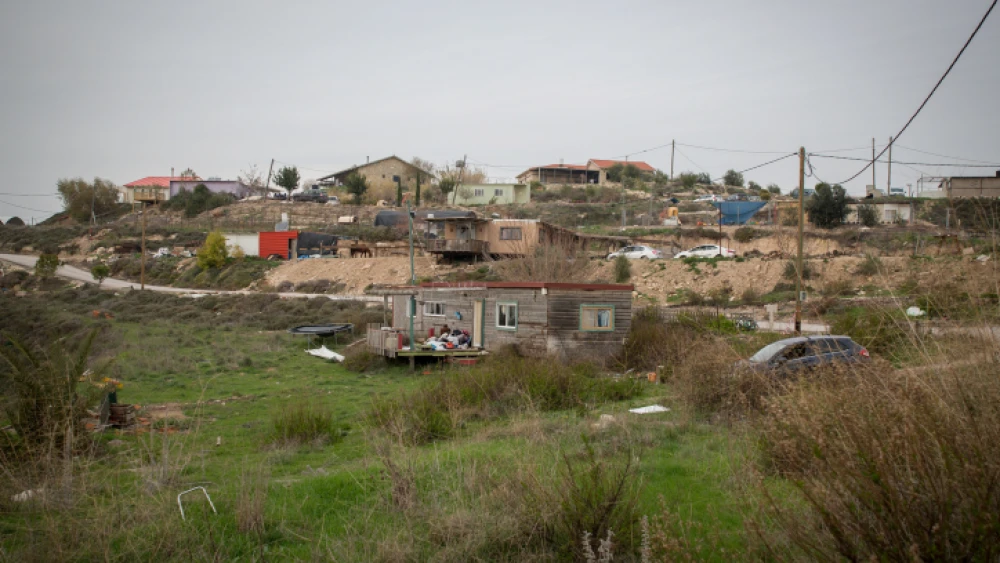
Israel’s cabinet voted unanimously on Sunday to legalize the Havat Gilad Jewish settlement, located in northern Samaria.
Havat Gilad, which was founded 15 years ago, never obtained official recognition as a legal community from Israel’s Interior Ministry, despite at least part of the community sitting on land legally purchased by private Israeli residents. Without being legalized, the community has been unable to receive government funding, or building permits.
The move to legalize the community came following the murder of Havat Gilad resident Rabbi Raziel Shevach, who was killed in a drive-by shooting by terrorists on January 9. Immediately following the attack, the Israeli government moved to officially connect the community for the first time to Israel’s electric grid.
At the opening of the cabinet meeting, just before the vote, Israeli Prime Minister Benjamin Netanyahu stated, “a few minutes ago, I spoke with Yael, the widow of Rabbi Raziel Shevach. I told her that the entire nation and all members of cabinet embrace her and their children in their time of grief.”
“I told her that our policy is being carried out in two spheres,” Netanyahu said. “First, exacting justice. Yesterday our forces were in action once again in an effort to apprehend the last of the assassins and their accomplices in the murder of Rabbi Shevach. We will not rest until we bring them to justice. And we will bring them all to justice.”
“Our second policy guideline is to strengthen settlement,” Netanyahu added. “Whoever thinks that through the reprehensible murder of a resident of Havat Gilad, a father of six, that he can break our spirit and weaken us, is making a grievous mistake.”