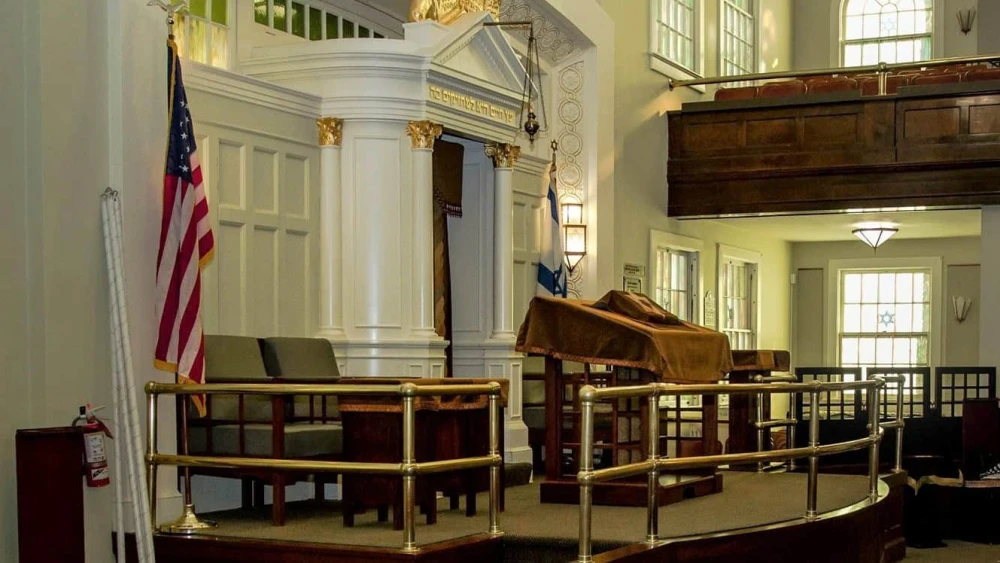
After decades of desires to expand and extended efforts to purchase a next-door building, Kesher Israel: The Georgetown Synagogue in Washington, D.C., has presented its plans for renovations.
Built in 1931, the Orthodox congregation has long sought to expand but Georgetown building codes slowed down the process. Efforts to acquire the building next door met with rejection for decades until a purchase agreement was finally reached.
“What’s important is building community and the people. But at Kesher, it’s hard to welcome people because it’s so crowded,” Rabbi of Kesher Israel Hyim Shafner said. “There’s no accessibility. The bathrooms aren’t sufficient. The social hall doesn’t have enough room, there’s no office space, there’s no rooms for study.”
David Epstein, a longtime member and former congregational president, said that his primary concern was “that we don’t lose the sense of intimacy that we have, which I think contributes considerably to the atmosphere of prayer.
“Hopefully, we’ll have the same flow of people coming in and wanting to be there because it’s a vibrant congregation,” he said.
Renovations are not expected to begin for as much as 18 months since the synagogue will need to raise approximately $13 million, in addition to the $5 million that has already been collected.