


Chaim Danzinger, a Chabad rabbi born in Ottawa and raised in Toronto, has found a connection between his native Canada and his more recent home more than 5,000 miles away in Russia in Rostov-on-Don: hockey.
Growing up, he snuck out of yeshiva at night to play hockey with his friends for hours, only to return exhausted and to find his learning faltering. “Becoming a rabbi wasn’t on my radar,” he wrote last year.
But after flying to Venice, Italy, to help the local Chabad emissary, he found himself drawn to helping Jewish tourists, including those three times his age, connect to their faith. He chose to become a Chabad emissary himself and, years later, moved to Rostov. “This time, in a country that loves hockey as much as Canada,” he wrote. “So I formed a Jewish hockey team.”
He connected with a Jewish man, who “played hockey but wouldn’t step foot in a shul,” through the sport, and soon Misha was participating in synagogue. “Hockey doesn’t have to distract from Torah. It can be a tool,” Danzinger wrote. “Find your hockey. Use it to uplift the world.”
The rabbi told JNS that he grew up surrounded by kosher restaurants and day schools, in a city that was relatively easy to be an Orthodox Jew. He was 18 when a friend told him he should staff a Jewish camp in the former Soviet Union.
He resisted, but his friend’s statement—that “we’re really needed there”—made an impression on him. His first summer in Crimea in 1998 introduced him to poor teenagers who carried their belongings in plastic bags and who knew next to nothing about Judaism.
At 14, some were willing to be circumcised at the camp. Their families had been denied such basic Jewish rites for 70 years under Communism, he said. The willingness of young people his age to accept pain to reclaim that commandment made an “indelible mark” on him, he said.
He kept coming back to the former Soviet Union and established his own camp. He saw former campers become rabbis, activists and proud Jews scattered across North America, Europe, Israel, Russia and Ukraine, he told JNS.
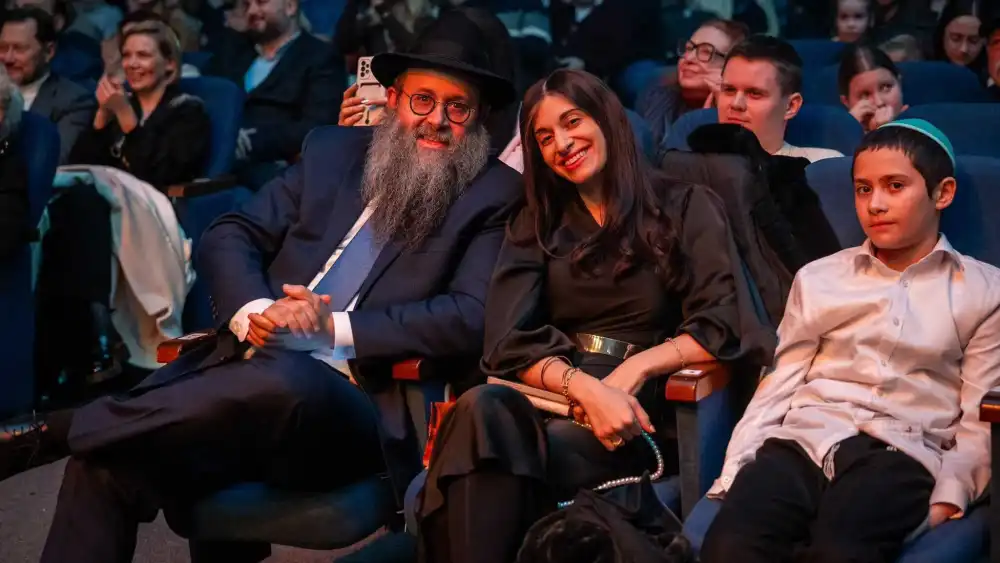
He married Kaila Estrin, of Pittsburgh, who had also staffed camps in the former Soviet Union. The couple decided to settle in Pasadena, Calif., in 2006. Then a call came from the chief rabbi of Russia. A rabbi was needed urgently for a city of about 15,000 Jews. Danzinger said no. Then he heard the name of the city.
‘Thirsty for Judaism’
For members of the Chabad-Lubavitch movement, Rostov is a very significant place. It was the wartime home of Sholom Dovber Schneersohn, the fifth Lubavitcher rebbe, and his burial place. From 1915 to 1924, it was the center of the movement. It is also the site of Zmievskaya Balka, where the Nazis killed about 27,000 Jews in 1942. It was the largest massacre of Jews during the Holocaust on Russian soil.
The couple agreed to stop by in Rostov “for a couple of days” en route to a vacation in Israel.
On Friday night, they went to the Cantonist Synagogue, which Jewish conscripts, who were forced into 25‑year terms of czarist military service, built in 1872. They found elderly Jews “thirsty for Judaism” and thrilled to have a rabbi to whom they could pose long‑buried questions.
After they returned to California, the couple decided they were needed more in Rostov than in Pasadena. They drove across the country to New York, sold their car, and in 2008, moved to Russia with their four children.
Even though Danziger knew he was going somewhere without Jewish infrastructure, he didn’t initially appreciate how much need there was.
Within a few weeks, he was told that a Jew had died and asked when the funeral would be. He was shocked to learn that there was no chevra kadisha, Jewish burial society, and that he had to learn, on the job, how to prepare bodies for internment.
He also founded a soup kitchen and an organization for young people with special needs, which later became a year-round center and camp staffed with physicians and therapists. He also, over time, developed supply lines from Moscow for Russian-language Jewish texts.
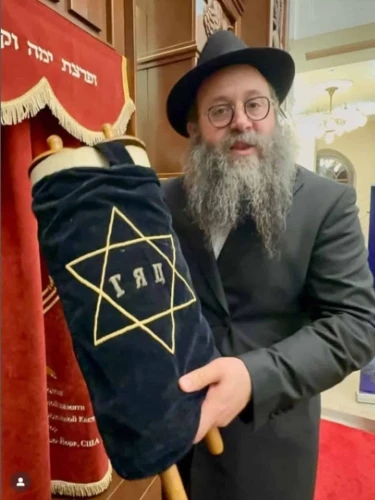
One area he found didn’t need much help was Passover observance. Even as Soviet authorities had cracked down on religious practices, they couldn’t police every kitchen.
“Russian Jews,” he told JNS, “always knew we must get matzah.”
Today, the community distributes between three‑and‑a‑half and four tons of matzah annually and hosts a Seder, which drew about 700 people to the shul last year. Many pitched in and cooked fruits, vegetables, meat and fish—“the way it used to be in the shtetl,” the rabbi told JNS.
This has happened under the shadow of Russia’s war against Ukraine.
Rostov’s airport is closed, so there are no direct flights to Moscow or Israel. To get to New York, one has to drive six hours to the nearest functioning airport, then fly to Turkey before connecting to another flight. The whole journey can take 26 to 33 hours, Danziger told JNS.
Given its location, some three hours from Mariupol, which has been devastated in the war, the Jewish community in Rostov has helped house and feed several hundred Jewish refugees and help them continue on to Israel and Germany, and in some cases, to settle in Rostov, according to the rabbi.
On Chanukah last month, some 2,000 people came to a concert in Rostov to hear the Turetsky Choir from Moscow, Danziger said. “This Chanukah, we gathered with heavy hearts and increased security,” he wrote on social media. “Still, we chose to gather.”
He opted to include the Cantonist Synagogue in the city’s “museum night,” an annual cultural festival in which Russian institutions stay open late. He expected a few people to show up. Instead, he told JNS, hundreds lined up outside for a chance to tour the sanctuary.
In turbulent times, he said, there can be a “big blessing.”


