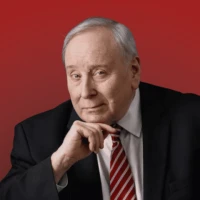
At a time when most Americans have lost the ability to listen to people with opposing views on political issues, how can a fractious Jewish community that is also split on denominational lines pull together?
That’s the question posed by JNS editor-in-chief Jonathan Tobin. He believes that Jewish disunity has been exacerbated by the capture of the political left, which is still supported by the majority of Jews, by anti-Israel and antisemitic “progressives.” This puts even more pressure on Jewish liberals to conform to fashionable opinion on the left that poses a threat to their community’s interests and safety.
He’s joined in this week’s episode of “Think Twice” by DePaul University Law professor Roberta Kwall, author of the new book, Polarized: Why American Jews Are Divided And What to Do About It. She believes that a vital Jewish center can be reconstituted if people realize that what unites them is still greater than those who seek to tear them apart.
Part of the problem is that Israel, which was once thought to be a unifying factor, is now the greatest source of division, with many unaffiliated or liberal Jews no longer supportive of it, and a small but well-publicized minority actively opposed to Zionism.
At the core of her effort is a statement of largely anodyne principles that she believes the overwhelming majority of Jews agree on. Among them is support for the right of Israel to exist as a Jewish and democratic state, as well as the legitimacy of criticizing its government.
But for Kwall, equally important is the need to re-emphasize education and the importance of tradition to reinforce Jewish identity. In such a context, it will be easier for Jews who disagree on politics or aspects of Israeli policy to listen to each other and find common ground.
Listen/Subscribe to weekly episodes on Spotify, Apple Podcasts, YouTube Music, iHeartRadio or wherever you listen to your podcasts.
Watch new episodes every week by subscribing to the JNS YouTube Channel.