
A recent Washington Post article asks whether the word “Zionism” has become so controversial, so misunderstood and so burdened by politics that perhaps Jews should stop using it.
Some of the Jewish leaders interviewed by the Post believe the word has been distorted beyond usefulness. Others insist that it still expresses something fundamental: the right of the Jewish people to self-determination in their ancient homeland.
Rabbi Rick Jacobs of the Union for Reform Judaism says the term has been “demonized,” although he continues to call himself a Zionist. Harvard University scholar Derek Penslar makes perhaps the most intriguing observation of all: Zion, he notes, is a biblical word expressing an aspiration.
That last point deserves much more attention, because for me, Zionism did not begin with Theodor Herzl. It did not begin with the First Zionist Congress in Basel in 1897. It certainly did not begin with Israeli Prime Minister Benjamin Netanyahu, settlements, Gaza or any of the other subjects that dominate today’s arguments over Israel. It begins with the Bible.
Long before anybody coined the word “Zionism,” Jews were reading about a return to their land. They were praying for it. They were facing Jerusalem when they prayed. At weddings, they remembered Jerusalem. At the Passover seder, they looked forward to “next year in Jerusalem.”
Certainly, Herzl did something remarkable. He took an ancient Jewish yearning and built it into a modern political movement. But he did not invent the yearning.
The Bible speaks of a scattered people being gathered and returned to the land of their ancestors. Isaiah envisions the dispersed of Israel coming back together. Ezekiel describes God taking His people from among the nations and bringing them back to their own land.
When I walk through Jerusalem today, Zechariah does not seem remote to me.
One need not believe, as I do, that our generation has been privileged to participate in the realization of those ancient promises. Jews have disagreed for generations about how to understand them, when redemption will come and what role human beings should play in bringing it about.
I have no interest in questioning another Jew’s religious faith because he reads those passages differently. But I do ask that those debating whether Zionism has become an embarrassing or expendable word understand why some of us are unwilling to surrender it. For us, Zionism is about more than politics.
Nowhere do I feel that more personally than in Jerusalem.
The prophet Zechariah paints an almost startlingly ordinary picture of the city’s future. Elderly men and women will again sit in Jerusalem’s squares, staffs in their hands because of their age. Those same streets will be filled with boys and girls playing. Then comes the declaration of something miraculous: God will bring His people back from east and west to live in Jerusalem.
I came to Israel as a citizen late in life. So, when I walk through Jerusalem today, Zechariah does not seem remote to me.
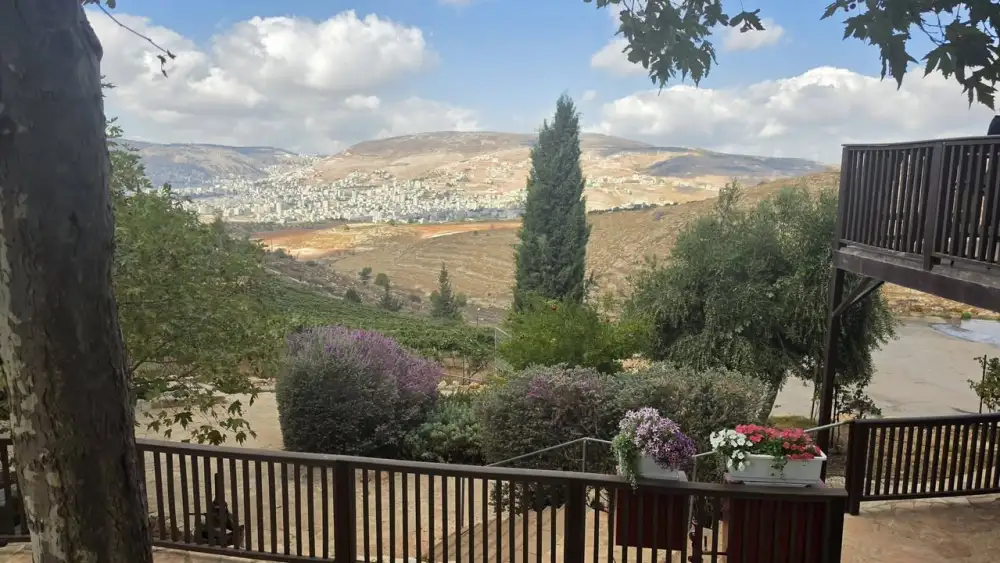
I see elderly men and women sitting on benches; some walk with canes. I see children racing down sidewalks and playing in parks. I see parents pushing baby carriages and grandparents surrounded by grandchildren. I hear Hebrew spoken as the everyday language of ordinary people buying groceries, arguing with taxi drivers, going to school and complaining about the weather. I see Jews whose families came from Europe, North Africa, Russia, Ethiopia, Yemen, America and elsewhere living together in the city Zechariah described.
I don’t offer the scene outside my window as a theological proof. Faith cannot be reduced to a photograph. But I know what it means to me. I know what it means to walk the streets of Jerusalem not as a tourist but as a citizen of the Jewish state and realize that for most of Jewish history my ancestors could only dream of doing what I am doing.
When Zechariah described old men and women and children once again filling Jerusalem’s streets, could generations of Jews who read those words during exile have imagined the Jerusalem I see today? I believe there is something profoundly significant in the fact that I have lived long enough to become one of those returning Jews. That is why the current argument about whether to retire the word “Zionism” seems incomplete to me.
Critics can debate Israeli governments. We Israelis certainly do. One can oppose a policy, condemn a politician or argue passionately about Israel’s future without abandoning Zionism. The existence of a Jewish state does not make every decision of that state sacred, and believing that the Jewish return has religious significance does not turn every act of an Israeli government into God’s will.
But those are political questions. Zion is something older. It survived Babylon. It survived Rome. It survived dispersion. It remained in Jewish prayer and memory through centuries in which the possibility that Jews would again govern themselves in their ancestral homeland must have seemed fantastical. Yet now, here we are.
Perhaps the most remarkable words in Zechariah’s vision come immediately after he describes the elderly and the children in Jerusalem. Is something that seems impossible to the people, God asks, must it therefore be impossible to Him? That verse speaks to me every time I look around Jerusalem.
So, others are free to decide that the word Zionism has become inconvenient, misunderstood or politically unfashionable. I cannot. I have seen Zion. I live there.