Muslim countries submitted a draft resolution to the United Nations on Tuesday, calling for the establishment of an international commission of inquiry to investigate potential human-rights violations during the recent fighting between Israel and terrorist groups based in the Gaza Strip.
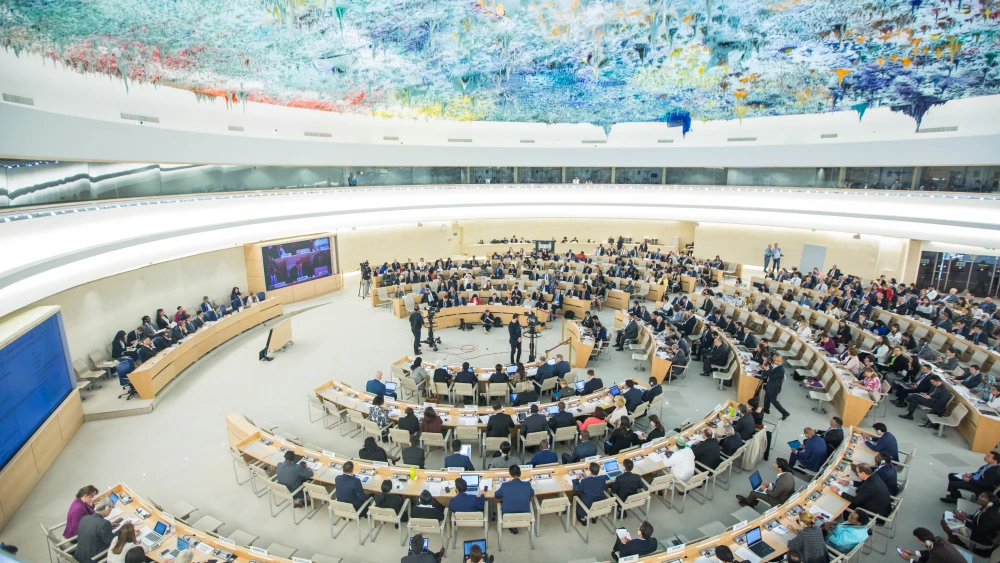
The U.N. Human Rights Council will hold a special session on the conflict on Thursday, at the request of Pakistan, as coordinator of the Organization of Islamic Cooperation, according to Reuters.
The draft resolution calls for an examination of the root causes of the conflict, “including systematic discrimination and repression based on national, ethnic, racial or religious identity,” according to the report.
The investigative team would be tasked with collecting and analyzing evidence, including forensic evidence, and report its findings next June.
Israeli Ambassador to the United Nations Meirav Eilon Shahar called on UNHRC member states on Thursday to “strongly oppose” the special session, which she called “a testament to the clear anti-Israeli agenda of this body.”
“The sponsors of this session are only rewarding the actions of Hamas, a terrorist organization, that has indiscriminately launched over 4,000 rockets at Israeli civilians, using the people of Gaza as human shields,” she tweeted.
U.S. Secretary of State Antony Blinken announced in February that the United States would return to the UNHRC despite its “flaws,” after the Trump administration withdrew from the international body in 2018, citing its anti-Israel bias and inclusion of countries with deplorable human-rights records, such as China and Venezuela.
UNHRC sessions present a permanent feature called “Agenda Item 7” that forces discussion about the “human-rights situation in Palestine and other occupied Arab territories,” resulting in more resolutions historically passed against Israel than against any other country.
“We recognize that the [U.N.] Human Rights Council is a flawed body in need of reform to its agenda, membership and focus, including its disproportionate focus on Israel,” Blinken said in February. “However, our withdrawal in June 2018 did nothing to encourage meaningful change, but instead created a vacuum of U.S. leadership, which countries with authoritarian agendas have used to their advantage.”