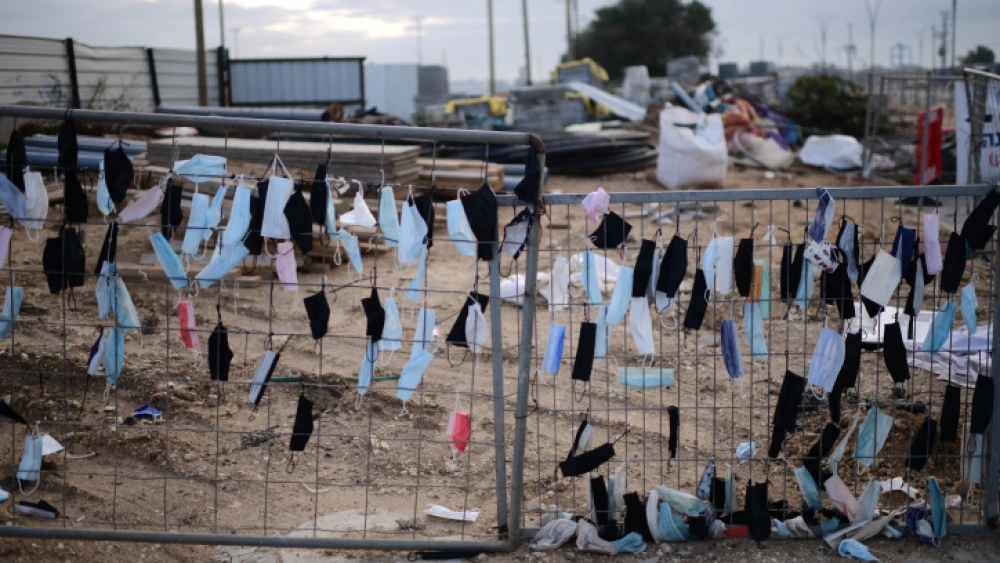
Israel’s indoor mask mandate ended on Saturday evening, marking the first time since the outbreak of the pandemic in 2020 that Israelis are no longer required to wear masks in enclosed public spaces.
Announced by Israeli Prime Minister Naftali Bennett and Health Minister Nitzan Horowitz on Wednesday, the measure came into effect at 8 p.m on Saturday.
The mandate remains in effect however for locations designated as “high-risk,” such as hospitals, nursing homes and flights. Individuals on the way to quarantine are also still required to wear masks.
The cancellation of the mandate is the continuation of Israel’s policy of “life alongside the coronavirus. Without panic, responsibly and with consideration,” said Horowitz on Wednesday. “The policy has proven itself, and this is how we will continue. We will carefully track the disease, and we will provide all means of defense: vaccines, testing and medicine. We will maintain health as well as routine life,” he added. The indoor mask mandate has been in place since the outbreak of the pandemic in March 2020, except for a brief two-week period in the summer of 2021.
This article first appeared in Israel Hayom.