
The most consequential political decision of my childhood was one I never had the chance to make. In 1979, I was a girl in Iran, watching a revolution reorder the country whose future would become my own. I had no vote, no influence over the men promising liberation, and no way to imagine how thoroughly their victory would shape the lives of women like me.
Forty-seven years later, as Americans prepare for the Nov. 3 midterm elections, I return to that childhood not to predict another Iran, but to explain a distinction no free society can afford to forget: the difference between protecting religion and allowing religion to govern the rights of others.
Iran’s revolution brought together liberals, nationalists, leftists, Islamists and ordinary citizens opposed to the monarchy. Their aspirations were not identical. Some wanted independence, others justice, others democracy. Yet from those competing ambitions emerged a system in which Ayatollah Ruhollah Khomeini’s interpretation of religious authority acquired supremacy over elected institutions. Under velayat-e faqih, the guardianship of the Islamic jurist, the state claimed an authority that ordinary citizens could neither meaningfully challenge nor freely reject.
The tragedy was not simply that political promises went unfulfilled. It was that the state acquired the power to define obedience as virtue and dissent as transgression. The language of faith became the machinery of government. Personal conscience, which should belong to every human being, became a matter for police, prosecutors and judges.
Americans sometimes speak of Sharia law as though it were a single rulebook embraced uniformly by the world’s Muslims. It is not. Islamic traditions encompass varied schools of jurisprudence, practices and political convictions. Countless Muslims defend secular government, equal citizenship and freedom of conscience. To confuse their faith with the coercive ideology of Iran’s rulers would be both inaccurate and unjust.
But acknowledging this diversity cannot excuse the laws the Islamic Republic actually enforces. Iran’s penal code assigns different evidentiary weight to male and female witnesses in specified proceedings. Its traditional rules on diya, financial compensation for death or injury, distinguish between men and women, even though later reforms have addressed some payment disparities. A woman’s legal standing should never depend upon an arithmetic of gender.
The code also prescribes 80 lashes for consuming alcohol, retains stoning as a statutory punishment for certain adultery convictions and imposes punishments that can include death for specified consensual sexual acts between men. Those who leave Islam face serious risks under laws and judicial interpretations used against religious dissent, although apostasy is not separately codified as an offense. These are not hypothetical controversies in a seminar on theology. They concern bodies, families, liberty and lives.
Freedom requires more than the exhilaration of a political victory.
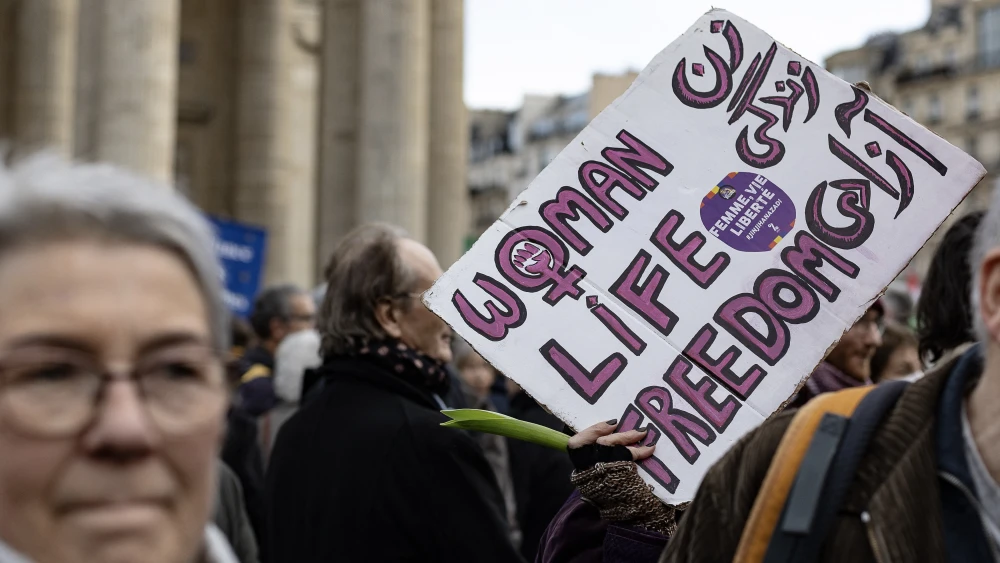
For Iranian women, the most visible assertion of religious power has been the compulsory hijab. Enforcement has fluctuated, and many courageous women now publicly defy the mandate. Yet the legal requirement has not disappeared. A government that claims the right to decide how a woman must dress has crossed a boundary that cannot be defended merely by invoking tradition or religious conviction.
Consider the terror that gripped Isfahan in 2014. Acid attacks against women shocked the country and prompted public protests. The attackers’ motives were never conclusively established; the crimes must not be presented as proven enforcement of a religious rule. Yet the fear unfolded against a political climate in which officials had long treated women’s clothing as a public matter demanding state control. That context cannot be ignored.
This is why I insist upon separating Islam, a religion practiced by individuals, from political Islam, a spectrum of movements seeking to give religious ideas political authority. Those movements differ profoundly; participation in democratic politics is not equivalent to advocacy of theocracy. Nor does a Muslim candidate’s identity disclose anything reliable about that candidate’s constitutional commitments. Religious affiliation is not evidence of a political program.
The proper questions are about law and power. Does a candidate accept the Constitution as the supreme law of the United States? Will that candidate protect the equal citizenship of women and men, believers and nonbelievers, religious minorities and LGBTQ Americans? Will the right to criticize a religion, leave it or practice no religion remain protected? Will private consensual behavior be judged by civil law and constitutional rights, rather than an imposed theology?
These questions apply across religions and parties. A Christian officeholder who seeks to impose religious restrictions on other people’s liberties deserves the same scrutiny as a Muslim officeholder proposing comparable laws. The American promise is not that government privileges the right religion. It is that government protects the rights of people who believe differently.
Endorsements should not obscure that test. Whether a candidate is praised by former President Barack Obama, Republican leaders or another powerful public figure, voters deserve to know what the candidate has said, proposed and done. It is legislation, constitutional principle and public accountability—not slogans or insinuations about someone’s identity—that should guide serious scrutiny.
Israel’s Oct. 27 election has also brought questions of national security, religious influence and democratic governance into sharp public view. Israel and the United States have distinct histories, institutions and political disputes. Neither country should be treated as a replica of Iran. Yet each confronts the enduring challenge of ensuring that political authority remains accountable even when leaders invoke history, faith or national destiny.
On Nov. 3, Americans will elect a new U.S. House of Representatives, part of the Senate, and numerous state and local officials. They will disagree about immigration, taxes, national security, education and countless other issues. Such disagreements are the ordinary substance of democracy. Beneath them lies a more lasting question: What limits must government respect, regardless of who wins?
I think often of the children of 1979. The adults disputed ideology and power. The children inherited institutions they had not chosen and restrictions they could not vote away. I was one of them. That is why this subject is not an abstraction to me or an invitation to fear one’s Muslim neighbors. It is a plea to recognize that religious liberty includes freedom from religious compulsion.
The lesson of Iran is not that America is destined to repeat our history. It is that freedom requires more than the exhilaration of a political victory. It requires laws that protect conscience against those who claim a sacred exemption from accountability.
Democracy is not measured only by the ballots counted on election night. It is measured by the liberties that remain secure the morning after.