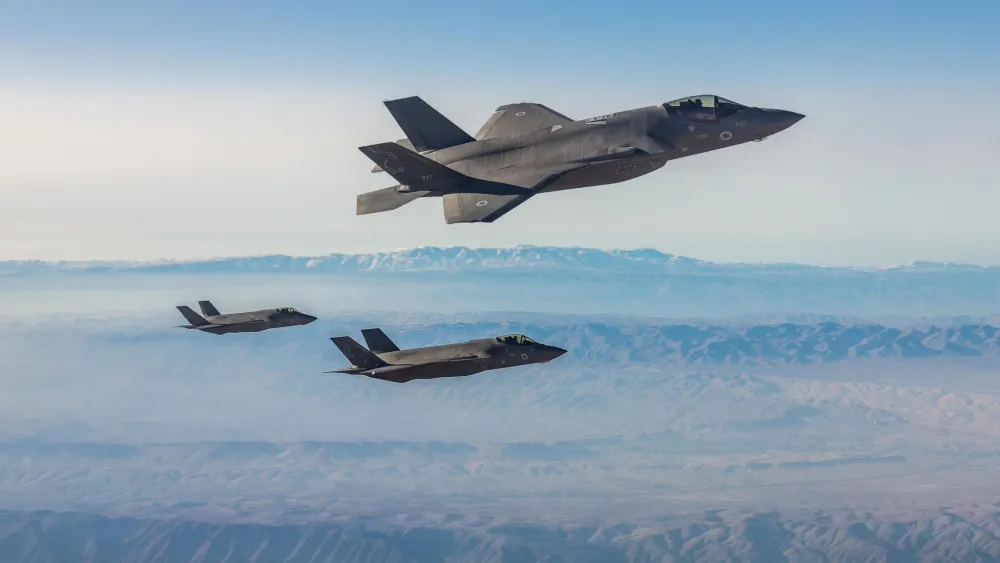
The global fleet of Lockheed Martin F-35 Lightning II stealth fighter aircraft has surpassed 1 million cumulative flight hours, according to the program’s latest monthly update released at the beginning of July.
A total of 1,340 F-35 aircraft are now operating from 55 air bases and aircraft carriers in 12 countries around the world.
More than 3,500 pilots and 21,240 maintenance personnel have been trained to operate and support the fifth-generation fighter.
Fourteen operators have declared Initial Operational Capability (IOC), while eight have employed the aircraft in combat operations.
Israel was the first country to use the F-35 operationally and flies a customized version known as the F-35I “Adir.” Since the Hamas massacre on Oct. 7, 2023, the Israeli Air Force has used the aircraft extensively in defensive and offensive operations across multiple fronts, including long-range strikes against Iran.
In January, Israel received three additional F-35I aircraft at Nevatim Air Base in the Negev, expanding the Israeli Air Force’s fleet. The aircraft joined the 116th and 140th squadrons.
Unlike standard F-35 variants, the Israeli “Adir” incorporates Israeli-developed electronic warfare and intelligence systems, mission software and domestically integrated weapons tailored to the Israel Defense Forces’ operational requirements.
In May, the Israeli government approved the purchase of an additional F-35 squadron and a second squadron of F-15IA fighter jets as part of the “Israel Shield” defense procurement program.
Israeli Defense Minister Israel Katz said at the time that the acquisition would preserve the Israeli Air Force’s qualitative edge “ahead of future missions” and marked the first phase of the IDF’s decade-long force buildup plan under a 350 billion shekel (about $95 billion) budget.
The additional aircraft are intended to bolster Israel’s long-range strike capabilities and ensure continued air superiority amid evolving regional threats.