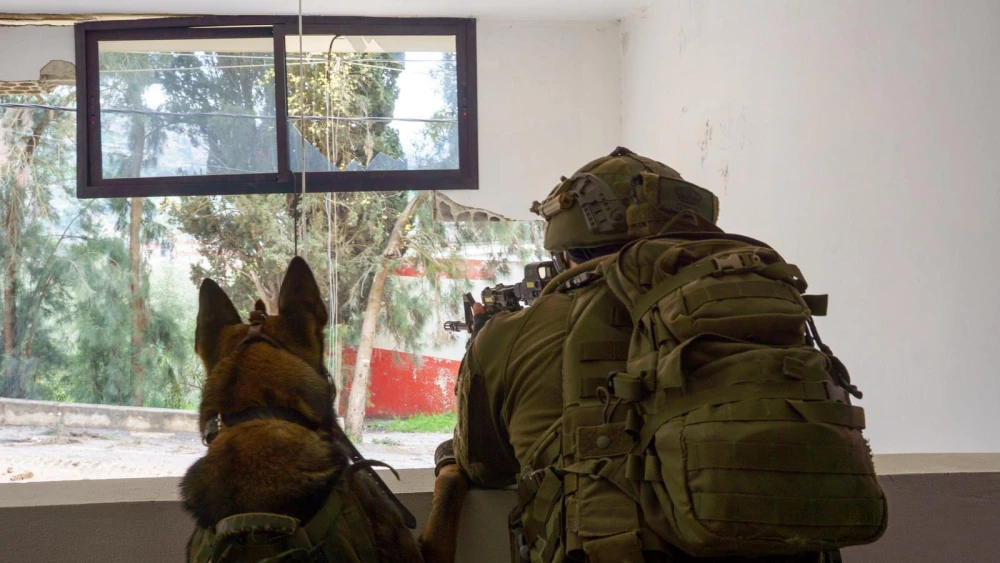
The Israel Defense Forces on Saturday eliminated an armed terrorist who entered the security zone in Southern Lebanon, the military said.
Soldiers identified the terrorist during operations in the Majdal Zoun area, some six miles from the Jewish state’s northern border, according to the statement.
“Following the identification, the soldiers responded to the threat and opened fire at the terrorist. Following extensive searches, the soldiers eliminated the terrorist,” it stated.
The IDF described the infiltration of the security zone as a “blatant violation” of the ceasefire agreement with Lebanon and said it would “continue operating to remove any threat to its soldiers and Israeli civilians.”
Hezbollah renewed its rocket and drone attacks from Southern Lebanon on Israel on March 2, following the targeted killing in Tehran of Iranian Supreme Leader Ali Khamenei on the first day of “Operation Roaring Lion” on Feb. 28.
In response, Jerusalem launched a broad aerial campaign against Hezbollah targets and expanded military operations in Lebanon aimed at preventing cross-border attacks on Israeli communities.
Following the resumption of hostilities, Lebanese President Joseph Aoun vowed to do “the impossible” to stop cross-border hostilities between Israel and Hezbollah, and moved to outlaw the Iranian proxy.
Israeli and Lebanese officials subsequently held five rounds of historic direct talks at the U.S. State Department, resulting in the framework of understandings that was reached on June 26 and is conditioned on Hezbollah being removed from the south.