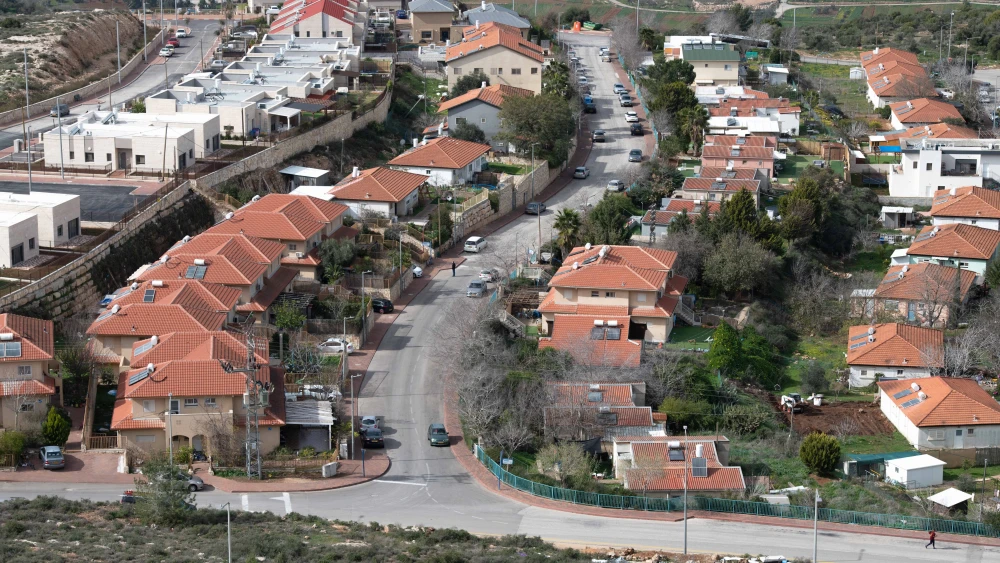
A large-scale initiative to establish new Israeli communities in the Binyamin region of southern Samaria is advancing following approval by the Security Cabinet on Thursday of 13 new communities. Officials said the first wave of development is expected in the coming months.
The Binyamin Regional Council described the plan as involving millions of shekels in investment and as one of the most significant community-building efforts in recent years.
According to the council, initial planning has already begun for a first phase in which four to six communities are expected to be established. Some sites will be developed entirely from the ground up, while others will be based on existing farm outposts that will be formalized into permanent localities.
The Yesha Council—an umbrella organization representing Jewish communities in Judea and Samaria—said the initiative was being advanced in coordination with the government.
“At the behest of the Security Cabinet, we are leading, together with the government, one of the largest community-building moves that Binyamin has seen in recent decades,” said Binyamin Regional Council Chairman and Yesha Council head Yisrael Gantz.
“From the west of the seam line to the eastern expanses, where our ancestors walked, we are establishing new communities and strengthening the heart of the country,” he added.
In West Binyamin, planned communities include Natuf, Zvada and Neot Harim. In East Binyamin, Deya, Matzoki Eretz and Kanfei Shahar are being advanced. Additional communities are expected in later phases under the broader government-approved framework.
Officials said the initiative focuses on two strategic corridors: the “Mountain Route” in western Binyamin, linking Jerusalem to central Israel, and eastern areas overlooking the Jordan Valley. They said strengthening civilian presence in these areas is intended to enhance regional security and reinforce control over key transportation routes.
Israeli officials also said the project is intended to counter the Palestinian Authority’s “Fayyad Plan,” which seeks to expand Palestinian territorial control in Judea and Samaria.
“The equation here is simple: either there will be a strong Israeli presence here, or Ramallah will control the hills overlooking Ben-Gurion Airport and the Dan Bloc,” Gantz said.
Minister of Settlement and National Missions Orit Strook said the approval reflects a long-term strategic effort.
“For the past three-and-a-half years, we have been correcting the damage of 30 years of Oslo, and community-building is a central pillar of this process,” Strook said. “We are restoring areas that were left without presence and creating a stronger security reality on both sides of the seam line.”