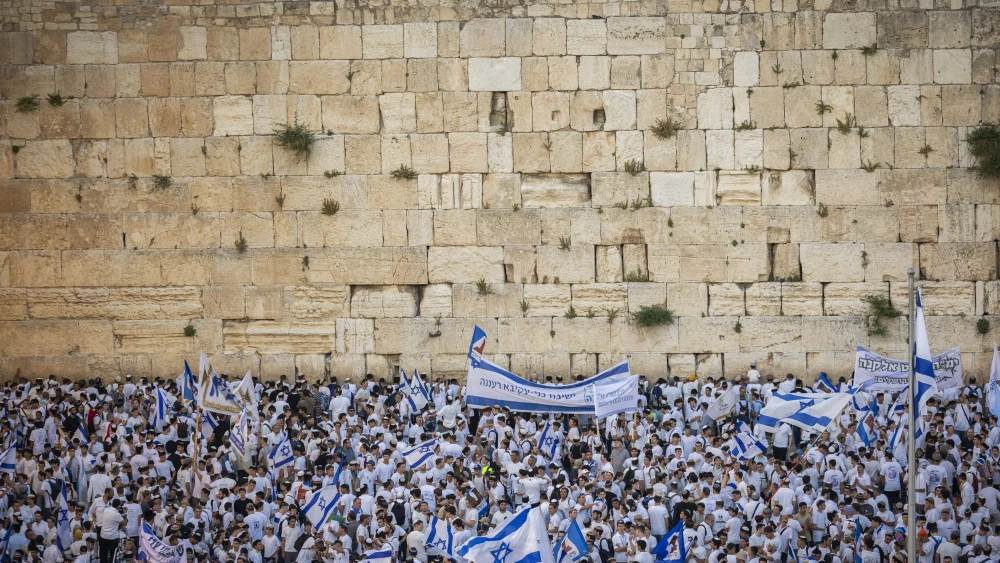
Israel on Sunday marked the 59th anniversary on the Gregorian calendar of its capture of eastern Jerusalem and reunification of the capital during the 1967 Six-Day War.
On June 7, 1967, the Jewish people returned to the heart of their ancient capital. Jerusalem was reunited in a moment of historic joy and liberation.
— Israel ישראל (@Israel) June 7, 2026
For 2,000 years, Jews kept Jerusalem alive in their prayers, dreams, and collective memory. Yet for 19 years (1948–1967), the… pic.twitter.com/4Pos6tOK6u
June 7, 1967, marked the day “the Jewish people returned to the heart of their ancient capital,” according to an Israeli Foreign Ministry X post.
It described the reunification of the holy city as a moment of “historic joy and liberation.”
The MFA’s statement highlighted the significance of Jerusalem in Jewish history and tradition, noting that Jews maintained a connection to the city for centuries through “prayers, dreams and collective memory.” However, during the Jordanian occupation between 1948 and 1967, “the city was divided, and Jews were barred from the Old City and the Western Wall, the holiest site where Jews can pray,” it noted.
The ministry noted that since the 1967 reunification, Israel’s capital has remained open to all faiths, with Jerusalem guaranteeing freedom of worship and access to holy sites.
The statement concluded by declaring that “Jerusalem is the eternal, undivided capital of Israel.”
The Jewish state generally celebrates Jerusalem Day on the 28th day of the Hebrew month of Iyar, which this year fell on May 14-15.