


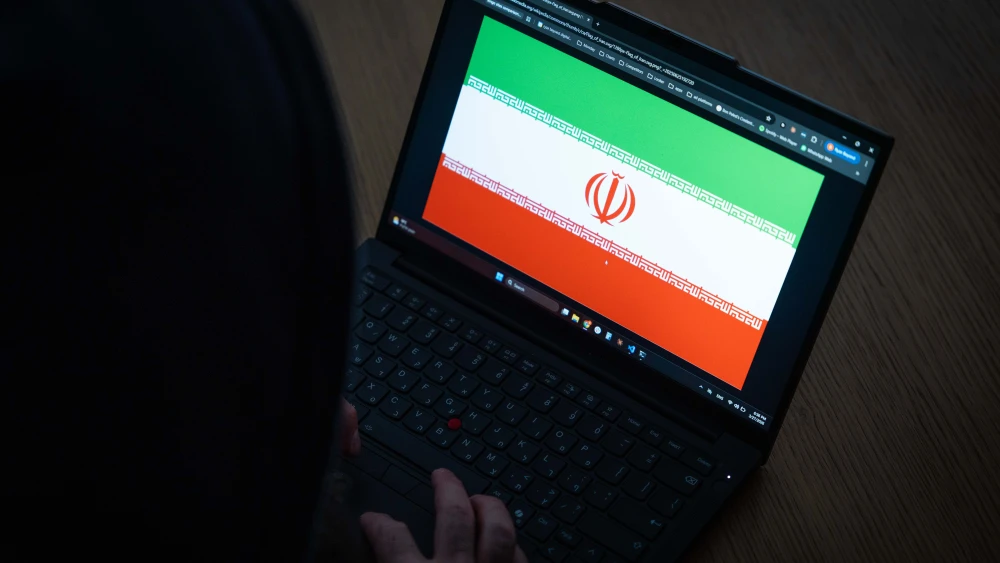
Many Israeli citizens have recently received threatening text messages from Iran designed to sow panic.
The National Cyber Directorate said it had identified a broad attack that included messages meant to undermine Israelis’ collective peace of mind, Ynet reported on Tuesday.
Iran’s attempt at “cognitive warfare,” was to send threatening messages to spur the recipient to act emotionally. One Israeli who received the messages said that six different texts came in an hour, all from different numbers, Ynet reported.
”Cognitive warfare” emerged as a distinct modern concept between 2017 and 2020, gaining prominence through NATO and U.S. military research as a framework for weaponizing neuroscience, data and social media to influence how populations think and behave.
Iran’s goal was to cause “cognitive collapse” by disrupting recipients’ OODA Loop, Ynet reported. The OODA Loop is a decision-making framework built around four stages: Observe, Orient, Decide and Act. Developed by military strategist and U.S. Col. John Boyd in the 1970s, it was designed to help individuals and organizations make effective decisions in fast-changing environments.
“Relying solely on officials is the best defense against these attempts at social engineering. Ultimately, it is a battle for consciousness in which technology is only a means. The goal is our concentration and resilience. When the Iranians try to scare us in the middle of the night, the best response is probably to just go back to sleep,” Ynet advised.
Not all the messages were threatening. One offered an employment opportunity: “The Islamic Republic of Iran invites you to participate in the intelligence field. To take part, contact one of the Iranian embassies in various countries, or one of the Iranian cyberactivists on the Internet. Build your future now.”
The possibility is not far-fetched. Israel has dealt with several cases of citizens who have been recruited by Iran. On May 8, the Haifa District Prosecutor’s Office indicted a civilian and three Israel Defense Forces soldiers for allegedly carrying out spying missions for Iranian intelligence agents.



