A Lufthansa flight from Israel to Frankfurt made an emergency landing in Belgrade on Sunday night after a flight attendant suffered a life-threatening allergic reaction mid-flight. An Israeli intensive care physician aboard the plane administered emergency treatment after the attendant’s EpiPen was incorrectly used.
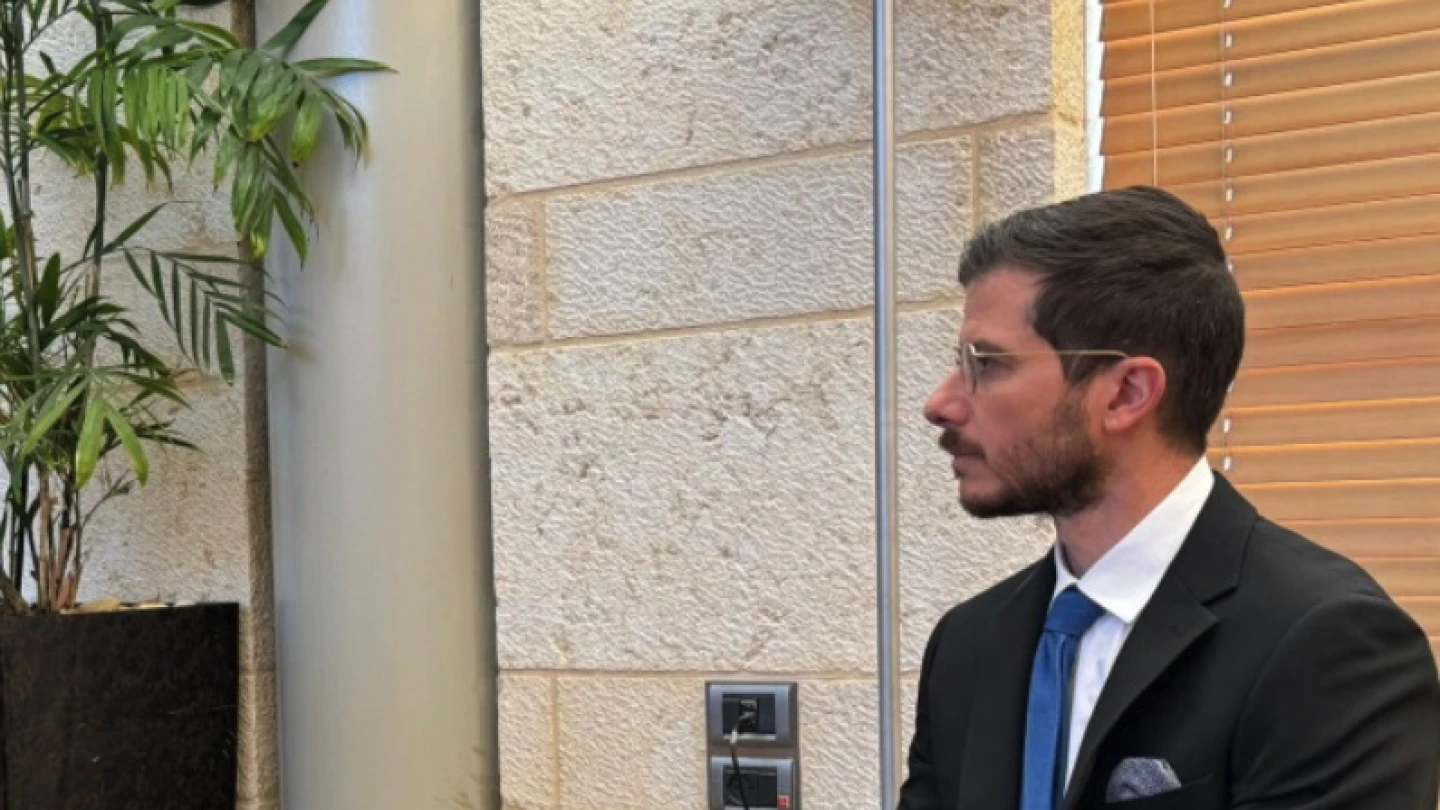
Dr. Uriel Trahtemberg, director of the Intensive Care Unit at Galilee Medical Center in Nahariya, responded to a call for medical assistance after the crew member accidentally ingested sesame and collapsed.
Trahtemberg found that the attendant’s EpiPen had not delivered its medication. He located adrenaline in the aircraft’s emergency medical kit and administered an injection, helping to stabilize the patient. He then urged the captain to divert immediately. Local paramedics were waiting when the plane landed in Belgrade and took the attendant to a nearby hospital.
In a phone interview with Israel Press Service, Trahtemberg, who was traveling to Düsseldorf to attend a medical equipment exhibition, played down his role.
“I gave someone medical treatment. I don’t know if that’s heroism,” he told TPS-IL. “There was no heroism here. There was professionalism. We did what was needed, the way it was needed.”
The plane was about a third of the way to Frankfurt when an announcement called for medical assistance. “I go over, and there’s someone sprawled on the floor, confused, half-conscious,” he recalled.
Two other physicians, a gynecologist and a neurologist, were already helping. The three divided the work, with the other doctors attending to the patient while Trahtemberg questioned a colleague to establish what had happened.
The colleague said he had already administered the patient’s EpiPen. Trahtemberg wanted to verify that it had been used properly.
“I wanted to make sure he really gave it, and gave it correctly, because people don’t realize it’s not trivial,” he said. It turned out the medication had not been administered. The colleague had accidentally discharged it into the air while trying to demonstrate how he had used it.
Meanwhile, the patient’s condition continued to deteriorate. He tried to vomit, fainted several times, and developed swelling around his lips. His pulse was weak, although his breathing remained stable.
“It was clear this could develop in very bad directions. With an anaphylactic reaction, you don’t know where it’s going,” Trahtemberg said.
He explained that anaphylactic shock can cause fluid to leak from blood vessels into surrounding tissue, reducing the volume of blood circulating through the body. The patient needed adrenaline.
Trahtemberg opened the aircraft’s emergency medical kit, found the medication, prepared the dose, and injected it.
“Luckily, this is my profession. I know it by heart. I don’t need to check doses. I do it every day,” he said.
The attendant stabilized somewhat after the injection. Trahtemberg then spoke with the pilot, urging him to land as soon as possible. The plane reached Belgrade within approximately 20 to 25 minutes.
Passengers applauded as paramedics carried the attendant off on a stretcher. Trahtemberg returned to his seat.
“There was a bit of applause, it was nice,” he said. Asked whether Lufthansa had rewarded him, he laughed: “I didn’t get anything. I got many thanks.”
Trahtemberg said he was focused entirely on treating the patient during the emergency. “You’re locked on the goal. You don’t feel anything, you’re working.”
The satisfaction came afterward. “The smile, the good feeling of, wow, I helped a person.”