It was while serving as a volunteer civilian medic during the Oct. 7, 2023, Hamas massacre in southern Israel, treating several badly wounded soldiers, that Shalom Avitan’s life would change forever.
The 26-year-old recalled treating a badly wounded Israeli reservist in his 30s who had been shot in the leg and had shrapnel wounds throughout his body in Kibbutz Kfar Aza, near the Gaza border. The reservist pushed him up against the ambulance and insisted that he treat his more seriously wounded comrade first.
“Then and there I decided to make a switch in my life,” Avitan told JNS in an interview last week. “Out of compassion, camaraderie and altruism, he was willing to give up his own treatment for his friend.”
A few weeks later, the then-23-year-old medic, who had spent most of his life studying in yeshiva, walked into an IDF recruitment office.
“I decided I want to be part of this amazing nation.”
An unexpected path
The decision to serve in the military, which set his life on a radically different course, was anything but expected.

Raised in the United Kingdom in an ultra-Orthodox family, Avitan was educated in the extremist Satmar movement, known for its vehement opposition to Zionism and the State of Israel.
At his yeshiva in Manchester, where even the thought of serving in the IDF was anathema, he was taught that there could be no Jewish state before the coming of the Messiah.
Nevertheless, at 18, Avitan came to Israel to study at a yeshiva in Jerusalem’s Mea Shearim neighborhood, where his English father had met his Israeli mother a quarter-century earlier. The family had moved back to Manchester shortly after he was born.
Two years after arriving in Israel, Avitan decided he was ready for a “change in life” and began working as a medic with the United Hatzalah emergency rescue organization.
Into the horrors of Oct. 7

On the morning of Oct. 7, Avitan received an urgent call instructing him to drive an ambulance south from Jerusalem to meet a unit doctor.
When he stopped at Barzilai Medical Center in Ashkelon to stock up on supplies, the reality of the crisis hit him as he saw the hospital’s corridors filled with patients lying on the floor.
“I understood we were going into a war zone,” he said.
After reaching the southern Israeli city of Sderot, Avitan saw rows of bodies in the streets.
“We started taking the bodies and making a strip on each body but didn’t have enough paper for that many bodies,” he said.
He and his team were then summoned to the devastated Kibbutz Kfar Aza, where their ambulance had to zigzag along the main road to avoid running over bodies.
At one point, they stopped to help a distraught mother recover her son’s burned body, which she had recognized by his shoes and necklace, he said.
Arriving at the hard-hit agricultural community, they set up a field hospital and “started working like robots.”
There, an Israeli military commander handed the young medic two 10-month-old twins, telling him that their parents, who had hidden the children in their safe room, had been murdered.
“I knew that this was my mission to take care of the babies,” Avitan said. “It was a very comforting moment amid all the tragedy.”
A photograph of the young medic holding the two orphaned twins in his arms became a symbol of both the horrors of the Hamas massacre and Israel’s resilience.
It later emerged that the twins had remained hidden in their home for 12 hours after their parents were murdered, until Israeli soldiers rescued them.
Avitan then began treating wounded reservists, including the soldier who insisted that his more seriously injured comrade receive treatment first.
“This was the moment that changed my life,” Avitan said.
The more seriously wounded soldier, who was unconscious, later succumbed to his injuries.

From yeshiva to combat service
A few weeks later, Avitan walked into the IDF recruitment center in Jerusalem and stunned the female soldier at the desk by telling her he wanted to enlist in a combat unit.
“I told her that there was no chance I would be in non-combat,” he recalled.
Much to his parents’ dismay, he served for two and a half years in a combat unit, including a stint as a squad leader.
In May, Avitan completed his military service, still determined to continue serving his country.
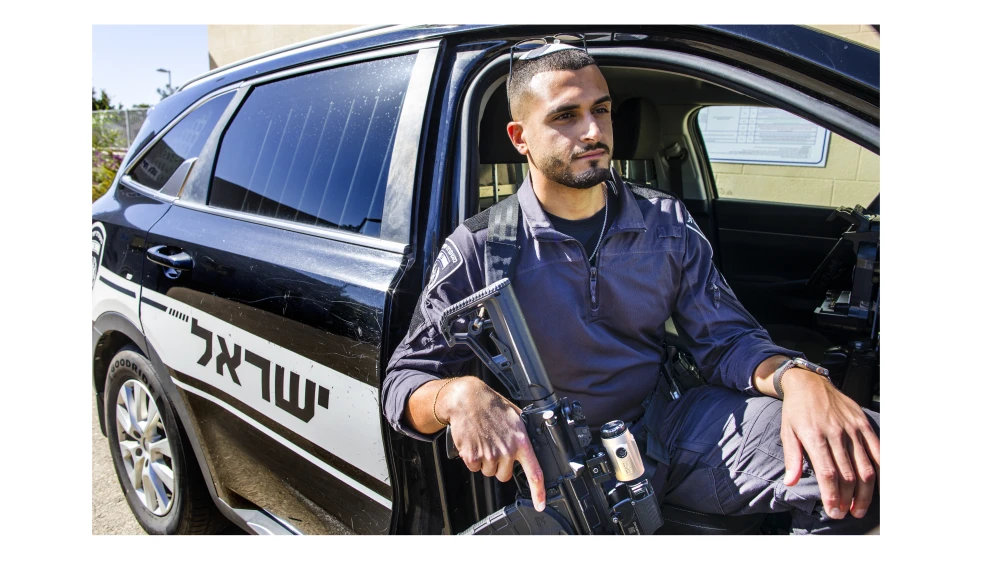
The following month, he joined the Israel Police’s Special Patrol Unit, which works to thwart terrorist attacks.
“When you know what you want to do in life, you don’t wait too much,” he said. “When you finish the army at 26, you don’t have time to fall in love with Thailand. I knew what my path is.”
A new calling
Reflecting on the soldiers and civilians who lost their lives on Oct. 7, Avitan acknowledged the questions that have stayed with him.
“You ask yourself why me and not them?” the former yeshiva student-turned-soldier and police officer said. “It has to come from your own will and choice.”
His girlfriend, a fellow Israeli police officer and avid supporter of his chosen path, is someone he plans to marry next year.
Last week, Avitan was recognized for excellence in his Israel Police training course.
“I feel it is my calling,” he said. “You come home—and you feel fulfilled.”