The leaders of Qatar and Turkey signed a mutual defense pact on Friday, further deepening ties between the two U.S. allies, who are frequently regional rivals of Israel.
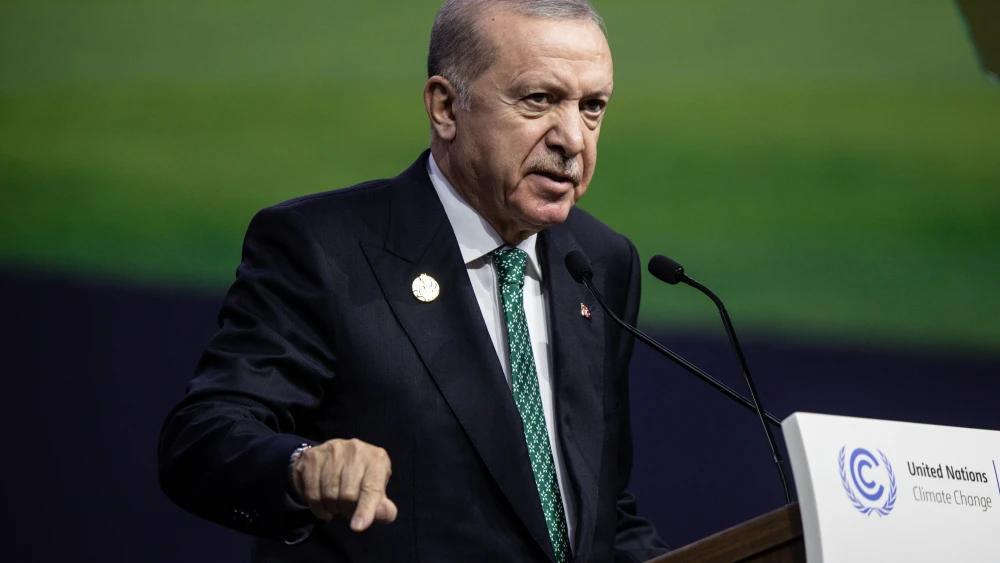
Turkish President Recep Tayyip Erdoğan stated that he and Qatari Emir Sheikh Tamim bin Hamad Al Thani signed the agreement, the text of which has not been released, to “add a new dimension” to relations between the two countries.
“Turkey and Qatar would continue their joint efforts to prevent the resumption of hostilities in the Gulf region, pave the way for dialogue and establish peace, emphasising the importance of encouraging the parties involved to resolve their differences through diplomatic means,” Erdoğan said.
The move follows a similar agreement binding Turkey, Saudi Arabia and Pakistan to mutual defense that was signed in Mecca in August and subsequently ratified by the three countries.
Qatar and Turkey have long been close partners in Middle East power politics, united by a shared affinity for Islamism, including support for the Muslim Brotherhood and Hamas, that has often put the two countries at odds with Israel and some Arab countries like the United Arab Emirates.
Turkey is also a treaty ally of the United States as a member of NATO, while President Joe Biden designated Qatar as a “major non-NATO ally” in 2022. U.S. President Donald Trump issued an executive order in 2025 pledging that the United States would “take all lawful and appropriate measures” to defend Qatar in the event of an armed attack against it.
Erdogan’s statement on Friday about the new defense pact did not explicitly name Iran, but Qatar has repeatedly been subjected to Iranian ballistic missile and drone attacks by the Islamic Republic after the United States and Israel launched the war against Iran in February.
Iran’s efforts to close the Strait of Hormuz have also continued to affect Qatar, even as the U.S. Navy has helped restore the transit of oil through the strait. Qatari transits of liquefied natural gas, which is the country’s main energy export, reportedly remain at only 30% of pre-war levels as the U.S.-led operation to re-open the strait has prioritized crude oil over other energy commodities.
Qatar has served alongside Pakistan as the diplomatic mediator between the United States and Iran in ceasefire talks, though Trump claimed on Monday that Qatar’s prime minister informed him that it supports the status quo of a U.S. blockade of Iran.
The signing of the defense pact between Sheikh Tamim and Erdoğan at Dolmabahçe Palace also highlighted the range of regional interests that the two countries now share.
“The meeting also addressed Israel’s attacks on Gaza and the humanitarian situation in the region, steps taken by Syria towards normalisation and the latest developments in Libya,” Erdoğan stated.