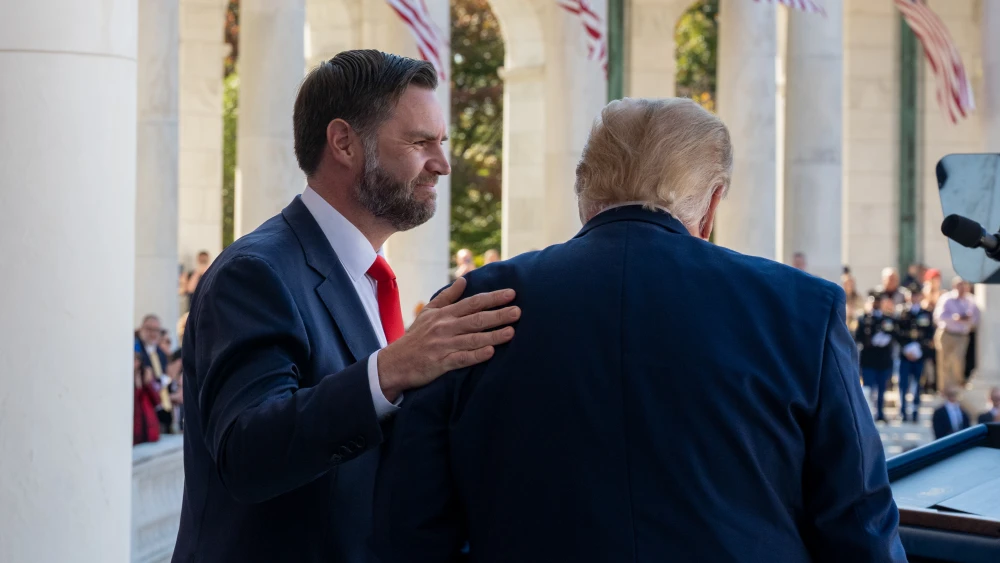

The midterm elections were disastrous for the Republican Party. But as bad as the results were for the Trump administration and GOP candidates around the country, they were even worse for the vice president. Less than two weeks after the debacle, JD Vance was unceremoniously fired from his position as chief diplomatic envoy charged with finding a way to end the conflict with Iran and diverted to an amorphous task of investigating corruption in Democratic-run cities and states.
This was not a promotion. Nor is it a post likely to produce headlines that will aid Vance’s efforts to succeed the president in 2028. It’s a clear sign that the Vance foreign-policy test drive that began last spring is finally over. That produced a Memorandum of Understanding with Iran that seemed to resemble previous American initiatives to deal with the Iranian threat by Democratic administrations under Presidents Barack Obama and Joe Biden. And it failed just as much as those efforts did, with Iran backing away from it almost immediately. They had quickly grasped that Vance was, like them, eager to appease their regime rather than a statesman who was willing to stand up to them.
An ironic demotion
Any plans for renewing that foolish effort have now been nipped in the bud.
It’s ironic. The vice president thought that he could get out ahead of the usual intraparty post-election circular firing squads that usually follow a catastrophe of such magnitude. He did so by blaming the defeat on his favorite scapegoats—the Iran war, as well as Israel and its supporters—in his election postmortem.
Not content to merely put the onus for the massive Republican losses on the policies that he opposed from inside the Trump tent, he also seems to have launched an initiative to renew his effort to appease the Islamist regime. He proposed, as The Wall Street Journal reported, to restart diplomacy with one of Tehran’s chief hardliners.
While Trump has sent the public a series of confusing and often contradictory signals about his Iran policy since the midterms, the one thing everyone can be sure of is that he has no intention of letting Vance be in charge of it. And now, be anywhere near it.
That’s good news for those who feared that Vance would exploit the shock inside the administration over the midterm results. His intention appeared to be to take charge of Middle East policy and then ensure a surrender to Tehran he thought would aid his bid for the 2028 Republican presidential nomination.
Standing their ground on Iran
That isn’t happening. Instead, U.S. Secretary of State Marco Rubio, who had seemed to be out of the limelight in recent months, appears to be back in charge.
Rubio’s policy is for the United States to stand its ground on Iran. He doesn’t want to give in to the temptation to give up the struggle with it as Vance seemed inclined to do. Such a choice would not only endanger the West by allowing Iran to race to rebuild its nuclear and ballistic-missile programs. It would also isolate and betray American allies, like Israel and moderate Arab states, who rightly fear that, left alone to recover from its defeats at the hands of the United States and Israel in 2025 and 2026, Iran will once again constitute a threat to the region.
Rubio and Trump seem to believe that increased sanctions and a steady U.S. determination to crush Iran economically will force it to concede the end of its existential threats to the West and Israel—or set in motion events that will lead to the end of the regime.
It remains to be seen whether they are right about that. Sooner or later, the administration may be compelled to resume military attacks on Iranian targets to forestall the Islamist government’s plans to resume efforts to intimidate regional friends of the United States.
Whether or not that is what happens, Trump’s statement that America “doesn’t need a deal with Iran” is a rebuke to Vance.
Being shunted aside in this matter is one more blow to the vice president’s reputation in the wake of a midterm election in which he had more to lose than anyone else in the GOP.
The focus of mainstream media attention has been on Democratic triumphalism in the wake of their decisive victory that gave them control of both the U.S. House of Representatives and the Senate. They seem focused on revenge against the Trump administration after two years in which they were forced to be passive observers as the president carried out his policies with no effective check on his efforts.
That will mean, among other things, an intense endeavor to investigate and perhaps impeach the president again, in addition to other members of the administration. And the president’s comments on the undoubted corruption in blue states and cities notwithstanding, there is plenty for Democrats to investigate when it comes to alleged conflicts of interest and inside dealing on the part of the president’s family, including Donald Trump Jr. and son-in-law Jared Kushner.
Vance is sidelined
That may well hamstring Trump’s ability to govern on domestic issues. Still, their efforts to impede his ability to carry out his plans on foreign policy are limited by the Constitution placing that responsibility in the hands of the executive branch. Unless another reversal of fortune occurs, it leaves Vance sidelined on important issues and unable to claim that he is the person who would effectively serve the third term of the Trump presidency.
Vance is still the frontrunner for 2028 among Republicans, if only because no other major candidate who could challenge him has yet declared their intentions. If Rubio sticks to his reported promise not to oppose Vance—a pledge that many Republicans are praying he will violate to save their party and the country from defeat in 2028—the vice president may still prevail in the GOP primaries and, depending on the identity of the Democratic nominee, have a chance to succeed Trump.
Indeed, Vance’s position since the summer, when he appeared to be the dominant candidate to secure the nomination, has markedly declined. The assumption that he could smoothly take over the leadership of the MAGA movement from Trump was shattered by two developments.
One is the midterm results, which make it look like whatever the Republicans put forward in 2028, it can’t merely be doubling down on the stands of the Trump era of the GOP, which seems to be at its end.
Republicans aren’t going to change their position on the importance of border security and opposition to illegal immigration—an issue on which Trump 2.0 had real achievements.
The idea that Vance would simply be allowed to steer the Republicans on a path in which they would appease Iran and abandon the country’s one ally that was ready to fight alongside it to defend American interests—Israel—is not going to happen. Or at least, it won’t happen without a monumental fight that the vice president will be ill-equipped to win with the president and Rubio (whether or not he joins the 2028 race) opposed to him.
Tucker’s influence
Vance was an opponent of the Iran war and is among the few Republican officeholders who are not enthusiastic about the alliance with Jerusalem. That seems to be a function, at least in part, of his ongoing close friendship with one of the country’s leading antisemites and peddlers of conspiracy theories about Jews and Israel—former Fox News host and current podcaster Tucker Carlson. More to the point, it also leads to his mistaken belief that those who listen to or are influenced by Carlson and those of even more extremist figures, like far-right political commentator Candace Owens or the neo-Nazi groyper Nick Fuentes, represent an important GOP constituency.
Trump has always been an Iran hawk because he understood “America First” meant defeating America’s enemies and avoiding “forever” wars that didn’t enhance U.S. security. He’s also been the most pro-Israel president since the modern Jewish state’s founding, as he rightly regarded the nation as a unique strategic asset and not a liability.
The overwhelming majority of Republican voters agree and still back Israel, though younger conservatives seem less likely to agree. Like their Democrat counterparts, they have been influenced by the toxic doctrines about race that dominate the education system and popular culture in which Israel and Jews are falsely labeled “white” oppressors. That view of the world also helped skew liberal media coverage of Israel’s war against genocidal Hamas terrorists in Gaza and their Iranian sponsors, and led to a subsequent decline in support for the Jewish state.
Carlson’s fans subscribe to a not dissimilar worldview based on antisemitic tropes, false conspiracy theories and noxious myths about Israel manipulating the United States against its interests. This is the latest example of horseshoe politics in which both parties’ extremists find common ground. But unlike the case with Democrats, whose anti-Israel wing swept most of their primaries, those who believe these big lies were uniformly defeated in GOP contests.
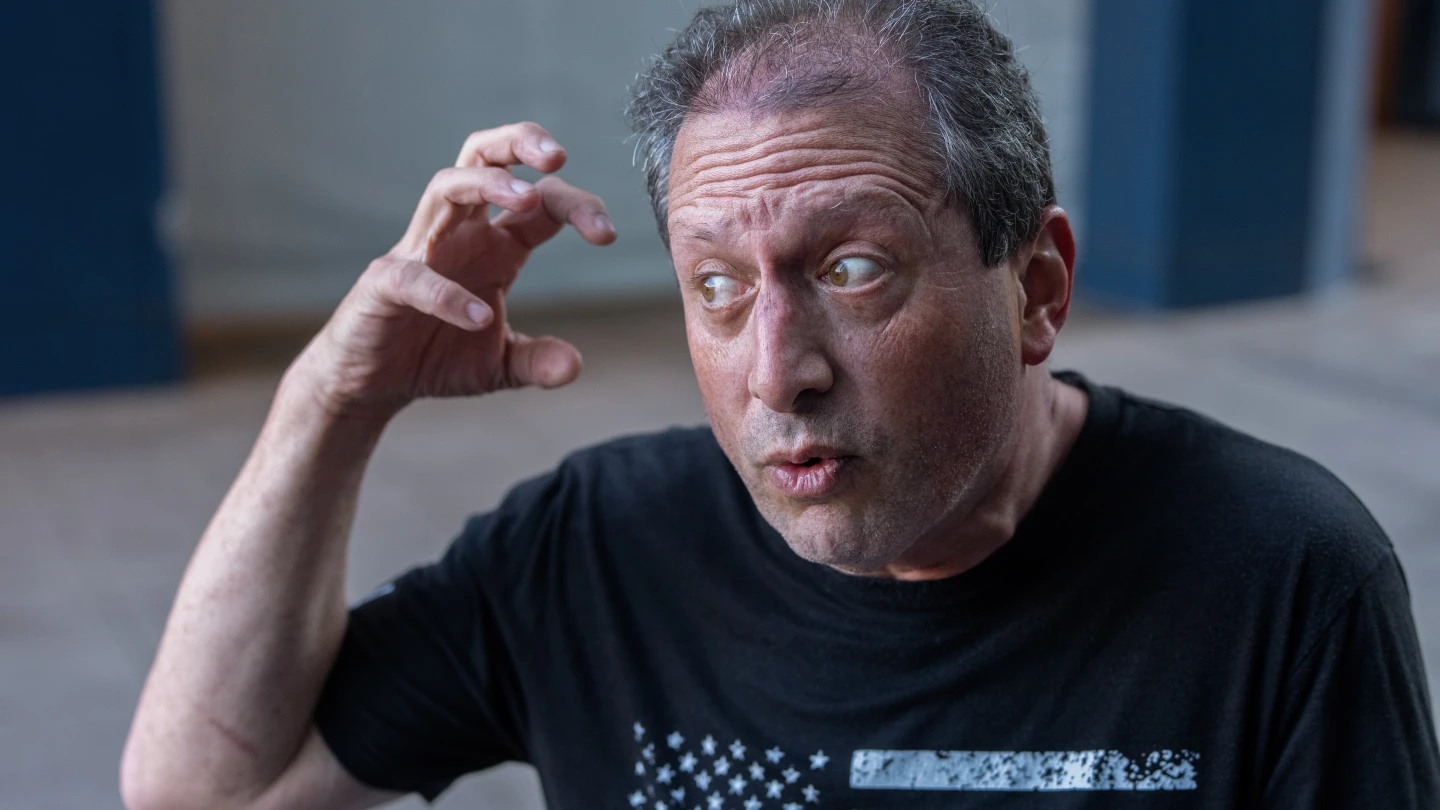
By embracing such views, Vance is making a statement about where he thinks the future of the Republicans lies. Yet he’s wrong to think mimicking the foreign-policy positions of the Democrats, their Israel-bashing and even antisemitism that has been normalized by the rise of figures like senator-elect Dr. Abdul El-Sayed of Michigan and others on the left will elect him president.
That’s not just a matter of making Jews and Christian supporters of Israel politically homeless.
Scapegoating an ally in ways that align with the divisive doctrines of the left will only further demoralize most Republicans, who reject conspiratorial mindsets and want America to defeat its Islamist enemies. That will also make the GOP less able to appeal to centrists who are unlikely to support a Democratic Party that—their midterm victories notwithstanding—could wind up being in thrall to its dominant left wing in 2028.
Puncturing his sense of entitlement
Vance’s rapid rise in politics from election to the Senate in 2022 and then to the vice presidency in 2024 was largely due to Trump being influenced by Donald Jr. and Carlson. It also bred in him a sense of entitlement that led to a widespread assumption that he would inevitably be named the president’s successor in 2028.
Such hubris is usually fatal to presidential candidates. The notion that he could seamlessly transition to the top spot while also imposing his interest in appeasing the groyper wing of the party on the GOP didn’t account for the possibility of such a massive swing against the administration in 2026.
This opens up the field for others who, unlike Vance, are neither tainted by the failures of the administration nor associated with antisemitic extremists to lead the party on a different path.
It’s possible to argue that Vance being sidelined by Trump will help him run against the administration’s policies in the primaries. But does anyone seriously believe that whatever happened in the midterms, this is the lane that will be the path to victory in a party where Trump is still the most important player?
A lot can happen in the next 18 months to alter the political equation. However, there is little doubt that Vance’s 2028 stock is rapidly declining in value. That’s bad news for him–and good news for those who understand his midterm postmortem was a moral betrayal and a formula for more Republican defeats in the future.
Jonathan S. Tobin is editor-in-chief of JNS. Follow him: @jonathans_tobin.