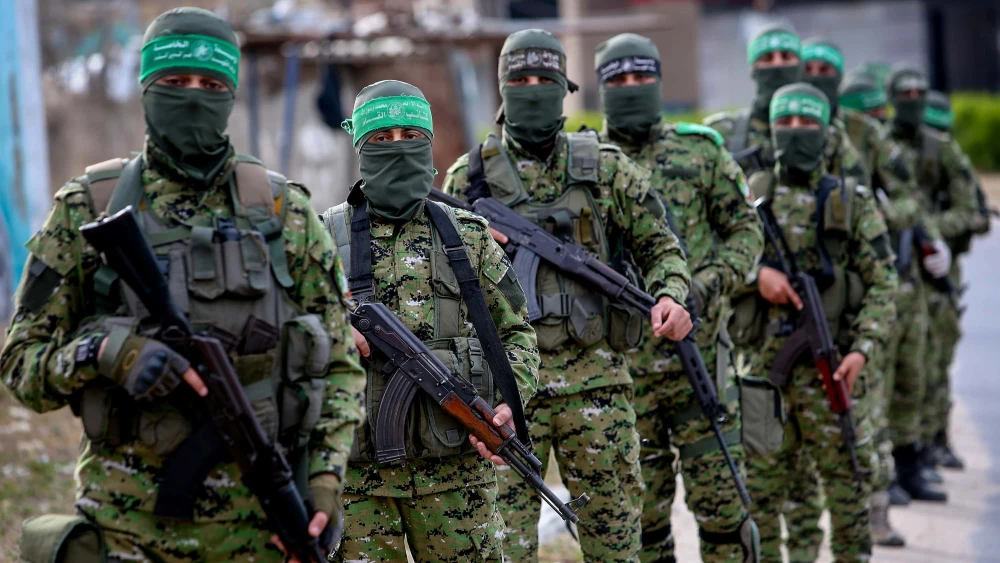
U.S. President Donald Trump reiterated on Sunday that the Hamas terrorist group is willing to give up its weapons under his peace plan for the Gaza Strip.
“We got the hostages back,” Trump told reporters aboard Air Force One. “You know, people forget there’s not a lot of fighting in Gaza. Hamas is now willing to give up their weapons.”
The president credited U.S. Special Envoy to the Middle East Steve Witkoff and U.S. Special Envoy for Peace Missions Jared Kushner for “their ability to close the deal.”
“Nobody [else] could have done the job,” Trump said.
Kushner said on Sept. 6 that Washington was only beginning to understand what is required to demilitarize the Gaza Strip, calling it “beyond your comprehension.”
“Demilitarizing it is not going to be easy,” Kushner said at a press conference in Kyiv, where he appeared alongside Witkoff and Ukrainian President Volodymyr Zelenskyy.
The United States worked with Hamas for more than four months, he said, resulting in the terrorist group committing to lay down its weapons. “You can’t go in if there’s guns, right?” Kushner said. “You can’t send the government into a place.”
Likud rejects Kushner’s Doha-strike assertion
Likud on Sunday rejected Kushner’s account of how a Gaza hostage-release deal was secured, saying Prime Minister Benjamin Netanyahu’s decisions to send Israeli troops into Gaza City and strike Hamas leaders in Qatar, together with pressure from Trump, forced Hamas to abandon its demands.
“The prime minister’s decision to send the IDF into Gaza City and to strike the Hamas leadership in Qatar, together with the intense pressure exerted by President Trump, are what led Hamas to drop its demands and agree to release all the hostages remaining in Gaza,” the party said.
The statement responded to comments made on Friday by Kushner during a remote appearance at the Yalta European Security Conference. The remarks were publicized on Sunday.
Kushner said Washington used the diplomatic fallout from Israel’s September 2025 strike on Hamas officials in Doha—which he called “a terrible thing” and an unsuccessful military operation—to press Israel into accepting the Gaza ceasefire and hostage-release agreement. The strike “led to Israel being globally isolated,” Kushner said, and “we used that dynamic in order to push them into a deal” that Israeli leaders were initially “a little uncomfortable” with but have since embraced.