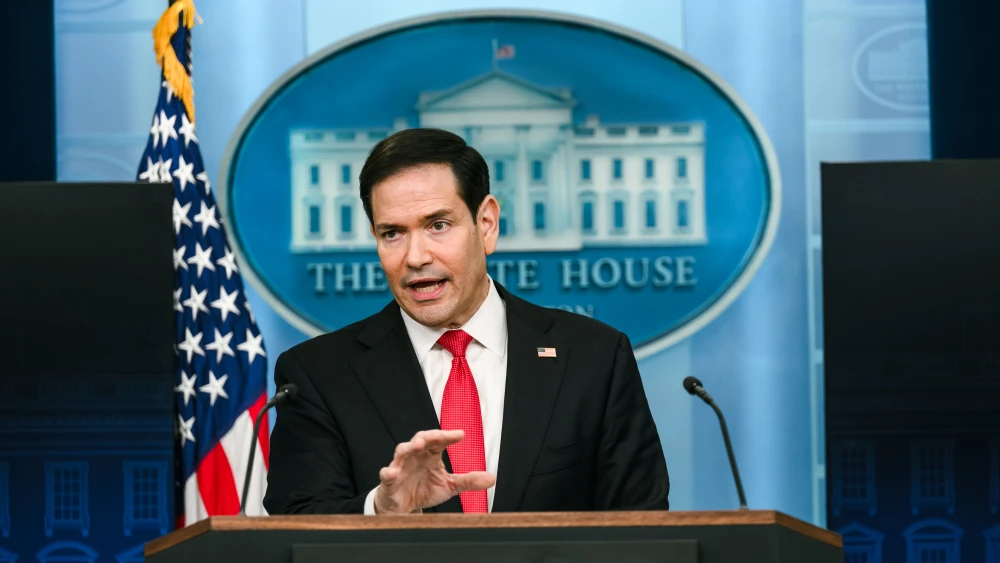
U.S. Secretary of State Marco Rubio on Saturday met with Qatari Prime Minister and Minister of Foreign Affairs Mohammed bin Abdulrahman Al Thani to discuss Washington’s support for Doha’s defense.
The secretary “expressed appreciation for Qatar’s partnership on a range of issues,” according to a spokesperson for his office.
Rubio and Mohammed also discussed “the importance of continued close coordination to deter threats and promote stability and security across the Middle East,” the spokesman added.
Mohammed held a phone call on Sunday with Iranian Foreign Minister Abbas Araghchi, emphasizing the importance of keeping the Strait of Hormuz open, according to Qatari Foreign Ministry.
“His Excellency also stressed that freedom of navigation is a firmly established principle that is not open to compromise, and that closing the Strait of Hormuz or using it as a pressure tactic will only deepen the crisis and endanger the vital interests of the countries of the region, noting the negative repercussions this may have on global energy and food supplies, and on the stability of markets and supply chains,” according to the readout of the call.
Qatari fighter jets on March 2 reportedly shot down two Iranian bombers that were minutes away from striking targets in Qatar, including the largest U.S. military base in the Middle East.
Gen. Dan Caine, chairman of the U.S. Joint Chiefs of Staff, confirmed the incident during a Pentagon briefing, saying Qatari fighters “for the first time have shot down two Iranian bombers en route to their location,” without specifying the intended target.
In September, U.S. President Donald Trump signed an executive order defining “any armed attack on the territory, sovereignty, or critical infrastructure of the State of Qatar as a threat to the peace and security of the United States.”
The executive action came just weeks after a Sept. 9, 2025, Israeli airstrike in Doha, targeting the leadership of the Hamas terrorist organization.
Prime Minister Benjamin Netanyahu in a Sept. 29 phone call with Mohammed “expressed regret that, in targeting Hamas leadership during hostage negotiations, Israel violated Qatari sovereignty and affirmed that Israel will not conduct such an attack again in the future,” according to a readout from the White House, which mediated the call.
Qatar, which has hosted Hamas’s leadership and has provided the organization with hundreds of millions of dollars, played a role in mediating for the freedom of some hostages the terrorist group held in Gaza.
Doha has long deflected accusations of playing a double game, saying that the United States requested that it open a mediation channel with Hamas.