Washington will judge Iran’s compliance with the recent Memorandum of Understanding by its actions, not its rhetoric, particularly whether commercial shipping continues to move freely through the Strait of Hormuz, U.S. Secretary of State Marco Rubio said on Thursday.
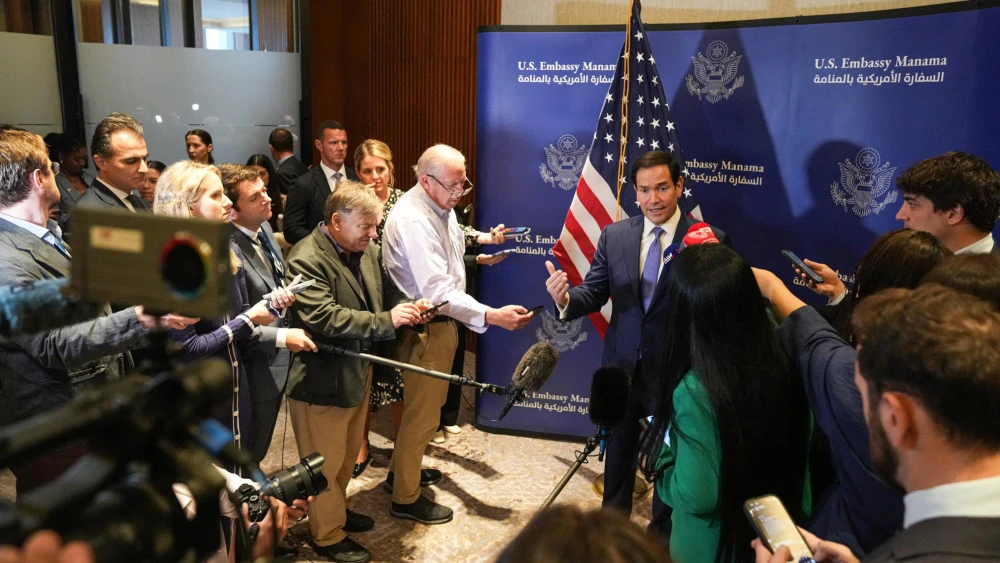
“What we’re interested in is not their press conferences,” he told reporters at the Sheraton Hotel in Manama, Bahrain, during a Middle East trip to meet with U.S. allies amid ongoing negotiations with Iran. “What we’re interested in is whether or not ships are moving.”
Rubio reiterated that the United States opposes any fees or tolls on vessels transiting the strategic waterway.
“If you’re paying someone to go, I don’t care if you call it a fee or a toll or a donation, it’s a toll,” he said. “That’s how we’re going to define it. That’s an international waterway. There isn’t a nation on earth that supports having to pay money to go through the straits.”
Asked about his previous description of Iran’s leaders as “religious, theocratic lunatics,” Rubio stood by the characterization.
“Well, it’s not that I believe it, it’s the fact of the matter,” he said. “The Iranian system is led by clerics, radical clerics. That’s what it’s always been led by, and that’s what it continues to be led by.”
Rubio also defended the U.S.-Iran agreement, saying it was intended to establish a framework for negotiations rather than “an all-encompassing document.”
“It basically just creates the outlines for a negotiation process, and that’s what the MoU did,” he said. “I mean, it had some specific things about immediately reopening the straits and so forth, but what it ultimately does is create the outlines for a process of negotiation.”