
Every attack on Israel cloaks itself in various ethical arguments, but one accusation is repeated again and again: Israel is aggressive and domineering, incompatible with a universal ethic that places the aspiration for peace at its center.
But the opposite is true. Israel is denied peace—a peace it has pursued since the establishment of the state in 1948, when it was willing to share the land and was rejected.
The truth is that Israel is increasingly surrounded by an explicit desire to erase it, and remaining constantly on guard is therefore what it must do to survive.
It is written in the sands of the Middle East and beyond.
On Friday, a defense pact was signed among Saudi Arabia, Turkey and Pakistan, champions of Sunni Islam. It may appear that they want to defend themselves against Shi’ite Iran, but no.
Pakistan’s defense minister, Khawaja Asif, was explicit: “In the context of Israel, all Muslim countries must unite,” he said, describing the Jewish state as “a threat to the entire Muslim world” and calling for a “united military front” against it.
Turkish President Recep Tayyip Erdoğan has made hatred of Israel—and the ambition to take control of Jerusalem—a banner of his politics.
The Saudis, with their interests in the West and the United States, condition an agreement with Israel on progress toward the Palestinians, first and foremost in Gaza.
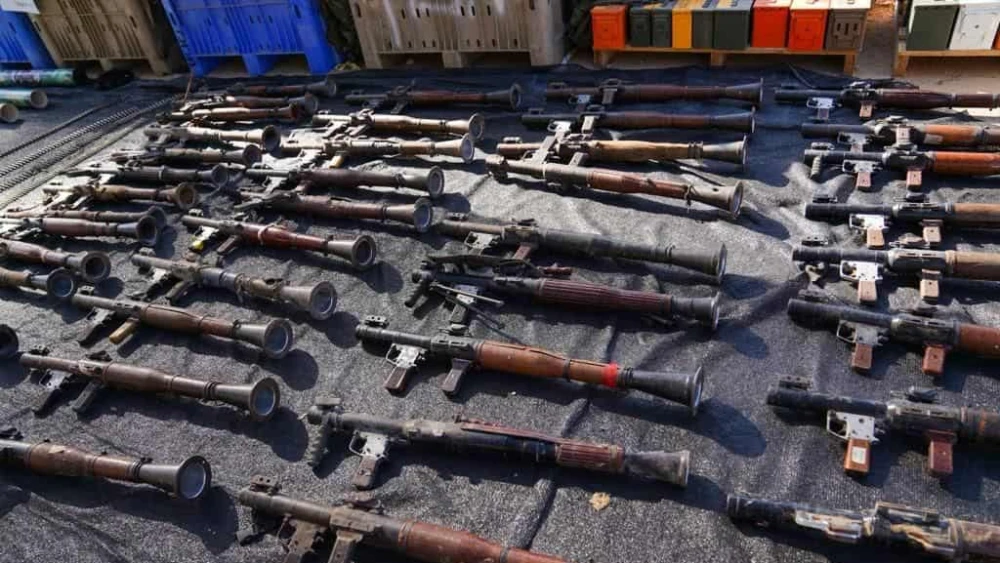
In Gaza, Hamas proposed giving up the weapons demanded by U.S. President Donald Trump in exchange for an Israeli withdrawal. But it is unclear whether this would be under a new 15-point plan or the 20-point plan of October 2025.
In other words, Hamas would “deposit” its weapons rather than destroy them. But which weapons, and who would control the depots? Hamas would hand them over only to Palestinian “technocrats”—the same Palestinian Authority that has paid terrorists for murdering Jews.
And what about Hezbollah?
An important experiment in peace has been worked out in Rome. Israel is trying to withdraw in part and place its trust in a joint monitoring force, but Hezbollah continues to attack. Two soldiers were killed last week and four seriously wounded, and yesterday there was an explosive drone attack.
Israel is showing patience. At least in the north, it hopes for quiet.
But can a resident of a kibbutz on the Gaza border—or on the Lebanese border—really return home?
Against this backdrop comes the continuing reality of a war still very much underway, in which Iran’s defeat represents nothing less than the promise of survival—a promise that has yet to be secured.
Enriched uranium and the fixation on destroying the “Little Satan” are still in play.
And throughout the world, we are witnessing a once-unthinkable public climate, in which Zohran Mamdani is mayor of New York and Jewish children from Rome are besieged while on vacation.
Do you really want peace with Israel?
Then lift the siege.