
One of the many things that the billions of people watching the war with Iran have grown accustomed to is the mocking tone with which the ayatollahs’ regime treats U.S. President Donald Trump, its principal enemy.
Indeed, when Trump softened his tone on Sunday, signaling after several days of threats and ultimatums that he was preparing to set war aside temporarily, the Islamic Revolutionary Guard Corps and the ayatollahs responded in unison with a series of more or less explicit aggressive messages.
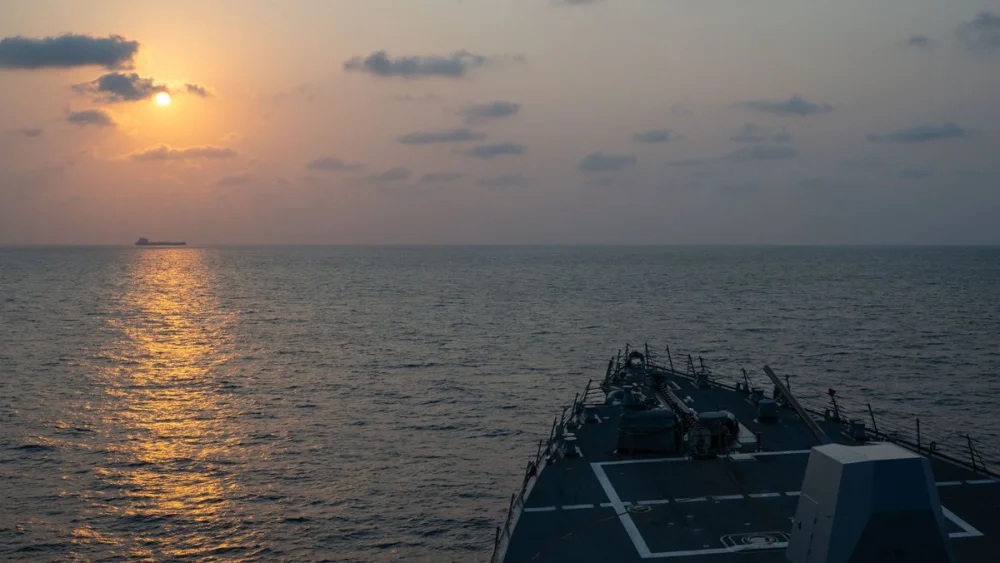
No negotiations are underway, contrary to what the Americans say. Demands for a withdrawal, compensation and an end to the U.S. presence in the Strait of Hormuz must be met before even a single word can be exchanged; and as long as the American naval blockade continues, Iran says, there is no reason for the Americans “to claim that the strait has become a safe passage.”
Other pointed gestures have accompanied these direct responses to the proposal for talks.
When Trump compared the confrontation to a chess match, Iran replied that its leaders were professional players.
There was also news of a complex reshuffling among the revolutionary leadership, including the appointment of Mohsen Rezaei as strategic adviser to the supreme leader. Rezaei, a former commander of the Revolutionary Guards, has been named among those held responsible for the 1994 AMIA bombing, in which 85 people were killed at the Jewish community center in Buenos Aires.
Then came the announcement of a seven-hour meeting between Mojtaba Khamenei and Iranian President Masoud Pezeshkian: many words, but no photographs.
But the most significant message from Iran is geopolitical: Tehran says that the agreement among Pakistan, Turkey and Saudi Arabia marks a turning point in perceptions of the United States.
In other words, Washington’s Middle Eastern allies are showing that they have lost confidence in it. The agreement, according to this interpretation, is not an anti-Shi’ite Sunni initiative but an Islamic one, directed primarily against the United States and therefore against Israel.
The interpretation is mocking, tendentious and unsubstantiated. But it plays on questions of hegemony, time and the genuine risks posed by the new alliance—all of which, in effect, challenge Trump.
The president is right when he portrays Iran as the loser by every conventional measure: The regime’s leadership and economy have been devastated; its system of regional domination, built around a ring of steel formed by its proxies, has been fractured; much of its arsenal of lethal weapons, including thousands of ballistic missiles, has been destroyed; and its nuclear infrastructure has been broken apart.
All these developments have shattered the mosaic upon which Iranian power was built.
And yet, like a sick ant, instead of nourishing its social body, the regime strengthens only itself. It does so through terror, executing young people in public squares, while using the funds it continues to receive from the Islamic world, as well as backing from Russia, China and North Korea, to continue building weapons, preparing attacks and forging aggressive alliances.
Hezbollah, like Hamas, continues to be stuffed with money. The regime invests in these things rather than in the survival and well-being of its civilian population.
For someone like Trump, who plays a long game in order to better prepare for what he ultimately intends to achieve, this is dangerous.
It is even more dangerous for Israel.
True, Israel has not been bombarded by Iran in recent months in the way that America’s Arab allies have. But that choice stems from Iran’s desire to preserve its capabilities for a potentially more difficult, direct confrontation. At the same time, Tehran is seeking to weave the trilateral network described above.
Trump undoubtedly remains committed to removing from the world stage the danger posed by Iranian aggression—with its proxies, missiles and uranium. He may collect Iran’s rejections and taunts with the indifference of the powerful, but he must nevertheless pay attention to the weapon of time, the oldest weapon in the history of strategy.
November is still a long way off, and the Iranians are working quickly—precisely because Trump has never changed his assessment of what he regards as the world’s most diseased and dangerous regime.