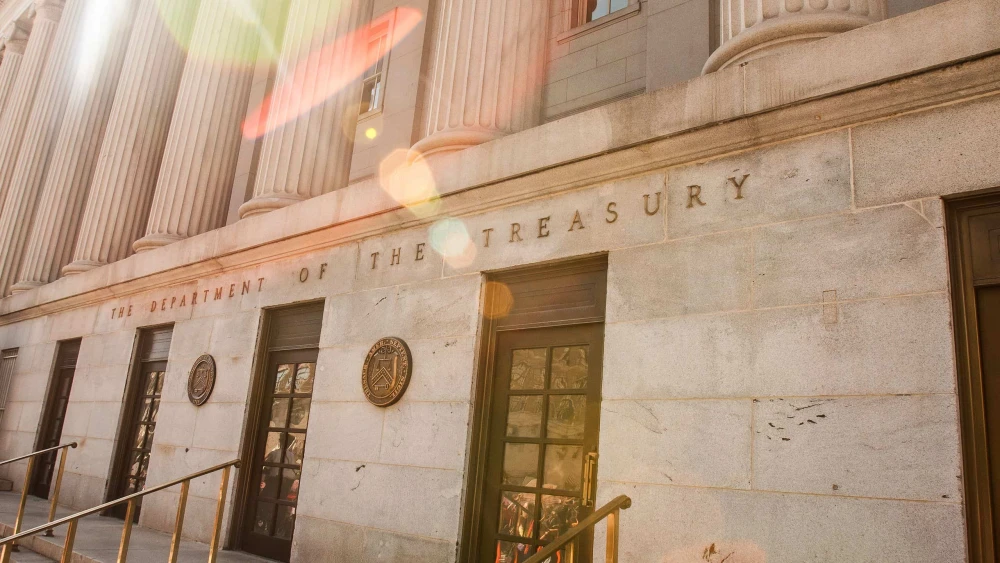
The member states of the Terrorist Financing Targeting Center announced on Tuesday joint sanctions on “multiple key components of Hezbollah’s financial infrastructure,” according to the U.S. Department of the Treasury.
The designations target five entities and 16 individuals, including Hezbollah financial institutions Al-Qard Al-Hassan and Bayt al-Mal, their senior leaders, and Ibrahim Ali Daher, chief of Hezbollah’s Central Finance Unit.
The TFTC includes the United States and the six Gulf Cooperation Council countries: Bahrain, Kuwait, Oman, Qatar, Saudi Arabia and the United Arab Emirates. The group coordinates sanctions designations, intelligence sharing on terrorist-financing networks and efforts to strengthen members’ ability to counter such networks.
“These coordinated actions underscore TFTC members’ shared commitment to disrupting Hezbollah’s ability to exploit the international financial system,” Treasury stated. “All targets announced today were previously designated by the United States.”
Treasury said Al-Qard Al-Hassan “masquerades as a non-governmental organization” while providing banking-like services beyond its stated registration, including moving funds through shell accounts and facilitators.
Hezbollah uses the organization “to facilitate its destabilizing militant activities, undermining the Lebanese people’s ability to rebuild while enabling the group’s own interests,” the department said.
Bayt al-Mal, meanwhile, serves as “Hezbollah’s unofficial treasury, holding and investing its assets and serving as intermediaries between the terrorist group and mainstream banks,” Treasury said, as it operates “as a bank, creditor and investment arm” for the Iran-backed terror group.
The sanctions also target three additional entities: Al-Khobara for Accounting, Auditing and Studies; Tashilat SARL; and The Auditors for Accounting and Auditing.
“The networks designated by TFTC today threaten regional stability, international security, mutual interests and global trade,” Treasury said. “By restricting Hezbollah’s access to funding, TFTC members are working to protect the integrity of the international financial system, support the Lebanese people and counter terror networks.”
Tuesday’s action marked the third TFTC designation effort during U.S. President Donald Trump’s second term and the ninth since the center was established in 2017 during his first administration.
The sanctions came days after Israel and Lebanon signed a U.S.-brokered framework agreement and security annex aimed at removing Hezbollah from southern Lebanon and restoring Lebanese sovereignty in the area, while preventing further attacks on Israel.