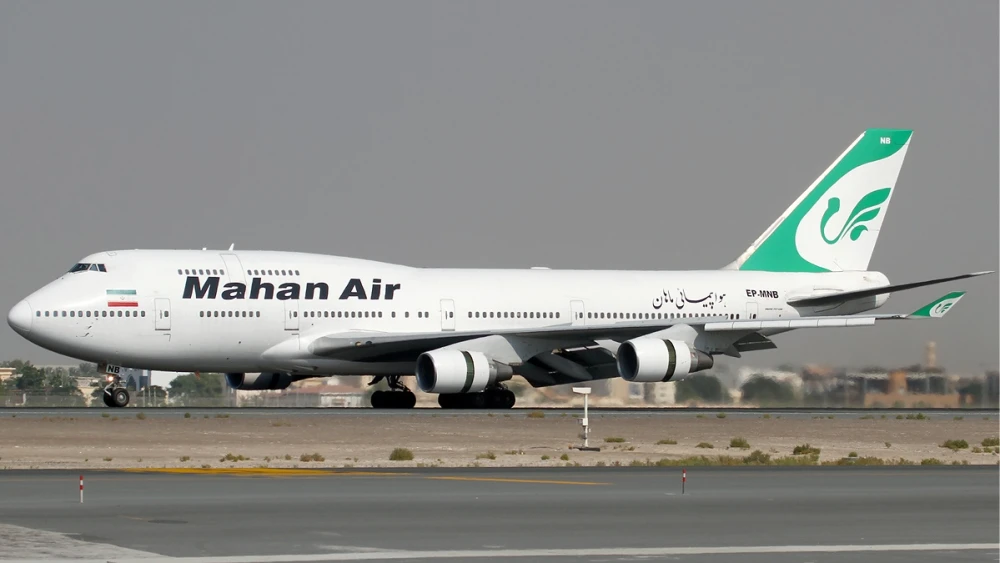
The Trump administration stated that its “Operation Economic Outcast,” which aims to choke the Iranian regime’s revenue, is working, after Turkey and Oman announced cancellations of flights on Mahan Air, which the United States began sanctioning in 2011 for supporting the Islamic Republic.
Mahan supports the Islamic Revolutionary Guard Corps, a U.S.-designated terror organization. Current U.S. efforts target “third-country firms” that facilitate Mahan’s “proliferation activity, terrorist-linked flight operations and illicit procurement of U.S.-origin aircraft,” the Treasury Department said.
That dramatically increases the risks for countries doing business with the privately owned airline, which has deep links to the IRGC, the federal government said.
A U.S. Treasury Department spokesman said on Friday that after Scott Bessent, U.S. treasury secretary, unveiled “Economic Outcast” in August, he “dispatched a senior treasury envoy to engage with partner countries,” including Turkey, Oman, the United Arab Emirates and the United Kingdom.
The envoy sought “to reinforce the U.S. strategy and seek swift action,” which has been “delivering results,” the spokesman said.
Mahan Air said it canceled its Tehran-Muscat route starting on Thursday and will suspend routes to Istanbul and Ankara beginning on Monday. It said the directives to do so came from “relevant aviation authorities” in Oman and Turkey.
The Treasury Department spokesman thanked the Omani and Turkish governments for “their important steps” and said that “we will continue to work together with partners to keep the Iranian regime from using any remaining economic lifelines to support its destabilizing and terroristic agenda.”
The country of Georgia also plans to suspend Mahan Air flights to and from the country beginning on Monday.
The Iranian regime has struggled to keep its economy afloat under growing sanctions during the war with the United States and Israel. Iranian oil exports have decreased dramatically amid an American blockade of the Strait of Hormuz.
The rial is at a record-low open market value, and the International Monetary Fund projects that Iran’s economy will contract 5.4% this year. Consumer price inflation has reached 69%.
The Trump administration has provided conflicting messages about whether an agreement to end the war is possible.