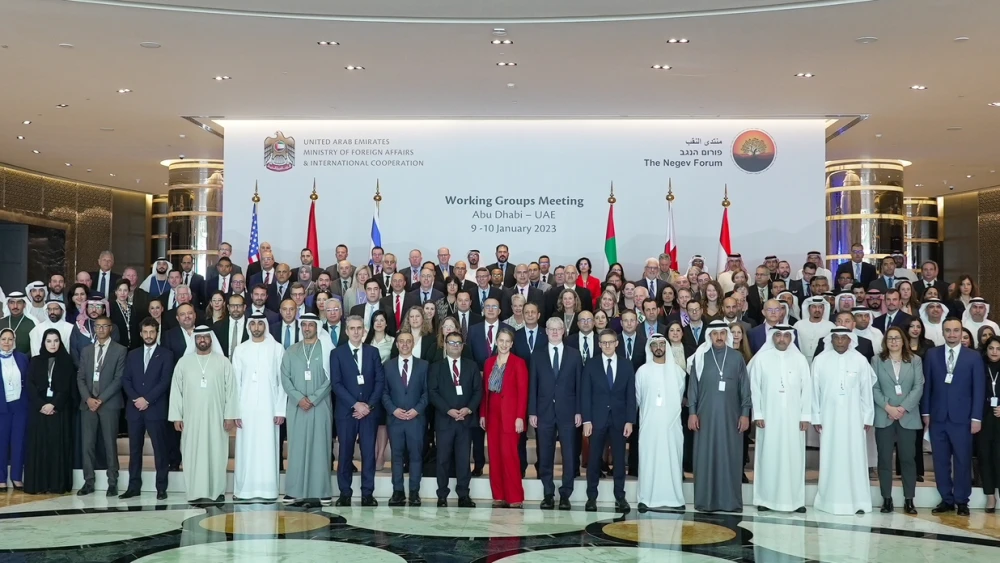
Abraham Accords countries met on Thursday on the sidelines of the United Nations General Assembly in New York City, marking their first gathering in more than three-and-a-half years.
The N7 Foundation convened a roundtable event, hosting U.S. Under Secretary of State Allison Hooker and her counterparts from Israel, the United Arab Emirates, Bahrain, Morocco and Kazakhstan.
Kazakhstan participated for the first time in an Accords event.
“The Abraham Accords have demonstrated what is possible when countries come together around shared interests with a common vision for a more integrated and prosperous region,” stated Jeffrey Talpins, N7 Foundation chairman and founder.
“The next phase is about deepening the relationships that already exist and identifying practical opportunities for countries to work together,” he said.
The N7 said that “officials reaffirmed the principles of the Abraham Accords and recognized that the Middle East’s vast potential can be unlocked through coexistence, mutual understanding and cooperation between Israel, its Arab and Muslim neighbors, the United States and like-minded partners.”
The Abraham Accords are a defining foreign policy achievement of U.S. President Donald Trump’s first term. The Israeli-Arab relationships have remained intact despite harsh disagreements over Israel’s prosecution of its war against Hamas after Oct. 7.
Some analysts have said that advancement of the Accords, and a growing momentum at the time toward Israel-Saudi normalization, motivated Hamas to attack.
While the second Trump administration has hinted several times that other countries are ready to sign on to the pacts, only Kazakhstan, a Central Asian nation which already had a significant relationship with Jerusalem, has joined.