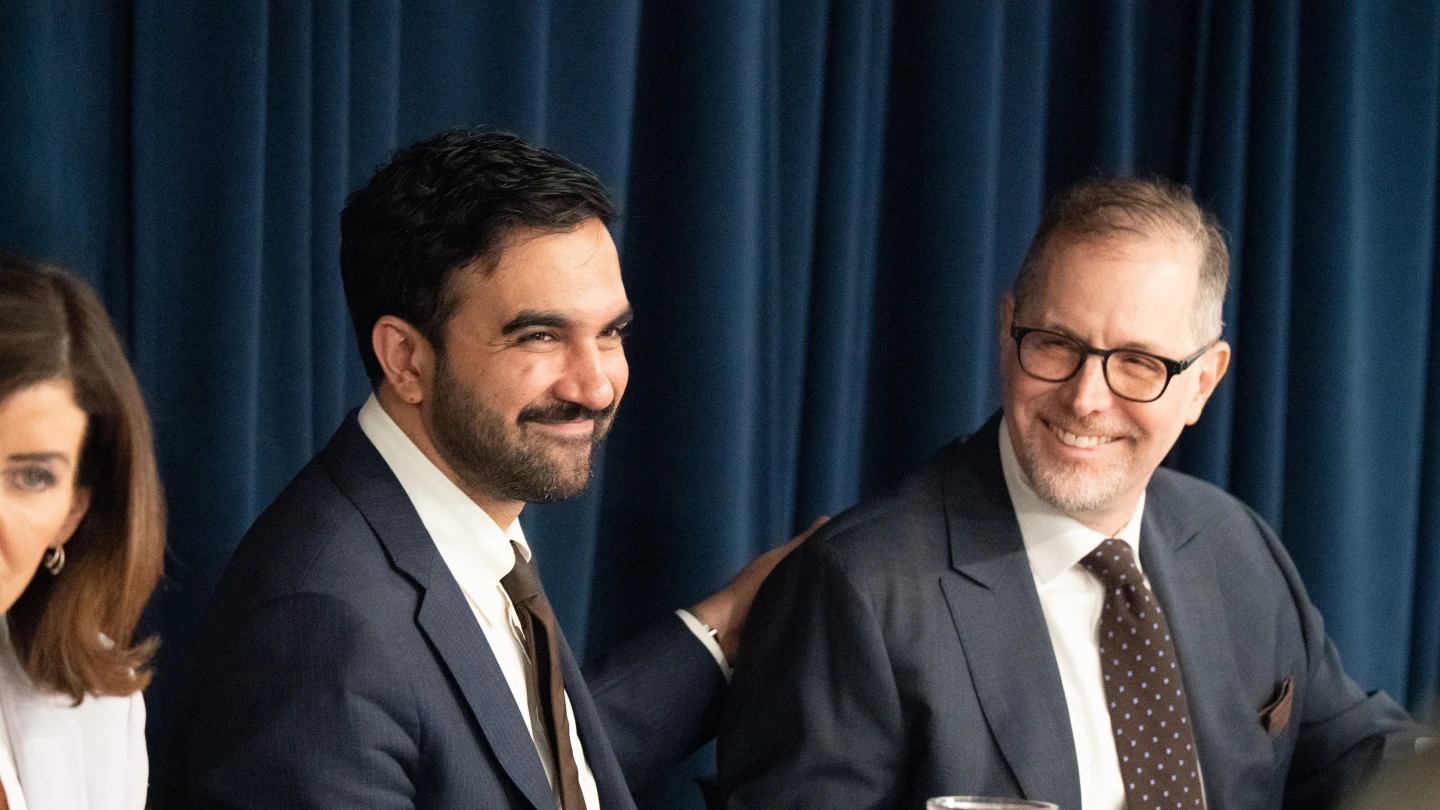
More than 120 Jewish leaders from 43 countries gathered in Mykonos, Greece, last week for a regional summit focused on strengthening isolated Jewish communities across Europe, the Middle East and Africa.
The two-day conference brought together Chabad-Lubavitch emissaries serving as the primary Jewish presence in countries with limited communal infrastructure, organizers said. The summit, held April 22-23, addressed security, outreach, fundraising and the use of artificial intelligence to support far-flung Jewish communities.
Rabbi Mendy Kotlarsky, executive director of Merkos 302 at Chabad World Headquarters, told JNS that many Jews are seeking a connection to Judaism and communal ties, despite rising worldwide antisemitism.
“Community members are feeling more connected as a result of the pressure they’re facing,” he said. “Many of these communities are experiencing real antisemitism, being scapegoated because of Israel. We discussed different strategies for how to address it, and also how to build a safety net.”
“Local Jews who weren’t previously engaged are being pushed to engage,” he said.
Kotlarsky told JNS that Chabad is using an internal platform “to harness the power of AI to streamline a lot of the manual, technical, tedious work, so they can focus on what matters most: being there to support people.”
“There’s also a security component, including recognition tools and the ability to anticipate potential issues,” he added.
Security discussions featured prominently throughout the summit, he added, particularly on how to balance stronger protections with maintaining an open and welcoming atmosphere.
“The question was how to approach it in a way that’s genuinely secure, but without becoming inaccessible and unwelcoming,” Kotlarsky told JNS. “We had experts devise strategies and plans, done with a Chabad twist, to ensure we can still offer a warm, welcoming and vibrant experience.”