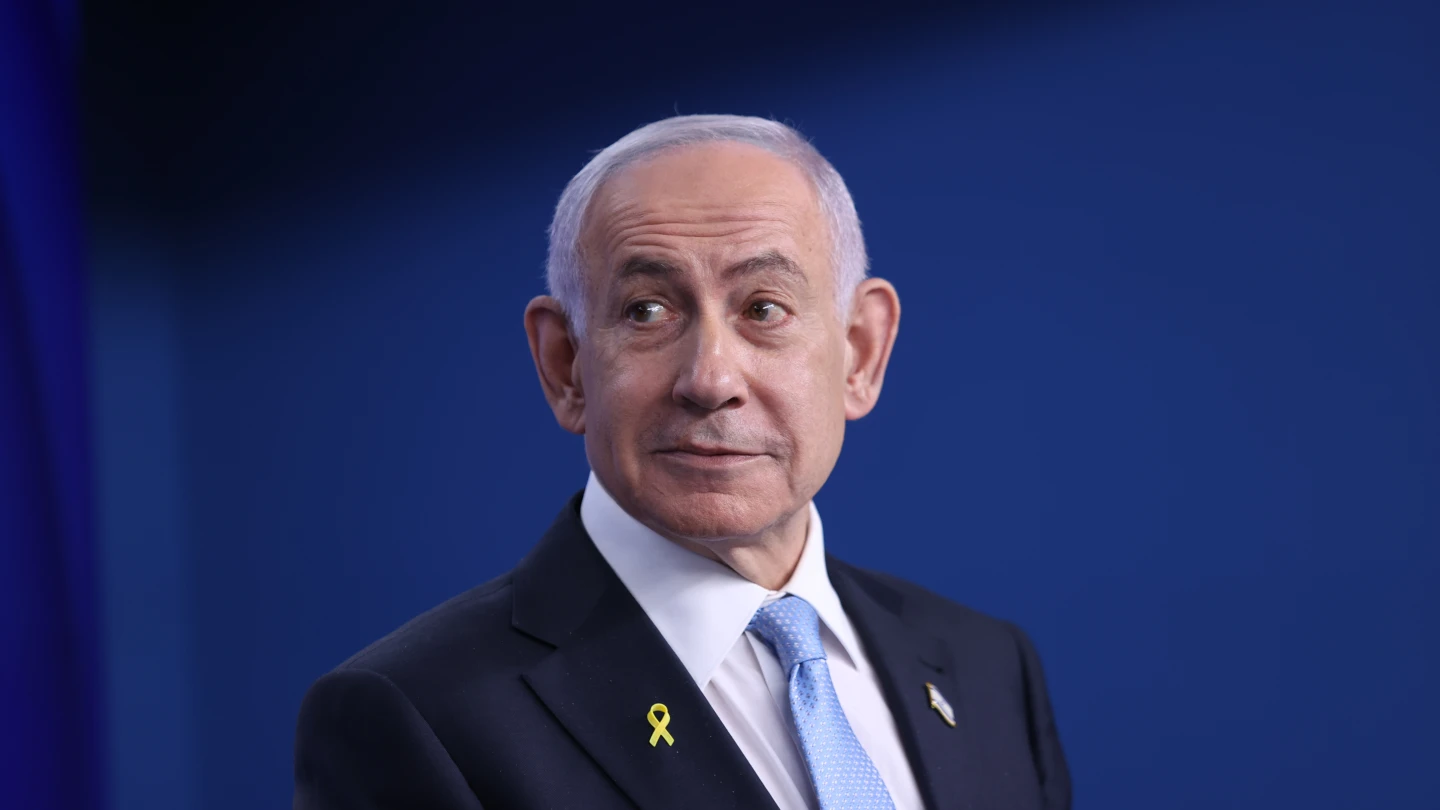

The Manchurian Candidate is a 1959 Richard Condon novel that was adapted into the 1962 film starring Frank Sinatra and a 2004 remake with Denzel Washington. The plot centers on an enemy foreign power brainwashing an American citizen into becoming an unwitting but critical instrument in the takeover of the United States.
In 2026, the story deserves a modern interpretation. America and the West are threatened by a deluge of quietly indoctrinated antagonists, and Qatar is likely behind it all.
Qatar’s nefarious double-dealing is ultimately directed toward weakening Western power, fracturing democratic societies, undermining confidence in national institutions and exploiting the freedoms that make the West resilient.
Qatari investment in American institutions raises serious questions about the vulnerability of American democracy to foreign influence. Through huge university donations, cultural sponsorships, media investments and political relationships, Qatar has cultivated access to influential segments of American society. This is not just about how much money has changed hands, but whether foreign capital has helped create an intellectual and political environment increasingly hostile to Israel, tolerant of antisemitism and deleterious to American power.
Building the strongest case against Qatar’s strategy requires examining recorded financial ties and their role in Qatari political influence. There is uncontested evidence that Qatar has invested heavily in American higher education and cultivated relationships across the political spectrum. Qatari investment in higher education has likely contributed to the rise of pernicious ideologues like the Democratic Socialists of America (DSA) and various radical candidates, as well as their political activities. The keffiyeh-cloaked mobs rioting and protesting on campus are downstream from a conspiracy energized by a convergence of interests, ideologies and institutional incentives.
In response, citizens should demand transparency, remediation and withdrawal.
The U.S. Department of Education has reported that Qatar accounted for more than $1.1 billion in reportable foreign gifts and contracts to American universities in 2025 alone. Cumulative disclosures reveal a much larger, multibillion-dollar relationship. These figures warrant scrutiny of donor agreements, academic independence and the political consequences of foreign funding.
This is about whether foreign capital has helped create an environment hostile to Israel, tolerant of antisemitism and deleterious to American power.
Educational institutions help shape the narratives and assumptions of future activists, journalists and political leaders. When anti-Israel activism becomes entangled with the demonization of Zionism, and when Jewish students are intimidated or excluded, legitimate criticism of Israeli policy can cross into antisemitism. Foreign funding deserves investigation wherever it may encourage institutional deference, suppress uncomfortable questions or weaken resistance to such extremist ideologies.
The rise of Democratic Party radicals like Mayor of New York City Zohran Mamdani, Michigan candidate for Senate Dr. Abdul El-Sayed, and Reps. Rashida Tlaib (D-Mich.) and Ilhan Omar (D-Minn.), deserves examination as well. Mamdani’s democratic-socialist politics and DSA affiliation, El-Sayed’s progressive political network, and Omar’s outspoken criticism of Israel reflect overlapping constituencies in which anti-establishment politics and Palestinian advocacy can be powerful electoral forces, possibly driven in part by Qatari influence.
Support for such ideologies among figures like far-right podcaster Tucker Carlson and far-left streamer Hasan Piker shows how Qatari-inspired influence moves across the far-right and left. Woke, intersectional ideas create a harmful mix of convenient grievances channeled into an anti-American, anti-Judeo-Christian alliance. Today’s powerful media tools spread the flood of disinformation.
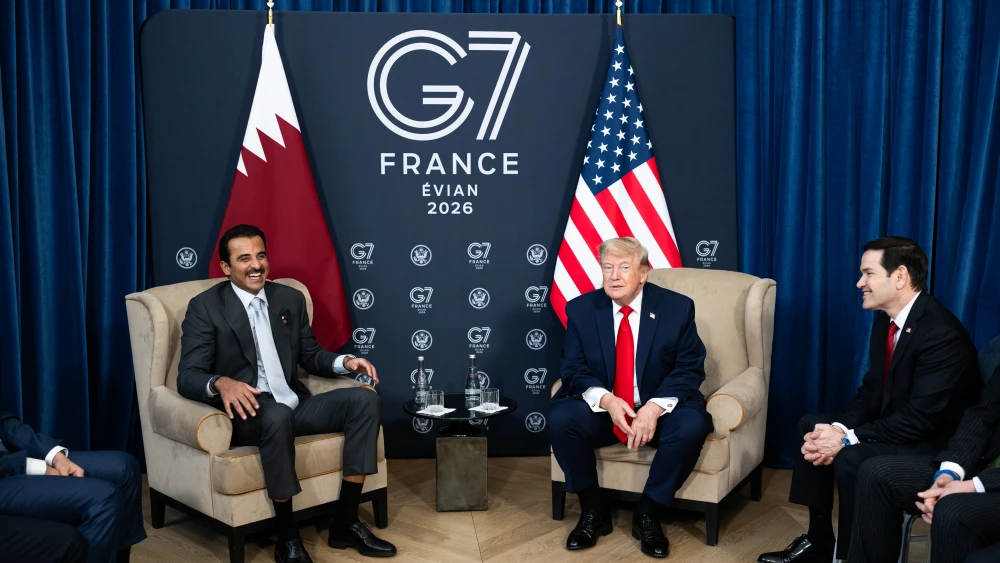
Qatar’s biggest advantage is its ability to maintain relationships with parties whose interests conflict. It hosts the major American military installation at Al Udeid Air Base, cooperates with Washington on regional security, and has served as a diplomatic intermediary in negotiations involving Hamas. At the same time, Qatar maintains relationships with Islamist movements, including the Muslim Brotherhood, and has hosted Hamas political leaders for some time.
This arrangement creates strategic ambiguity. Qatar can present itself to Washington as an indispensable security partner and mediator while maintaining channels to actors hostile to Israel. The Trump administration’s acceptance of a Qatari Boeing 747 for presidential use intensified concerns about foreign gifts, political access and conflicts of interest. The aircraft and Qatar’s military partnership raise concerns about American officials being controlled or influenced by Qatar.
This is an issue of plausible deniability: Relationships that appear contradictory can be defended separately, while their cumulative political effects receive insufficient scrutiny. Claims of neutrality become questionable when mediation gives an organization political legitimacy without requiring meaningful accountability for its conduct.
Citizens should demand transparency and remediation.
The United States should demand transparent university funding, rigorous enforcement of disclosure laws, independent scrutiny of political financing and consistent opposition to antisemitism—whether it comes from the far-left, the far-right or Islamist extremists. It should also insist that mediators distinguish genuine diplomacy from enabling terrorism.
The issue is not whether Qatar has secretly spawned every adversary of Israel and America, or whether every antisemitic trope is attributable to it. It’s whether U.S. institutions have been sufficiently vigilant in protecting their independence. Foreign money can purchase access, prestige and influence without purchasing explicit obedience. In a democracy, that possibility alone warrants scrutiny.
The original Manchurian Candidate imagined one person clandestinely transformed into an instrument of the enemy. It makes for a great book and screenplay. You can see the face of the enemy. Today, the danger is diffused and broader: a wealthy adversary hiding behind a facade of amicable partnership that can exploit a multitude of weaknesses, sometimes independently, sometimes in cooperation, while Americans argue over whether the danger exists at all.
We are dealing with “The Qatari Candidates.”
These are dangerous enemies, and they are not at the gate; they are well inside the walls. In fact, they have been welcomed in. However, when we support good candidates, we help rid this country of a terrible rot and a dangerous weakness.