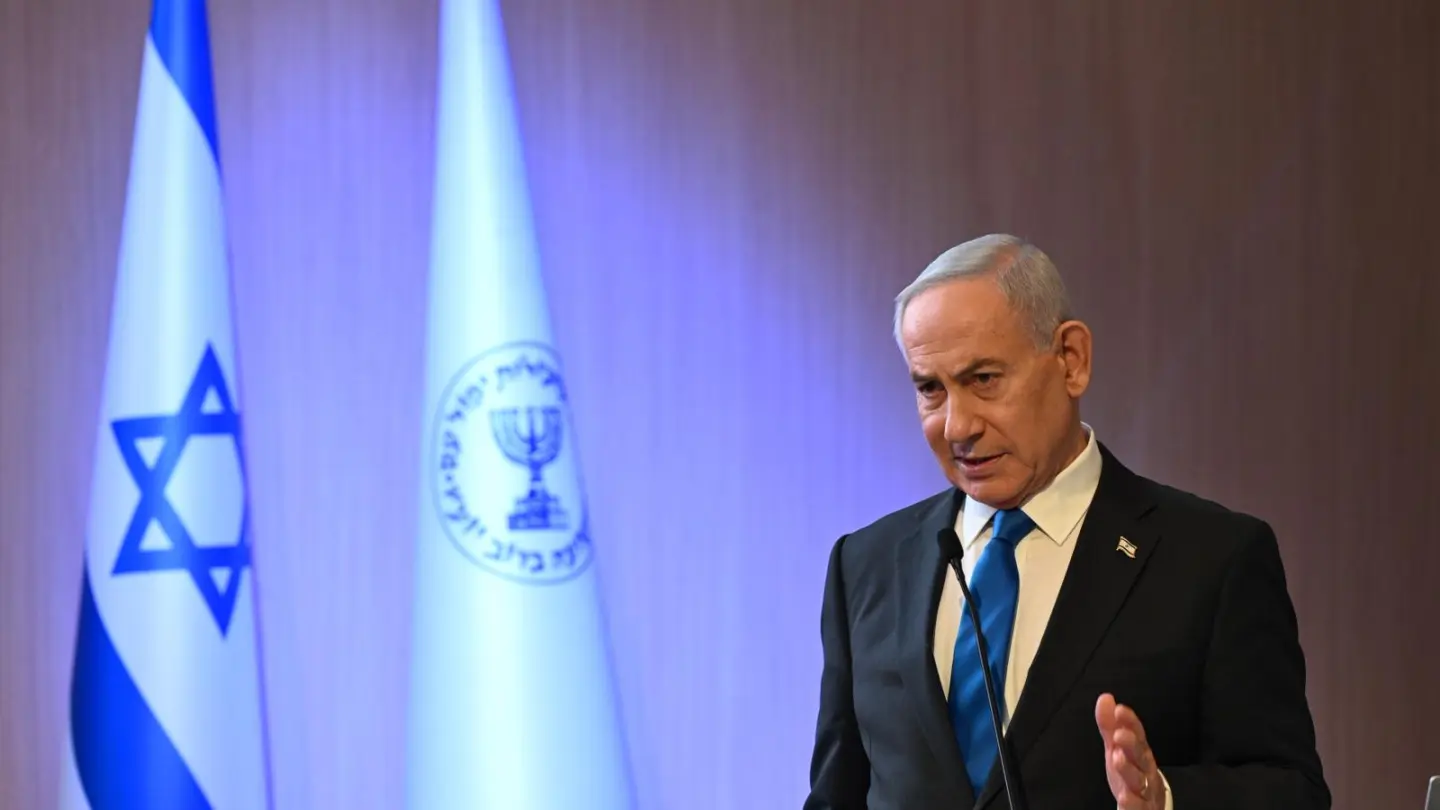

“Going ballistic,” “exploding” and “dropping the F-bomb” aren’t just headlines from the Israel-Iran conflict. They also describe the state of public discourse, where profanity has become a barometer for a different kind of war. From TV rants to Capitol Hill outbursts, this spike in swearing reflects a deeper breakdown.
This new verbal escalation erupted on Piers Morgan’s YouTube show four weeks ago, where the media heavyweight, who kept his cool even with convicted killers, lost it. His guest, international human-rights lawyer Natasha Hausdorff, remained calm and composed. But as she tried to answer his questions about Israel, he cut her off repeatedly, shouting “Bulls**t!”
It wasn’t just aggressive; it was condescending, arguably misogynistic and shattered any pretense of journalistic integrity. With more than a million views, it marked a new line being crossed, a moment where the boundaries of decorum visibly shifted, especially when it comes to Jews or Israel.
Just days ago, Rep. Jared Moskowitz (D-Fla.), who was targeted last year by a gunman with a rifle and an antisemitic manifesto, let his frustration show during a hearing on Capitol Hill about antisemitic terror. “Mr. Chairman,” he said, “this hearing ain’t gonna fix s**t.”
It was an understandable expression of urgency from a man who’s witnessed the rise of antisemitism firsthand, while institutions stage polite discussions that achieve nothing.
The Moskowitz and Morgan moments reveal stances in society today: one a desperate plea, the other a breakdown in journalistic norms.
More profanity hit the airwaves recently when U.S. President Donald Trump reacted to the Israel–Iran turbulent ceasefire saying, “They don’t know what the f**k they’re doing.”
Some thought this was a strategic blunder, a way to appear neutral to Arab audiences. Others, a sincere slip. But as Trump once said, “We live in a post-truth world.” Who knows what’s real anymore?
Still, it marked another rupture in political norms. No other U.S. president had dropped an F-bomb on live television, and when the most powerful man in the world speaks like that, it licenses everyone else to follow.
So, what’s next?
How long until U.K. Foreign Secretary David Lammy calls Trump a “neo-Nazi-sympathizing sociopath?”
Oh, he already did?
At this rate, I will be able to write swear words without asterisks in a matter of days.
The erosion of civility doesn’t stop with language. When words break loose from norms, behavior soon follows. Swearing becomes not a lapse, but a signal: This is war. And in war, civility is unnecessary.
When people believe genocide is unfolding in Gaza or that climate collapse is imminent, anything goes. The rules are suspended. Righteousness becomes its own justification.
That same logic now shapes political allegiances. It’s why Zarah Sultana, a British member of Parliament, declared: “We are all Palestine Action,” as a public show of solidarity with a group that, at the time, was already known for storming air bases, vandalizing military property and glorifying intifada. That group has since been banned in the United Kingdom under terrorism legislation. When the cause feels righteous enough, even elected officials will lend support, treating legality and public safety as afterthoughts.
And language, especially profanity, plays a role in deepening those divides. A study found, “Profanity signals group membership and leads to more negative perceptions of opposing groups, exacerbating the polarization cycle.” And it doesn’t stop there. Strong words actively “push individuals toward extreme political positions.” When public figures swear, they’re not just venting, they’re marking tribal lines. And making them.
The rise of profanity in public life isn’t just a cultural quirk. It’s a warning sign, a crack in the foundations of civil society and the norms that once held it together.
We’re no longer in an age of shared rules, but of tribal allegiance; two sides with irreconcilable worldviews, each convinced the other poses an existential threat. (And yes, I’m convinced my side is right.)
Every outburst, every F-bomb, chips away at the old scaffolding of civility in journalism, diplomacy and politics.
And when the pillars of public life start sounding unscripted and furious, it’s not just the language that’s changed, it’s the foundations beneath that are shaking.