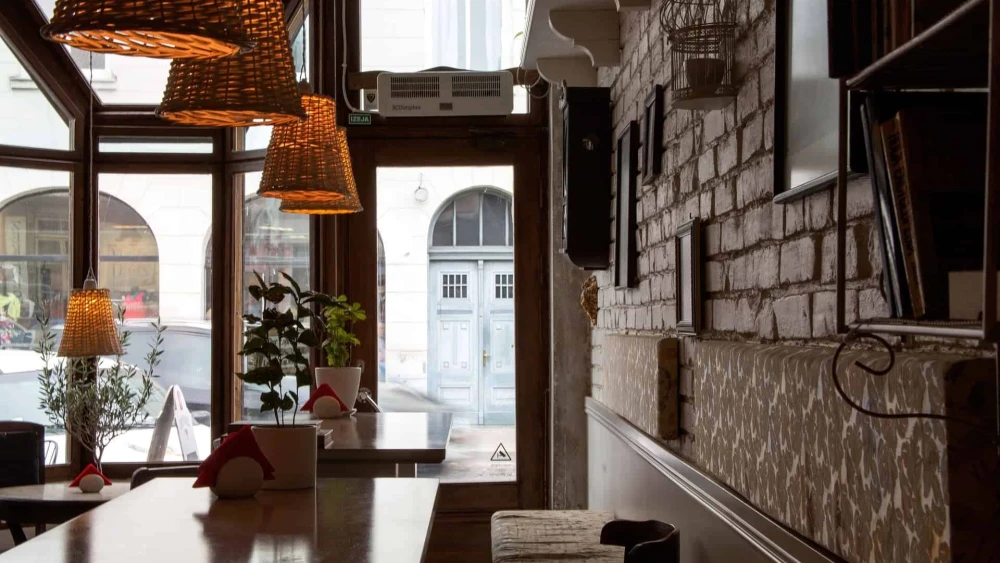

On an ordinary afternoon near campus in mid-February, a group of Jewish students gathered at a neighborhood cafe to drink coffee, study and spend time together. It should have been unremarkable. Instead, it became a stark reminder of the climate many Jewish students are navigating today—and of the vital role Hillel plays in ensuring they can continue to live vibrant Jewish lives in the face of hostility.
Across the country, Jewish students are confronting record levels of antisemitism, harassment and campus disruptions. Yet amid rising tensions, participation in Jewish life has not diminished. It has surged. Metro Chicago Hillel saw a 156% increase in student engagement in 2025-25. Students have sought out Shabbat dinners, learning opportunities and spaces where they can simply exhale.
That desire for connection brought together 13 students from three different schools to a coffee hour at an off-campus cafe last week, hosted by Hillel staff. A colleague from the Jewish United Fund (JUF) joined them. There was nothing political or provocative about the gathering. Students chatted, compared notes on assignments and opened laptops to do homework. They were visibly Jewish—some wearing Star of David necklaces, others with Hebrew stickers on their computers. They were also simply college students enjoying each other’s company.
As the Jewish students began to arrive, another group entered the cafe wearing sweatshirts emblazoned with slogans such as “globalize the intifada.” They began directing anti-Jewish tropes at the students, invoking Israel and the war in Gaza. The disruption escalated quickly. The group asked cafe staff to turn up the music, and began dancing and chanting “Free Palestine” over the Jewish students’ conversations.
When the JUF staff member stepped outside to notify her team and security, she was deliberately shoulder-checked on her way back in. Several of the agitators were recognized as members of Students for Justice in Palestine. They approached the staff and asked, “Hey, so can we kick them out?” The shouting continued. Cafe employees cheered. Eventually, for the sake of the students’ physical safety, Hillel staff made the decision to relocate the group.
As the Jewish students exited, the disruptors and cafe staff chanted “We won!” while filming and photographing them.
For students who had already endured months of tension and encampments on campus, the experience was deeply unsettling.
“I didn’t want to believe that students had riled up themselves and the cafe workers to kick out a group of paying customers,” said Teddie Waxler, a junior studying sports communications. “To see it all happen and know that hearing the word ‘Shabbat’ or seeing someone’s Jewish star necklace or sticker on a computer makes you an easy target, and that’s enough for them to harass us.”
Another junior shared anonymously: “At this point, Hillel is one of the only places on campus that I can fully participate and be myself. If I want to be part of anything else on campus, I feel like I have to cut out a part of my identity, but with Hillel, I can show up as myself fully.”
Hillel staff remained with the students for hours afterward, helping them process what had happened. The care did not stop that evening. “It happened over a week ago, and I still receive texts every day from staff asking me how I’m doing, what I need,” Waxler said. “They were here during the encampment, and so they know what we’ve endured. It’s just an amazing organization to have in your corner.”
The incident was painful, but it also underscored something powerful: Jewish students are not retreating. They are showing up. They are seeking community, meaning and pride in their identity.
Since the Hamas-led terrorist attacks in southern Israel on Oct. 7, 2023, Hillel has become even more than the radically welcoming, pluralistic Jewish home it has always been. It remains the place students come to explore their Jewish identities, sing their favorite songs, debate ideas and relax with friends. At the same time, it has evolved into a steady advocate and trusted guide, helping students understand their rights and navigate difficult campus climates, in addition to ensuring their safety and representation.
The essential, mission-driven work continues. Shabbat tables are set each week. Holidays are marked with joy. Learning cohorts, leadership programs and service projects still fill the calendar. First-year students show up at Hillel—sometimes nervous, sometimes curious—and discover a community that welcomes them as they are.
The reaction to the cafe incident has reflected the broader moment. On social media, some have attempted to reframe the event and blame the Jewish students themselves for gathering publicly. But alongside that ugliness has been an outpouring of support from alumni, community members, colleagues and friends. Many have reached out simply to say: We see you, and you are not alone.
Ultimately, the story is not only about harassment in a cafe. It is about resilience. It is about young Jews who refuse to shrink themselves—who will not remove their Star of David or chai necklaces, silence the word “Shabbat” or hide their Hebrew songs. It is about a community that responds to intimidation not by withdrawing, but by building.
Jewish life on campus today is both challenging and thriving. The confrontations are real. So is the growth. So is the courage. So is the joy.
Hillel’s commitment remains unwavering: to support students on campus in proudly expressing their Jewish identity wherever and however they choose—whether that means studying together in a local coffee shop, walking across campus, celebrating Shabbat with friends or simply showing up as their full selves.
No chant can drown that out.