
American politics has become so polarized that it can seem impossible to find anything the far-left and far-right agree on.
Apparently, there is one exception: Israel and, increasingly, the Jews.
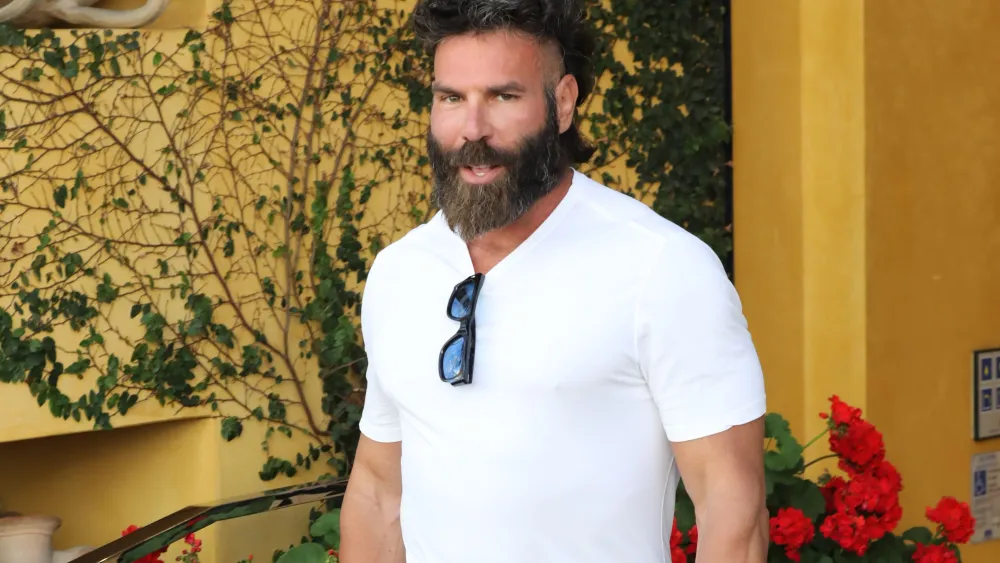
A remarkable report recently revealed that more than a dozen donors to Michigan Democratic Senate candidate Abdul El-Sayed also contributed to the congressional campaign of Dan Bilzerian, the far-right provocateur whose antisemitic rhetoric is hardly subtle and who lost his Florida congressional bid to incumbent Randy Fine.
Politically, El-Sayed and Bilzerian inhabit opposing worlds. One comes from the progressive left. The other comes from the conspiratorial right.
Yet when Israel enters the conversation, the distance between the extremes begins to collapse.
Antisemitism has survived because it knows how to reinvent itself. From the Dreyfus case to The Protocols of the Elders of Zion, from the pages of Der Stürmer to today’s political extremes, its vocabulary and messengers change, but the underlying hatred does not.
Today, Tucker Carlson gives that hatred an audience on the right, while Hasan Piker packages it for millions on the left. These are new politics, new platforms and new language. But the enduring poison is the same. Like a mutant virus, antisemitism survives by adapting itself to whichever political movement is willing to host it.
On the far-right, the Jew is the globalist, the financier and the disloyal citizen manipulating America. On the far-left, the Jew is the Zionist, the colonizer, the oppressor and the source of sinister political money and influence.
The packaging changes. The suspicion remains. One side calls it “Jewish power.” The other calls it “Zionist influence.” One questions Jewish loyalty. The other demands Jews distance themselves from Israel to prove their loyalty.
Nowhere is the hypocrisy clearer than in the fixation on pro-Israel political spending. Over the past decade, Americans who financially support pro-Israel candidates and causes have been scrutinized and vilified. Since Oct. 7, fueled by TikTok, opaque social media campaigns, the influence of shadowy foreign actors, an unregulated podcast ecosystem and viciously anti-Israel political candidates, that inexplicable fixation has metastasized into a defining issue in national, state and local elections across the country.
Yet, since 2016, Qatar has reportedly spent nearly $250 million on 88 registered lobbying and public relations firms in the United States. From 2021 through mid-2025, its agents reported 627 in-person meetings with American political contacts, more than any other country.
That is only part of the story. Federal disclosure data put Qatar-linked gifts and contracts to U.S. universities at approximately $8.8 billion, including more than $1.1 billion in 2025 alone.
The contrast between pro-Israel activism and Qatari influence couldn’t be starker. One is Americans exercising their constitutional rights to political participation and free speech. The other is a foreign government spending enormous sums on lobbying, public relations and higher education as part of a multibillion-dollar influence campaign.
Yet many of those wholly obsessed with American support for Israel greet the influence campaigns of Qatar, China and other foreign manipulators with thunderous silence.
If the first has you up in arms while the second doesn’t move the needle, take a long look at yourself in the mirror.
This brings us back to El-Sayed and Bilzerian. The two men are not the same, and neither are their politics. But their shared donors illustrate how opposing political movements can arrive at a disturbingly familiar place.
Bilzerian makes no bones about his views on Jews. His antisemitism is explicit, vicious and virulent. There is no pretense. El-Sayed is a real politician and far more nuanced. He publicly professes his love and appreciation for Jews and insists he stands against antisemitism. Yet his rhetoric, associations and relentless demonization of Israel tell another story. His embrace of Hasan Piker, whose inflammatory rhetoric about Israel and American Jews has made him toxic and contemptible even to mainstream Democrats, puts the lie to his protestations.
Whatever differences these two candidates presented to the public, their shared donors see something in common. Michigan voters who are considering El-Sayed’s candidacy should see it for what it is.
Supporting Israel does not make American Jews less patriotic, nor does advocating for Israel make their loyalty suspect. Antisemitism cannot be condemned selectively: Not by conservatives when it comes from the right, nor by progressives when it comes from the left.
This warning is not for Jews alone. All Americans have a stake in rejecting antisemitism before unfettered hatred takes hold in this country. History has written a lesson in bloodshed: Nations have been ruined and millions of lives destroyed when hatred is unleashed. It may begin with the Jews, but it never ends with the Jews.