
We were in the middle of morning prayers at the Chassidim Shul in Yeoville, Johannesburg, in the district of Gauteng, South Africa, on the morning of July 4, 1976. The minyan began promptly at 8 a.m. At 8:05, Rabbi Yisroel Hazdan, one of the senior members of the community—a respected rav and schochet (“ritual kosher slaughterer”)—came running in, shouting almost hysterically.
M’hot zei geratevet! “They saved them! They rescued them!”
This was the first we heard of the brilliantly daring and unbelievably audacious rescue of Israeli and Jewish hostages at Entebbe. The rabbi was, uncharacteristically, a few minutes late to synagogue and had just heard the news on his car radio, and thus made the announcement.
Pandemonium broke out. It took quite a few minutes for the service to reconstitute. Such was the enthusiastic reaction to the dramatic news of what has been described by military experts as “the most daring hostage rescue mission in history.”
The next morning, as the founding director of the soon-to-be-opened Chabad House, I went to check out how the construction work was going. I met the contractor, a very fine man of Portuguese descent named Joe Costa. I will never forget how he looked at me and said, “You Jews are something else!”
Indeed, the Jewish world was at its very proudest at that moment, and the whole world was in awe. Israel’s political leadership, its military leadership and the commandos on that mission had demonstrated how every single life is precious and how Jews will go to the ends of the world to save the lives of people in mortal danger.
Over the years, I have read a great deal about the Entebbe rescue mission. Ten years ago, on its 40th anniversary, our congregation, Sydenham Shul, organized a concert with the popular Chassidic singer Benny Friedman. There, more than 1,000 audience members watched the first showing of “Miracle at Entebbe,” a short documentary we produced for the occasion.
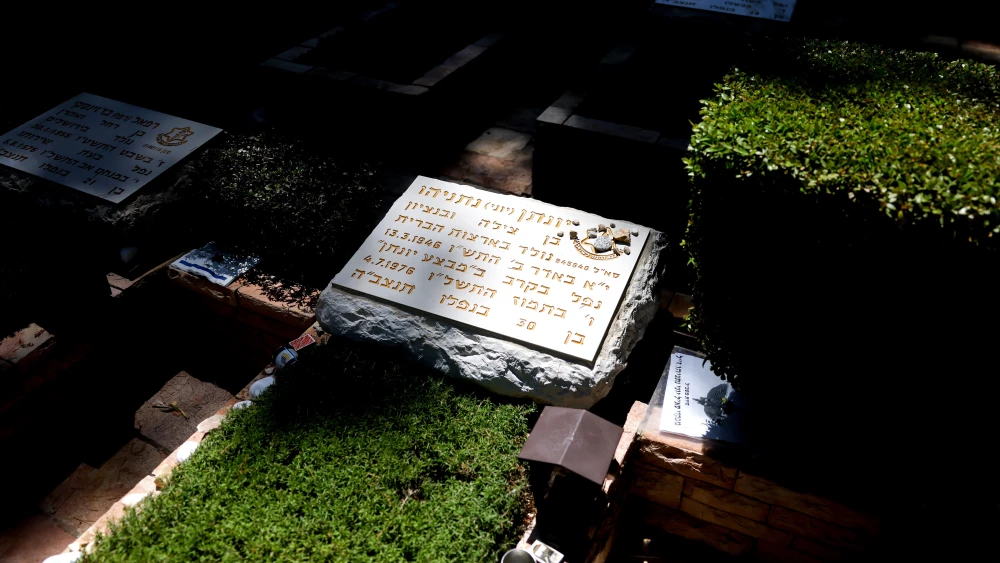
Since then, a million people have watched it on YouTube, and I was privileged to receive a personal “thank you” letter signed by Israeli Prime Minister Benjamin Netanyahu. His brother, Yonatan (“Yoni”) Netanyahu, was the commander and the sole Israeli casualty in the operation. Codenamed “Operation Thunderbolt” and widely known as “Operation Entebbe,” it was later renamed “Operation Yonatan.”
A few years ago, my colleague Rabbi Yehuda Stern invited one of the original Entebbe commandos to come to our community and share the behind-the-scenes story. Rami Sherman revealed many fascinating details that made the unbelievable tale even more mesmerizing.
Israel’s cabinet was sharply divided on whether to mount such a rescue mission. Some considered it irresponsible, reckless and nothing less than suicidal. What chances of success did we have? It would require flying some 2,500 miles, much of it across enemy territory and potentially further endangering the lives of the 100-plus hostages, all while risking international condemnation.
It was reported that then-Israeli Prime Minister Yitzchak Rabin apparently confided to his daughter: “Tomorrow, either I will be a national hero, or they will hang me in the town square.” Such was the extreme danger in authorizing this mission.
The amazingly successful rescue can be credited to a brilliant and bold military plan; the fabled Yiddishe kop (“a Jewish head”); a healthy dose of Israeli chutzpah; well-trained and courageous commandos who endangered their own lives; and, of course, the Israeli cabinet that made the agonizing decision to proceed with the perilous plan.
Ironically, it was then-Israeli Defense Minister Shimon Peres, the legendary “man of peace,” who voted for the mission to go ahead. In the end, the cabinet vote was unanimous, but not before much fiery debate and heated arguments.
As skeptics have argued, a million things could have gone wrong, causing the whole mission to fail and backfire, and make matters considerably worse. But they did not. Virtually everything worked. Every system clicked. Every step of the daring plan was realized.
And while the world can admire and applaud the courage, grit and strategic brilliance of those behind the scenes and those on the ground who made it happen, the leaders at the time were the first to insist that there was a Higher Power at work.
The pilot of one of the cargo planes said, “Somebody up there was looking after us!”
Why? Because while he was meant to stop his plane at a certain point on the runway, inexplicably, he stopped it some meters earlier. He had no logical explanation as to why.
Later, they saw a huge crater on that same runway. Had he continued according to plan, the whole plane might have toppled over. That was but one of numerous details that demonstrated the unmistakable hand of God protecting His people.
At the end of the day, the Entebbe rescue mission was not only a military decision, but a moral one. “All of Israel are responsible for one another,” says the Talmud (Shavuot 39a).
How many other countries would have had the courage and concern, the faith and fearlessness, the ability and the agility to mount such a veritable “mission impossible?”
May our brothers and sisters in Israel continue to live with faith and courage, and with the ever-present watchful eye of the One Above, be blessed to protect our people forever.