
In his Aug. 6 newsletter, Commentary magazine executive editor Abe Greenwald described that morning’s daily podcast, which featured National Review senior writer Noah Rothman discussing the victory of Dr. Abdul El-Sayed in the Michigan Democratic Party primary for the Senate.
The panel—hosted by Commentary editor-in-chief John Podhoretz and including senior editor Seth Mandel—talked about how Republican Sen. Mike Rogers would be able to defeat El-Sayed in the Nov. 3 midterm elections.
“The basic question was whether it would be more effective to go after El-Sayed for his socialism or his adjacency to jihadism,” Greenwald wrote. “I suspect it would be profitable for Rogers to hit him on both counts, but there’s a potential risk in focusing the race too narrowly on El-Sayed’s radicalism altogether.”
Greenwald explained, “It’s become clear in high-profile elections over the past few years that naming and shaming the big, glaring, awful thing that defines one’s opponent doesn’t have the persuasive power we’d like to think—no matter how accurate the characterization. We’ve seen this approach flop on both sides of the aisle and in primary races.”
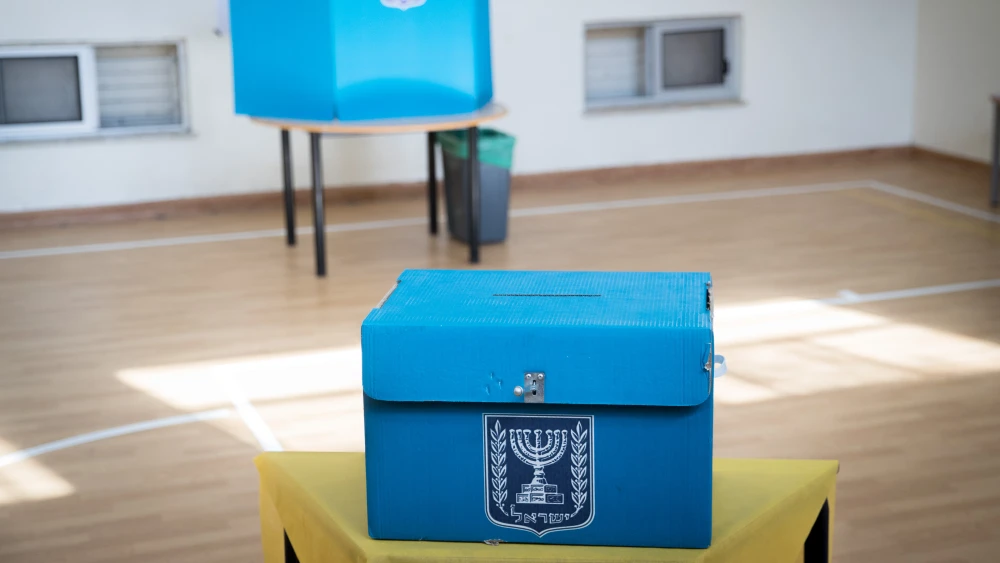
Which brings us to Israel’s campaign for the upcoming Knesset elections on Oct. 27.
Greenwald’s depiction ought to serve as a serious warning to every right-wing politician and pundit on the other side of the pond. This is because the energy invested in discrediting the left and the rest of the potential candidates whose main goal is to unseat Likud leader Prime Minister Benjamin (“Bibi”) Netanyahu has been central to his camp’s campaign.
The impulse to go after the “anybody but Bibi” representatives is unavoidable. Take Gadi Eisenkot, for instance.
Currently Netanyahu’s most serious contender, the former Israel Defense Forces chief of staff has been posing as a conservative when his past record in the military and overall political outlook indicate otherwise. That he tragically lost a son during the war in Gaza lends sympathy, if not credence, to the pretense. It therefore makes perfect sense for Netanyahu and his supporters to emphasize this point.
Then there’s Yair Golan, chairman of HaDemokratim (“The Democrats”). He makes no bones about his far-left positions and never has, including when he served as deputy chief of the IDF. So, unlike the case of Eisenkot, it’s not necessary to expose him. It is, however, crucial to remind voters that he will be part of the next government in the event of a Likud defeat. Likely with a prominent role.
And, of course—neither last nor least—let’s not forget Mansour Abbas, chairman of Ra’am, who presents a double threat. An Islamist Israeli citizen who’s a member both of the Knesset and a branch of the Muslim Brotherhood—a group outlawed almost everywhere except in the Jewish state—Abbas plays the “moderate” card.
Assisting him in the endeavor is Yoav Segalovitz, who established and served as the first commander of Lahav 433, the Israel Police’s national unit for combating corruption and organized crime. The law-enforcement honcho-turned-MK recently resigned from opposition leader Yair Lapid’s Yesh Atid Party to engage in negotiations to join Ra’am.
According to some Hebrew media reports, Segalovitz’s move has caused a number of former security officials to consider following suit. Talk about giving Abbas a kosher certificate—one that’s even better than the one he received from former Prime Minister Naftali Bennett, whom he abetted to become premier despite a measly number of mandates.
Speaking of Bennett, he’s another figure the right began attacking by refreshing the public’s memory of the stunt he pulled in order to assume power. But attention to him as a force to be reckoned with is waning, along with his dropping poll numbers.
The above isn’t merely “inside baseball,” Israeli-style. It’s a snapshot of a situation with which the United States is contending.
Combating radicalization, which has creeped into the zeitgeist despite efforts to keep it at bay, is not simply the demand of the day; it’s an existential imperative for liberal Western democracy and civilization. And though the tendency to sound the alarm on individuals running for office is completely understandable, it doesn’t always achieve the desired results. On the contrary.
Greenwald offered a useful reminder of why. “The 2016 presidential election left no doubt about the exact nature of Donald Trump’s flaming outlandishness, and he stunned the world by becoming the GOP nominee and then president,” he wrote. “Starting years before the 2024 election, Democrats made a full-time job of repeating that Trump was a threat to democracy, a sexual predator, a grifter and a convicted felon, and then he was elected president by a greater margin than in 2016.”
The lesson here isn’t that it’s useless to impugn an opponent. It’s that doing so excessively can backfire badly.
Indeed, the irrational, obsessive maligning of Netanyahu by Israeli leftists and their fellow “anybody but Bibi” travelers didn’t succeed at their mission. Instead, they were pummeled at the ballot box in November 2022, ushering in the most right-wing coalition in the country’s history.
The right should take this into account today. It would also do well to consider another problem that Greenwald elucidated: “When a candidate makes his opponent’s unfitness the central message of his campaign, he also makes the race all about his opponent.”
Exactly.
If the right spends the next two and a half months explaining why Eisenkot, Golan and Abbas are the bogeymen, it will be turning them into the protagonists of the election. You don’t have to be an expert in advertising to grasp that this is a way to build, rather than dilute, their brand.
Greenwald’s prescription is worth noting. “Perhaps the best way to go after a radical opponent,” he suggested, “is to get a jump on offering a compelling vision of your own that competes with the dark one he’s peddling.”
That should be the Israeli right’s strategy. Not letting the left off the hook, but preventing it from becoming the centerpiece—and from disguising itself as the center.