Gaza’s tunnel network could take more than a decade to dismantle under a proposed postwar plan being advanced by the Board of Peace, the body tasked with shaping the territory’s future, its high representative for Gaza said on Sunday in an interview with Israel’s Channel 12.
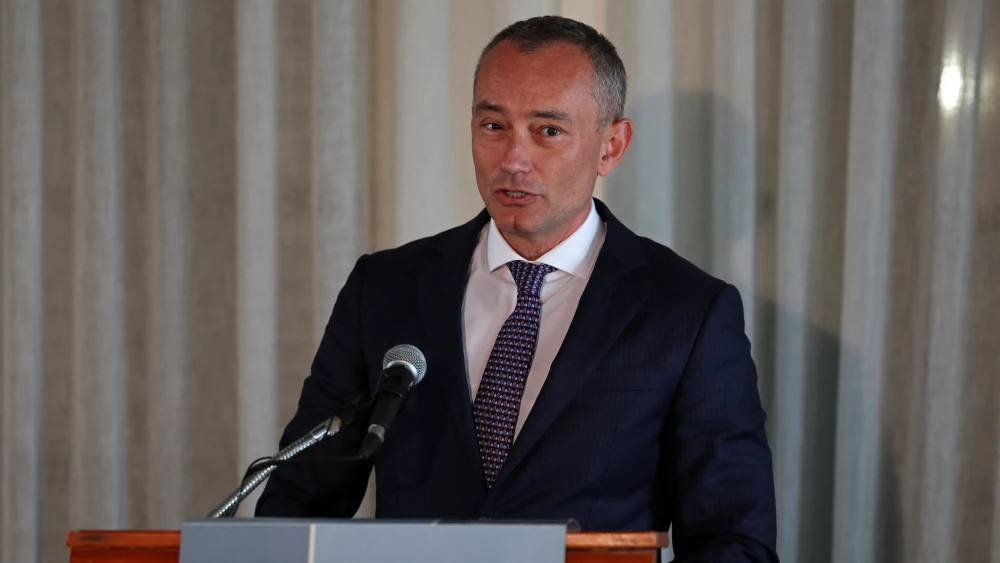
Nikolai Mladenov told journalist Amit Segal that the 15-point roadmap, negotiated between the Board of Peace led by U.S. President Donald Trump and Hamas, is designed to ensure Gaza “is never again a threat to Israeli security” and hinges on three elements: full decommissioning of all weapons in Gaza, Board of Peace governance through a national committee, and large-scale reconstruction, backed by an international security force to oversee the process.
* Dismantling the tunnels will take ten years
— Amit Segal (@AmitSegal) August 9, 2026
* Israel will not need to withdraw at the current stage
* Personal weapons? Not Kalashnikovs and not in large quantities@nmladenov , the man responsible for the future of Gaza, attempts to alleviate concerns in Israel in an exclusive… pic.twitter.com/Pyio88NrT2
Mladenov said Israel would not be required to withdraw forces “before we actually have verified steps on the ground,” explaining that IDF troops are currently positioned along the Yellow Line inside Gaza and that any pullback toward the border fence would proceed sector by sector only after weapons are collected, stored and rendered unusable by the national committee and international forces.
He stressed that the plan does not limit Israel’s ability to respond to imminent threats or evidence of Hamas rearming, saying that if commitments are not met, the process would freeze and “we do not progress to the next stage,” while adding that personal weapons in Gaza under the envisioned arrangement would not include Kalashnikov rifles or be held in large quantities.
The interview aired hours after Prime Minister Benjamin Netanyahu announced that Jerusalem rejects the 15-point roadmap announced by the Board of Peace on July 30.
Disarming the Iranian-backed terrorist group means that Hamas gives up its “heavy weapons, the less heavy weapons, all the weapons,” the prime minister reiterated, saying there had to be “real disarmament, not fictitious disarmament.”
Jerusalem is discussing the matter with the Trump administration, the premier said, adding that the Americans “have ideas, some of them acceptable to us and some not acceptable to us.”
The IDF will continue to thwart threats against Israeli forces and civilians, he vowed.
Israeli Energy and Infrastructure Minister Eli Cohen told JNS on Monday that the IDF will not redeploy in the Gaza Strip until Hamas terrorists lay down their weapons.
“Until Hamas disarms, we will not move a millimeter,” said Cohen, a member of the Security Cabinet.
“I do not believe Hamas will disarm, but I am willing to give the Board of Peace the opportunity to do so,” the minister said, referencing the body chaired by U.S. President Donald Trump that oversees ceasefire efforts.
“If they do not succeed, we will return to war and dismantle Hamas ourselves at a time we deem appropriate,” Cohen warned.
“We will not return to an Oct. 6 mentality, and we will not allow Hamas to become stronger,” he said.