The shooting attack on IDF soldiers on Sunday reinforces the security establishment’s assessment that terrorist organizations in Judea and Samaria are getting stronger and may reach a strategic tipping point. The Palestinian Authority has long since lost control over its cities, and it is only thanks to the pro-active posture of the Israeli security forces that Jenin and Nablus have not become another Gaza.
The new terrorist threat should have Israel rethink the overall rationale that has guided its policies since the Oslo Accords came into effect in the ‘90s. Almost 30 years since they were supposed to usher in a new era of peace, it is incumbent upon us to scrutinize the flawed assumptions on which they were based.
The first assumption was that a separation from the Palestinians was a prerequisite for any resolution of the conflict. The fact of the matter is that the IDF pulled back from Jenin in 1996. In 2005, several Jewish settlements were uprooted from Gaza. Both these areas subsequently became terrorist hotbeds that drew Israel back time and again in order to protect its civilians.
The creation of these terrorist hotbeds was the direct result of the void created by the lack of Israeli troops and civilians in the area, and one must wonder: Perhaps separation is anything but a solution?
The second assumption: Any risk entailed in pursuing the Oslo path was calculated and reversible. Then-Prime Minister Yitzhak Rabin explained that Israel would retain effective control over areas handed over, making it possible to reverse course should the need arise. The events that have unfolded in the Gaza Strip over the past few decades—along with the new trends in Judea and Samaria— have been a rude awakening. Just look at how the efforts to reestablish the Jewish settlement in northern Samaria have been met with opposition by Israeli security officials (who are taking their cues from their U.S. counterparts). This shows that as far as the international community is concerned, Israeli withdrawals are irreversible.
The third assumption: “Ending the occupation” will grant Israel international legitimacy. The international criticism directed at Israel any time the IDF launches incursions into Palestinian cities ignores the fact that this is defensive action aimed at curtailing the murderous terrorism in Israel. Accusations such as “it is none of Israel’s business to be there” undermine the very idea that Israel has the right to defend itself as it sees fit by taking the initiative in Palestinian areas.
The fourth assumption: A Palestinian state will be demilitarized. The proliferation of standardized weapons in the Jenin areas is not in line with the fundamentals on which the Oslo Accords were based. The Israeli expectation that a Palestinian entity of state would not challenge Israel’s security has failed the test of reality. To understand the potential threat, it would suffice to look at what has unfolded in the Gaza Strip. It is clear that had Rabin known that Gaza would become what it is now, he would not have signed off on the Oslo Accords.
The underlying premises on which the two-state solution has been based appear to have failed miserably. In light of this situation, Israel must chart a new path forward when it comes to the future of Judea and Samaria and the Jordan Valley.
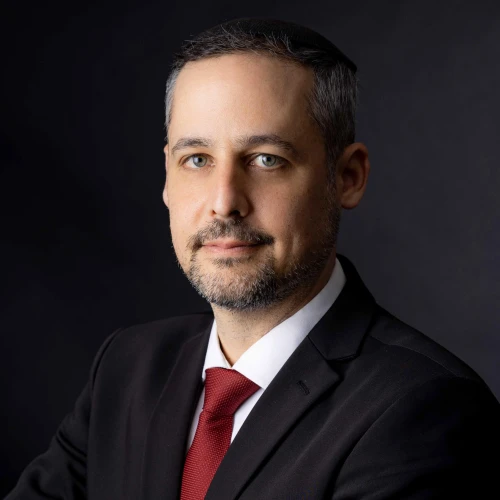
Maj. Gen. (res.) Gershon Hacohen is a senior research fellow at the Begin-Sadat Center for Strategic Studies. He served in the IDF for 42 years, commanding troops in battles with Egypt and Syria. He was formerly a corps commander and commander of the IDF Military Colleges.
This article first appeared in Israel Hayom.