
Perched in the heart of the Mediterranean between Europe and North Africa lies the island nation of Malta, a place best known for its ancient fortresses, sun-drenched harbors and strategic location. Yet like so many corners of the world where Jews have quietly lived, traded and prayed, Malta has a Jewish story—one that reflects both the suffering and resilience that have characterized Jewish life across the ages.
Today, Malta’s Jewish community numbers perhaps 100 to 200 people in total. They gather for Shabbat prayers, maintain Jewish traditions and welcome Jewish visitors from around the world. But behind this small community lies a rich historical tapestry woven through centuries of migration, persecution and renewal.
The Jewish presence in Malta dates back nearly two millennia and possibly more. While some scholars speculate that Jewish traders may have arrived during the Phoenician period nearly 2,900 years ago, the earliest clear archaeological evidence emerges in the late Roman era.
Discoveries in the catacombs of the Maltese town of Rabat include burial chambers carved with menorahs, strong evidence that a Jewish community lived on the islands during the fourth and fifth centuries. It is believed that the community may have numbered several hundred people at its peak during this era, living alongside Christians and pagans in the cosmopolitan environment of the Mediterranean world.
In the centuries that followed, Malta passed through the hands of various rulers—Byzantines, Arabs and Normans—with each leaving their imprint on the island’s culture. Jews appear to have lived relatively peacefully under some of these regimes, participating in trade and commerce that connected the Mediterranean’s bustling ports. Notably, the Maltese island of Comino hosted the renowned Jewish mystic Abraham Abulafia in the late 13th century, where he lived in seclusion and composed several of his mystical writings.
But like so many Jewish communities in Europe, Malta’s Jews were not immune to the sweeping forces of history.
Malta was under the Crown of Aragon, and when Ferdinand and Isabella issued the Alhambra Decree in 1492, expelling Jews from Spain, the edict extended to Spanish-controlled territories across the Mediterranean, including Malta. Jews were forced to convert, flee or face expulsion, often at great financial cost imposed by the crown. The result was the disappearance of an organized Jewish community on the island for centuries.
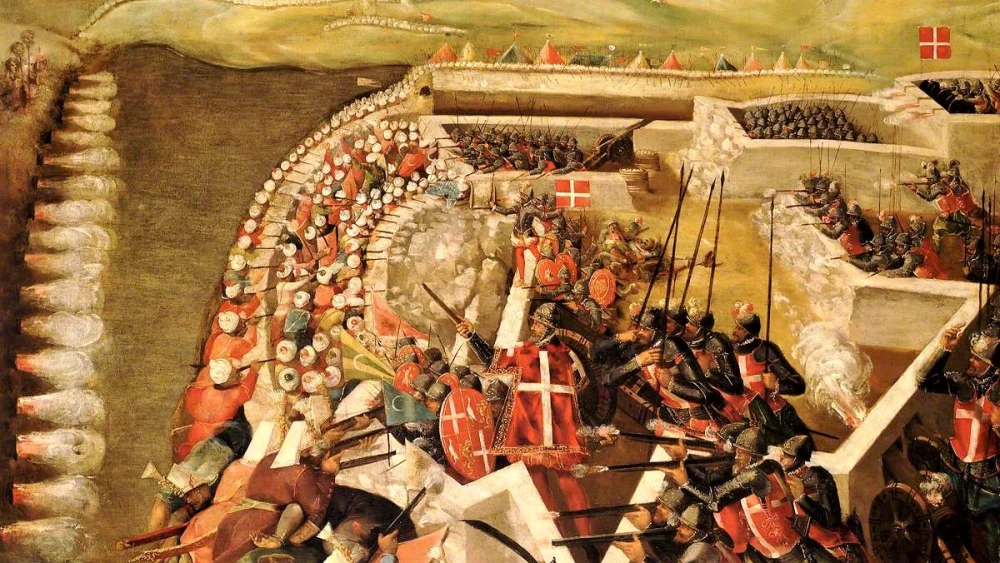
When the Catholic military order known as the Knights Hospitaller took control of Malta in 1530, Jewish life took on a darker dimension. The knights, who conducted naval campaigns against Ottoman shipping and coastal towns, frequently captured Muslims, Jews and others during their raids and brought them back to Malta as slaves.
Some 1,000 Jewish captives were imprisoned in harsh conditions in the island’s slave quarters, often awaiting ransom from Jewish communities elsewhere. Across Europe, Jewish leaders mobilized resources to redeem their brethren. Most of the enslaved Jews were freed thanks to the efforts of the Society for the Redemption of Captives, a Venice-based group dedicated to the mitzvah of pidyon shvuyim, the “redemption of captives.”
Correspondence from this era recounts harrowing stories of Jews held in chains while their families and communities scrambled to raise the funds required to secure their release. In some cases, captives languished for years before their freedom was obtained. An English traveler who visited the prison where the Jews were held in 1663 noted that they were singled out from the non-Jewish slaves and forced to wear “a little piece of yellow cloth on their hats or caps.”
Yet even amid such darkness, the Jewish spirit endured. Rabbis among the captives organized religious life, arranged divorces when necessary and offered spiritual guidance to fellow prisoners. Their resilience serves as a testament to the enduring strength of Jewish faith even under the harshest conditions.
It was not until the arrival of Napoleon Bonaparte in 1798 that the institution of slavery on Malta was finally abolished. Under French and later British rule, a new chapter began, one in which Jews were gradually able to return and rebuild a small but stable community.
During the 19th century, Malta’s position as a British naval hub attracted Jewish merchants and traders from across the Mediterranean and Europe. A Jewish cemetery was established in the town of Marsa in 1879, symbolizing the re-emergence of a permanent Jewish presence on the island. An older cemetery in the village of Kalkara, opened in 1784, is the oldest surviving Jewish burial ground in Malta, with 12 graves dating from 1820 to 1834.
By the early 20th century the community remained small but vibrant. Jews were active in commerce and business, and Malta’s strategic location made it a crossroads of cultures and peoples.
One of the most remarkable chapters in Malta’s Jewish story came during the dark years preceding World War II.
As Nazi persecution intensified across Europe, hundreds of Jews desperately sought refuge from the growing menace by fleeing to Malta, which proved to be a rare sanctuary at a time when much of the world was closing its doors. During the war itself, Malta’s strategic position led to intense Axis bombing, but the island’s role as a British stronghold also protected its small Jewish population from direct Nazi occupation.
Following the establishment of the State of Israel, Malta gradually developed friendly relations with the Jewish state. Diplomatic relations between Malta and Israel were formally established in 1965, and cooperation has grown steadily in fields such as tourism, education and trade.
Today, although Malta’s Jewish community remains small, it continues to flourish in modest but meaningful ways. Rabbi Chaim Shalom opened the Chabad Jewish Center of Malta in 2013 and received approval three years ago to build a new center that will include a synagogue and kosher restaurant. The community imports kosher meat from Belgium due to local slaughter bans and flies in mohels from Israel or Europe for brit milah ceremonies.
For Israel, Malta’s story carries a quiet but meaningful resonance. Both nations are small Mediterranean states whose histories have been shaped by geography and by the powerful empires that surrounded them. Both sit along vital maritime routes that have for centuries linked Europe, Africa and the Middle East. And both understand, perhaps better than most, the strategic importance of this narrow sea that has served as a crossroads of civilizations since antiquity.
In the sweep of Jewish history, Malta may appear to be little more than a footnote. Yet the story of the Jews on this small Mediterranean island reflects a much larger truth about our people. For nearly 2,000 years, Jews found ways to survive and sustain their identity even in the most unlikely places: sometimes flourishing, sometimes suffering, but always enduring.
Indeed, Malta stands as a reminder that wherever Jews have wandered, they have carried their faith, their traditions and their hope for redemption. And in that sense, even this tiny island has earned its place in the remarkable saga of the Jewish people.