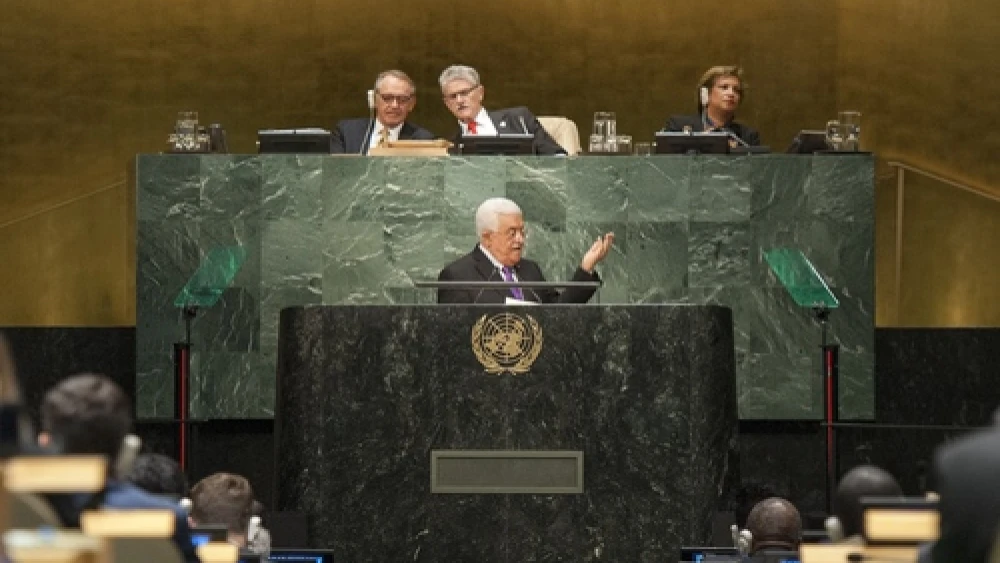
The latest draft of a Palestinian U.N. resolution on the Trump peace plan is much less aggressive in tone than the initial version, according to the AFP news agency, which recently obtained a copy.
The new draft, which was acquired ahead of a U.N. Security Council vote on Tuesday, no longer mentions the United States by name and uses less confrontational language than the original, according to the report.
The revision comes in the context of what diplomatic sources claim is U.S. pressure on countries supporting the Palestinians in their rejection of its Mideast peace plan, which would allow Israel to annex parts of Judea and Samaria, as well as the Jordan Valley.
The initial draft of the resolution, which was presented by Tunisia and Indonesia last week, cited that the Trump peace plan “breaches international law and the internationally-endorsed terms of reference for the achievement of a just, comprehensive and lasting solution to the Israeli-Palestinian conflict.”
In the updated version, according to the AFP, the draft states that the plan “departs from the internationally-endorsed terms of reference and parameters for the achievement of a just, comprehensive and lasting solution to this conflict, as enshrined in the relevant United Nations resolutions.”
The revised draft also adds a condemnation of “all acts of violence against civilians, including acts of terror, as well as all acts of provocation, incitement and destruction” and dropped the call for an international conference on the Middle East “at the earliest possible date,” instead referring to a similar call made in a 2008 U.N. resolution.
The draft still condemns Israeli settlements in eastern Jerusalem and Judea and Samaria, and restates the importance of preserving the 1967 armistice lines.
According to a statement from the Palestinian mission to the United Nations, Palestinian Authority leader Mahmoud Abbas, who is expected to be present for Tuesday’s vote in New York, will hold a news conference with former Israeli Prime Minister Ehud Olmert following the vote.