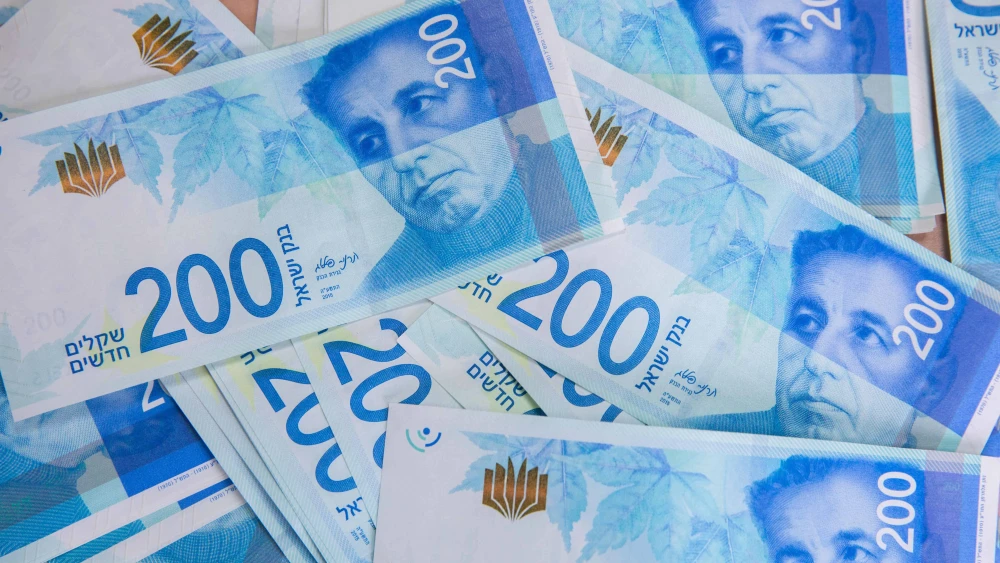
The Israeli currency surged to one of its strongest levels in decades, trading at 3.0860 shekels per dollar on Thursday afternoon.
A similar exchange rate was last recorded in November 2021 and in 1996.
The Bank of Israel’s representatives exchange rates set on Thursday afternoon included 3.0860 per U.S. dollar, 4.2563 per British pound, 2.2765 per Canadian dollar, 2.1713 per Australian dollar, 0.1956 per South African rand and 3.6873 per euro.
The shekel’s strengthening is not a momentary outlier, as it has been rising against the nominal effective exchange rate—the basket of currencies of Israel’s main trading partners—since April.
The shekel’s move against the dollar rose by more than 20% since April, when the rate stood at 3.88 shekels per dollar.
Bank analysts cited robust defense exports, increased foreign venture capital investments in Israeli startups and hedging activities by institutional investors as fundamental drivers of the “strong shekel” trend, including the conclusion of the war and low unemployment.
Expectations in the market are for the dollar to continue to fall, potentially below the three-shekel mark.
The projected sale to Egypt of Israeli natural gas may supply the Jewish state with more dollars in the near future, strengthening the shekel even further, outlet Ynet reported.
Senior officials in Israel’s Ministry of Finance said that the strengthening of the shekel is a positive trend, the report continued.
“Import prices—including raw materials for industry and a wide range of consumer goods—are falling, and the strengthening of the shekel is greatly helping the economy and citizens after two years of war. We support this trend, and there is no reason to weaken the shekel at this time. It would be good if it strengthens further,” the officials, who were not identified by name, were quoted as saying.
Exporters were pressuring the Bank of Israel to intervene and buy dollars to halt the plunge in the dollar’s exchange rate, the report continued.
Foreign exchange reserves are at a record high, exceeding $220 billion.
“We are closely monitoring developments in the foreign exchange market, and if necessary, we will make decisions accordingly,” the Bank of Israel governor, Professor Amir Yaron, said in recent days.