Newsletter
Newsletter Support JNS

Shekel nears four-year high at 3.17 per dollar

Israeli currency’s surge is being driven by tech exits, defense exports and hedging flows.

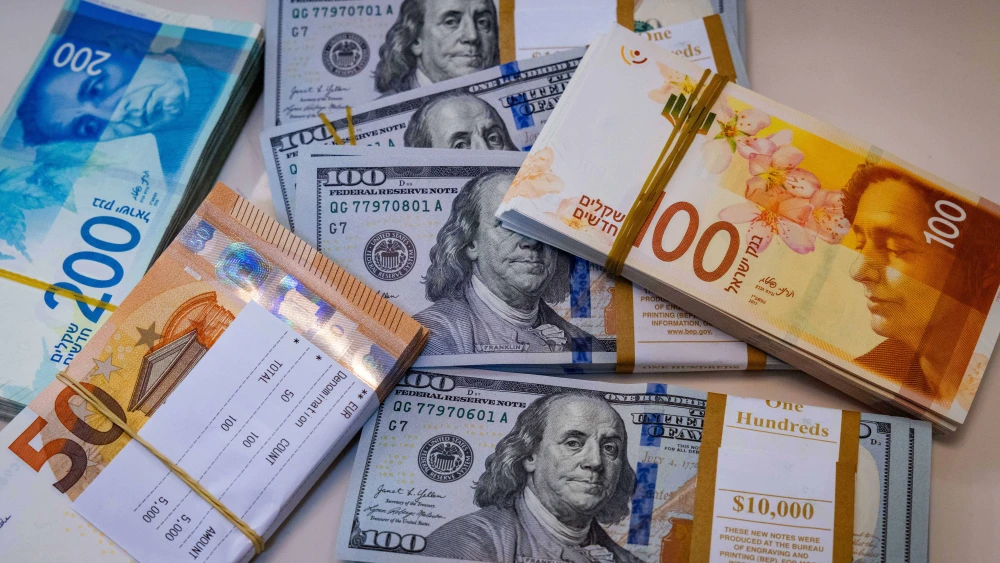
Illustration of U.S. $100 bills, 100 and 200 Israeli shekel bills, and 50 European euro bills, May 19, 2025. Photo by Nati Shohat/Flash90.

The Israeli shekel strengthened to 3.17 per dollar Tuesday morning, a near four‑year high, according to Israeli business daily Globes.

The strengthening reflects technology exports, defense industry sales and institutional investors hedging positions amid rising global equity markets, according to the report.

Yossi Menashe, CEO and founder of Altshuler Shaham Financial Services, told Globes the shekel is at a level it has not reached in four years, last seen before a “mini‑burst” of the tech bubble and the outbreak of the Ukraine war. Recent defense exports and technology exits, including last week’s announcement by Armis, are contributing factors.

Armis, an Israeli-founded cybersecurity company, agreed to be sold to U.S. software firm ServiceNow in a cash deal valued at about $7.75 billion, making it one of Israel’s largest tech exits.

Yotav Kostika, CEO of More Investment Houses, predicted the shekel will likely cross the three-per-dollar threshold. The dollar index has declined 1.5% since early December, but the shekel has strengthened more sharply.

Menashe said the Bank of Israel has signaled the current rate is consistent with its economic models and has so far given no sign of intervention.


See more from JNS Staff
The judges said the sanctions, which the United States imposed in response to the Hague-based court’s targeting of Israel, are unlawful.
The Fedayeen Football League plans to hold the game in the heart of the city’s World Cup activities, wearing keffiyehs and waving Palestinian, Iranian and Lebanese flags, to call for FIFA to expel Israel.
Katie Lawson, a university spokeswoman, told JNS that it was the “first time in more than six years that this authority was exercised.”
The anti-Israel “Squad” member is backing Imraan Siddiqi’s bid to unseat a Democratic incumbent, as progressive challengers target fellow Democrats in Washington state legislative races.
Only 34% of respondents approved of the way the U.S. president was handling Iran, with 62% disapproving.
The study achieved 82.8% accuracy using AI analysis of eye blood vessels, offering a potential alternative to blood tests.
Benny Gantz, JNS editor-in-chief Jonathan S. Tobin, Gilad Erdan, Mosab Hassan Yousef, Nissim Black and leading voices in security, diplomacy, media, law and Jewish communal affairs headline the summit’s third day in Jerusalem.