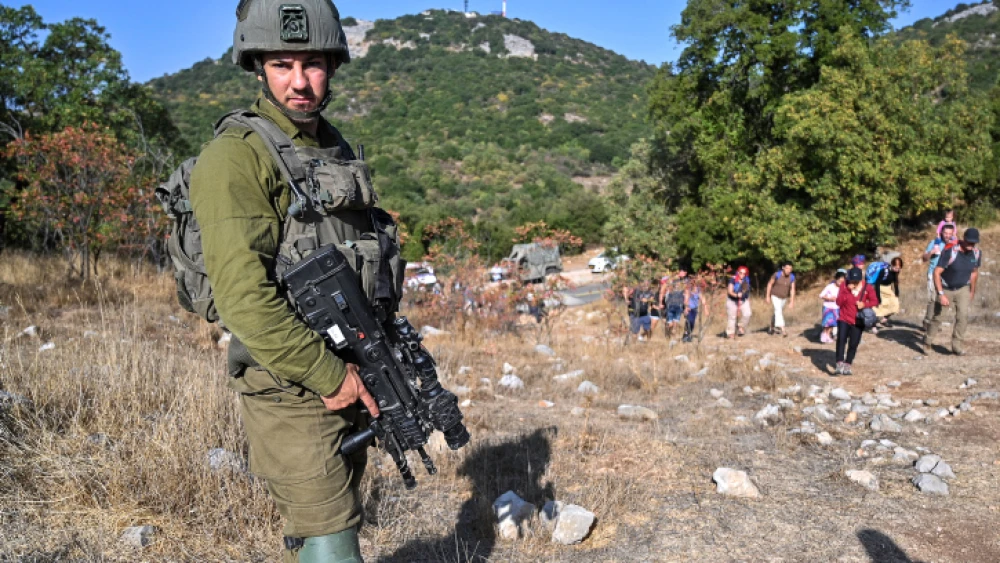
Tensions rose along the Israeli-Lebanese border and the Lebanese Army was put on alert Sunday after reports that an IDF patrol crossed the frontier.
“An Israeli enemy patrol breached the Blue Line in Aita al-Shaab [South Lebanon], to a distance of approximately one meter,” the Lebanese army said in a statement.
The Blue Line is a temporary border published by the U.N. on June 7, 2000, after the Israeli withdrawal from Lebanon.
“A Lebanese Army patrol came and forced the enemy patrol to retreat beyond the Blue Line towards Occupied Palestinian Territories. A patrol from the United Nations Interim Force in Lebanon [UNIFIL] also attended to check on the breach,” the statement added.
“We are aware of tensions along the Blue Line in the area of Aita al-Shaab, where some Israeli maintenance works are ongoing,” a UNIFIL spokesperson told Lebanon-based L’Orient Today.
“Our peacekeepers are on the spot to de-escalate the situation. We urge all parties, and everyone present at the scene, to maintain calm. Any kind of work near the Blue Line is extremely sensitive, and we continue to ask all parties to coordinate through UNIFIL to avoid unnecessary tension,” the spokesperson said.
Citing a journalist from Hezbollah’s Al-Manar TV, L’Orient Today also reported that tensions flared after “a Lebanese Army officer pushed an Israeli soldier and removed an iron stake that soldier was placing in violation of the Blue Line.”